


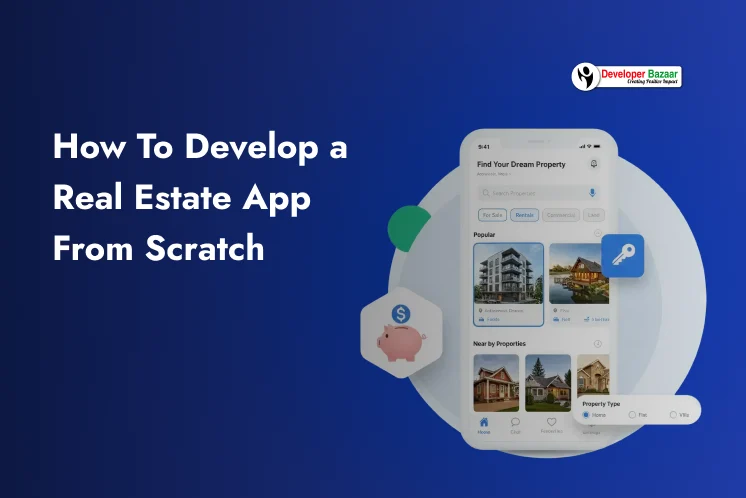
As everything is going digital, the real estate industry is also moving fast toward mobile solutions. People now prefer to search, compare, and buy properties using their smartphones instead of visiting multiple sites physically. This growing trend makes it the right time to develop a real estate app in 2026.
A real estate app helps users find properties easily, connect with agents, calculate budgets, and even take virtual tours. For businesses and startups, building a real estate app opens doors to new customers, better income, and long-term growth.
This comprehensive blog explains everything from understanding real estate apps to market stats, reasons to invest, and how to develop a real estate app from scratch.
What is a Real Estate App?
A real estate app is a mobile platform that connects property buyers, sellers, agents, and renters in one place. Users can search for houses, apartments, or offices using filters like price, location, and size.
A real estate app uses smart technology to make the experience better. Latest AI technologies study user behavior and show relevant property suggestions. These AI features in real estate apps help users find the right property faster and with less effort.
For example, if someone often searches for 2-BHK apartments in a certain area, the app will automatically suggest similar listings. This smart suggestion system is called AI recommendation, and it makes the app more useful and user-friendly.
Market Overview For Real Estate Apps?
The real estate software market is growing every year because people trust digital platforms more than ever. According to global market studies:
- In 2023, the global real estate software market crossed USD 10 billion.
- The market continued to grow in 2024 due to higher mobile usage.
- By 2030, the market value is expected to reach over USD 21 billion.
- North America holds the largest share, but Asia and Europe are growing fast
These numbers clearly show that now is the best time to create a real estate app and enter this expanding market.
Why Invest in Developing a Real Estate App?
A real estate app helps businesses reach the growing number of online property seekers, offering multiple revenue streams and improved user experience. With automation and global reach via Android and iOS, apps save time, boost efficiency, and increase profits.
| Benefit | How It Helps | Stats |
|---|---|---|
| Online Property Searches | Meet users where they are | 90% of buyers search online first |
| Multiple Revenue Streams | Earn via listings, ads, subscriptions | Potential $1,000 - $3,000/month per 1,000 users |
| Better User Experience | Fast search, maps, chat | Effective onboarding boosts retention by 50% |
| Wider Business Reach | Android + iOS access | Reach millions of users globally |
| Automation Saves Time | Notifications, lead tracking, follow-ups | Agents save 5 - 10 hours/week on manual tasks |
1. Increasing Online Property Searches
Many people searches homes, land, or flats online before visiting them. When you build a real estate app, you meet users where they already are, on their phones. This makes property discovery faster and easier.
2. Multiple Ways to Earn Money
A real estate app allows you to earn through many channels. You can charge for premium listings, take commissions, show ads, or offer paid subscriptions. This reduces risk and increases profits.
3. Better User Experience
Mobile apps offer smooth navigation, quick searches, maps, and instant chats. This improves user satisfaction and increases the chances of successful deals.
4. Wider Business Reach
With cross platform app development, your app can reach users worldwide. Your app will no longer be limited to only one city or region.
5. Automation Saves Time
Apps automate tasks like notifications, lead tracking, and follow-ups. This improves efficiency and reduces manual work for agents and business owners.
Top Features to Incorporate into a Real Estate App
A successful real estate app must be simple, fast, and helpful for users. The right features make property searching easy and improve user trust. When you build a real estate app, these features help users find the right property quickly and stay active on the platform.
Below are the most important features explained in clear and simple language.
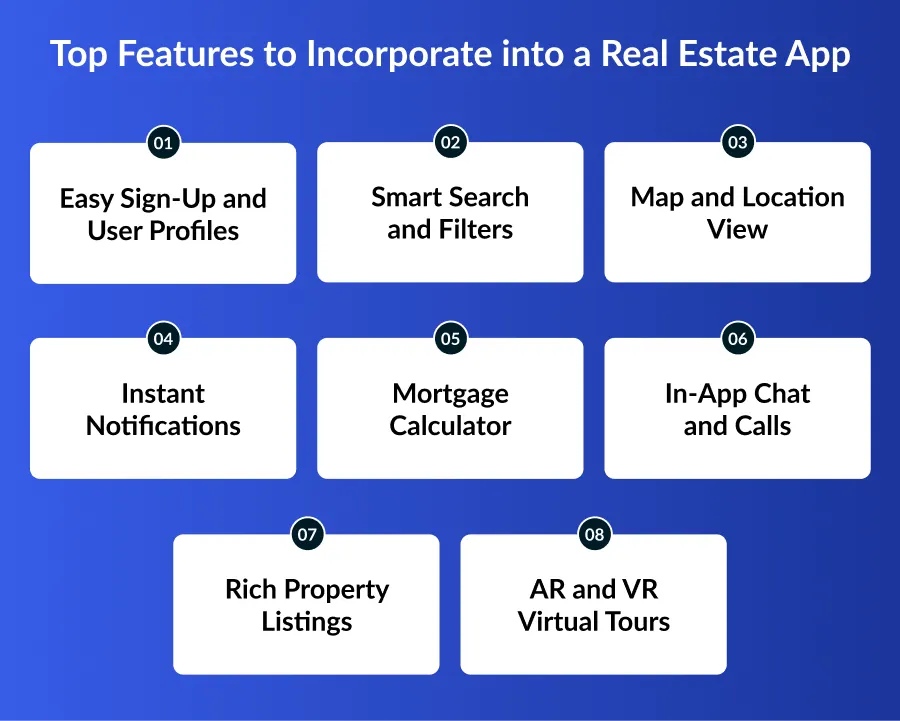
1. Easy Sign-Up and User Profiles
Users should be able to sign up using their phone number, email, or social accounts in just a few steps. A smooth sign-up process helps users start using the app without confusion. User profiles allow people to save favorite properties, track searches, and manage their listings easily.
2. Smart Search and Filters
Smart search helps users find properties based on price, location, size, and property type. This saves time and avoids showing unwanted results. Advanced filters make property searching faster and give users better control over their choices.
3. Map and Location View
Map integration shows properties on an interactive map with nearby places like schools, hospitals, and markets. This helps users understand the area better. Location view makes it easier to choose a property that fits daily needs and lifestyle.
4. Instant Notifications
Real-time notifications alert users about new listings, price changes, and messages. This keeps users updated without opening the app again and again. Instant alerts help users act quickly before good properties are booked by others.
5. Mortgage Calculator
A mortgage calculator helps users calculate monthly loan payments based on price and interest rate. This makes financial planning simple and clear. It also helps users choose properties that match their budget without stress.
6. In-App Chat and Calls
In-app chat and calling features let buyers, sellers, and agents communicate directly. This reduces delays and improves response time. Better communication helps users make faster and more confident property decisions.
7. Rich Property Listings
Property listings should include clear photos, videos, pricing, and full property details. This gives users a complete view of the property. Rich listings build trust and help users decide without needing multiple visits.
8. AR and VR Virtual Tours
AR and VR tours allow users to walk through properties digitally from anywhere. This saves time and travel costs. Virtual tours make property viewing more engaging and help users shortlist properties easily.
How To Build A Real Estate App From Scratch in 2026?
Building a real estate app requires clear planning and the right execution. If you want to develop a real estate app in 2026 that users enjoy using, you must follow a step-by-step process. Each step helps you build a stable, useful, and successful app.
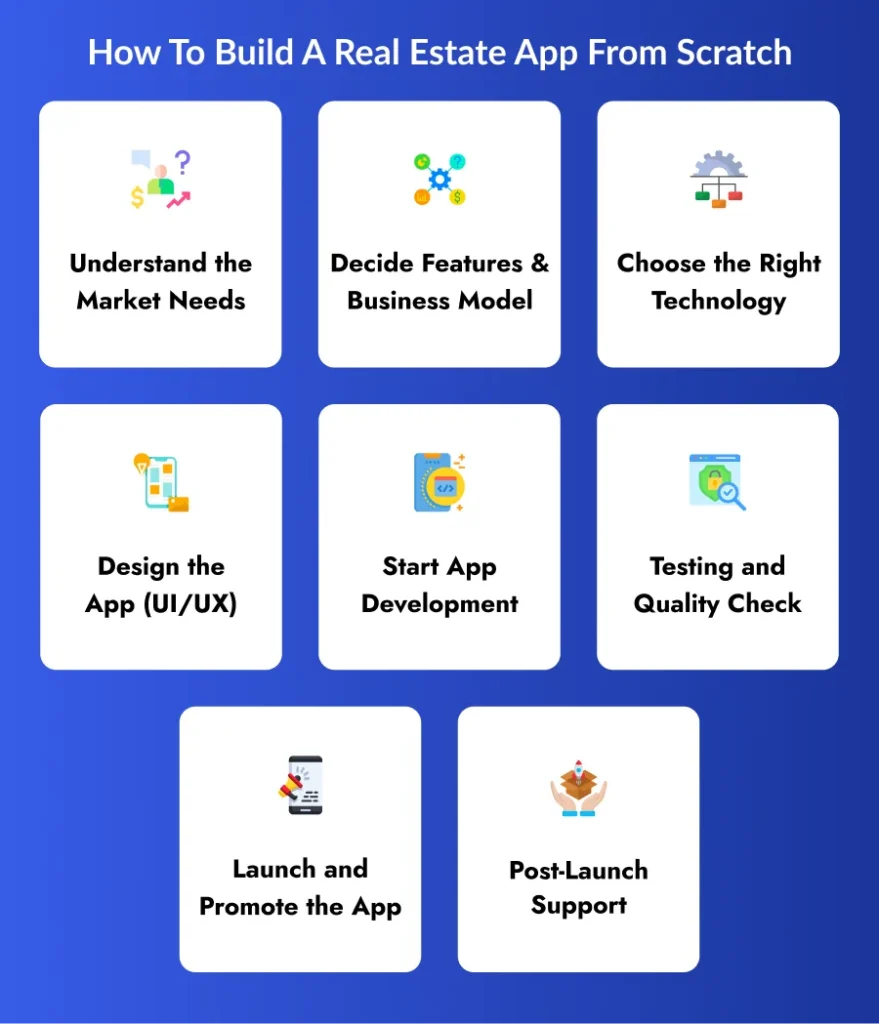
1. Understand the Market Needs
Start by understanding what users expect when they search for properties online. Study the needs of buyers, sellers, renters, and real estate agents. Check popular apps in the market and see what features they offer and where they lack. This research helps you create a real estate app that solves real user problems and stands out from competitors.
2. Decide Features and Business Model
Make a clear list of important features like property search, filters, maps, chat, and notifications. These features decide how useful your app will be for users. At the same time, choose a business model such as ads, subscriptions, commissions, or featured listings. This planning helps your app earn money and grow smoothly.
3. Choose the Right Technology
The technology you choose decides how fast, secure, and scalable your app will be. A strong tech base ensures smooth performance and fewer issues in the future. You can select Android app development, iOS app development, or both, depending on where your target users spend most of their time.
4. Design the App (UI/UX)
A simple and clean design helps users understand the app without confusion. Easy navigation makes searching properties and using filters comfortable. Good UI/UX design improves user experience, keeps users engaged, and increases the chances of property inquiries and conversions.
5. Start App Development
This stage involves actual coding of the app, including frontend, backend, and third-party integrations. Developers turn your ideas and designs into a working product. A reliable real estate app development company can help you build a secure, fast, and scalable app that meets your business goals.
6. Testing and Quality Check
Testing ensures that the app works properly on different devices and screen sizes. Developers check for bugs, speed issues, and security risks. Quality testing helps deliver a stable app that users can trust and use without errors or crashes.
7. Launch and Promote the App
Once testing is complete, launch the app on the Google Play Store and Apple App Store. Make sure the app description and visuals are clear and attractive. Use SEO, social media, and online ads to promote the app and reach the right audience quickly.
8. Post-Launch Support
After launch, continue improving the app by fixing bugs and adding new features. User feedback helps you understand what needs improvement. Regular updates keep your app secure, fast, and popular, and help you stay ahead in the competitive real estate market.
Cost to Build a Real Estate App
The cost to develop a real estate app depends on features and complexity. Below is a simple cost table for better understanding.
| App Type | Features Included | Estimated Cost |
|---|---|---|
| Basic App | Login, simple listings, basic search | $15,000 - $30,000 |
| Medium App | Filters, map view, favorites, alerts | $30,000 - $50,000 |
| Advanced App | Chat, virtual tours, analytics | $50,000 - $100,000 |
The more features you add, the higher the real estate app development cost.
Key Factors that Affect the Real Estate App Development Cost
Several important factors decide the final real estate app development cost. Understanding these points helps you plan your budget better while building a real estate app.
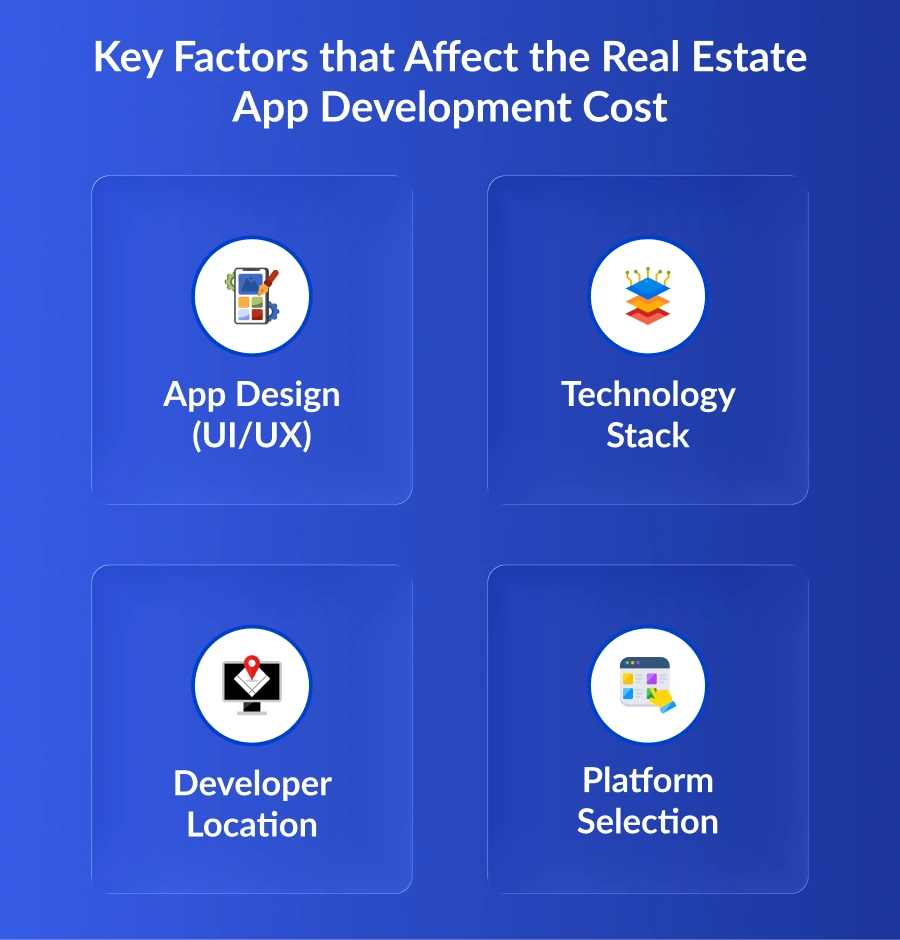
1. App Design (UI/UX)
The design of your app plays a big role in cost. A simple layout with basic screens costs less to create. Advanced UI with animations, custom layouts, and interactive elements increases the cost but improves user trust and engagement.
2. Technology Stack
The choice of technology affects how fast and secure your app will be. Basic tools and frameworks cost less and suit simple apps. Adding AI features in real estate apps, such as smart search or AI recommendations, increases cost but offers better performance and personalization.
3. Developer Location
Developer charges depend on where your development team is located. Offshore teams usually offer lower prices with good technical skills. Onshore teams cost more but provide faster communication, local market knowledge, and quicker support.
4. Platform Selection
Monetization Strategies to Generate Revenue With Your Real Estate App
A real estate app can earn money in many smart ways. Choosing the right monetization strategy helps your app grow and generate steady income over time.
This table illustrates how a real estate app can help owners generate revenue through multiple monetization models, even with a modest user base of 1,000, turning users, listings, and transactions into consistent monthly and annual income.
| Monetization Model | Target Users / Agents | Avg. Users Paying / Month | Pricing / Month (USD) | MRR (USD) | ARR (USD) |
|---|---|---|---|---|---|
| Subscription Plans | 1,000 Users | 200 Premium Users | $12 | $2,400 | $28,800 |
| In-App Advertising | 1,000 Active Users | All Active Users | $0.50 per user/month | $500 | $6,000 |
| Commission on Sales | 50 Transactions/year | Avg. $200,000 Property | 1.5% per transaction | $12,500 | $150,000 |
| Featured Listings | 50 Agents | 10 Featured Listings | $100 per Listing | $1,000 | $12,000 |
| White-Label Licensing | 2 Agencies | N/A | $5,000 per Year | $833 | $10,000 |
1. Subscription Plans
In this model, users pay a monthly or yearly fee to access premium features. These features may include advanced filters, detailed property insights, or unlimited listings. Subscription plans provide regular and predictable income, which helps businesses plan long-term growth easily.
2. In-App Advertising
In-app ads allow you to show promotions related to real estate, home loans, interior services, or moving companies. These ads appear while users browse properties. You earn money when users view or click on these ads, making this a good option for apps with high user traffic.
3. Commission Model
With the commission model, you charge a small percentage for every successful property sale or rental completed through the app. This strategy works very well because real estate deals usually involve high value, leading to higher earnings per transaction.
4. Featured Listings
Property owners and agents can pay extra to highlight their listings at the top of search results. This gives their properties more visibility and faster responses. At the same time, this model creates a steady income source for app owners without affecting user experience.
5. White-Label Solutions
In this model, you offer your real estate app to agencies so they can use it under their own brand name. You earn money through setup fees, licensing charges, or ongoing maintenance costs, making it a strong long-term revenue option.
How to Choose the Right Real Estate App Development Partner?
Choosing the right partner is very important if you want to develop a real estate app in 2026. The success of your app depends not only on the idea but also on the team that builds it.
A reliable mobile app development company should have strong experience in real estate projects, skilled developers, and a clear development process. They should understand your business goals, suggest the right features, and communicate regularly during the project. Transparency in cost, timeline, and progress is also very important.
Developer Bazaar Technologies is a trusted real estate app development company that helps businesses build secure, scalable, and user-friendly real estate apps. Their team uses modern technology and smart AI recommendation systems to improve user experience and increase property conversions. They also provide end-to-end support, from planning and design to launch and post-release maintenance for the long-term success of your app.
Conclusion
In 2026, mobile technology is reshaping the real estate industry faster than ever. People now expect to search, compare, and finalize properties directly from their smartphones. This makes it the perfect time to develop a real estate app that offers speed, comfort, and trust to users.
From understanding market needs to choosing the right features, technology, and monetization model, every step plays an important role in success. A well-planned app with smart AI features in real estate apps, smooth design, and strong performance can attract more users and generate steady revenue. Whether you want to build a real estate app for buyers, sellers, or agents, the right approach ensures long-term growth.
Partnering with an experienced mobile app development company like Developer Bazaar Technologies helps you turn your idea into a secure, scalable, and user-friendly solution. With expert guidance and modern development practices, you can confidently create a real estate app that stands out in today’s competitive market.
FAQs
1. How can a real estate app attract more users?
A: Offering features like AI recommendations, AR/VR virtual tours, interactive maps, and real-time notifications increases engagement. Regular updates and smooth user experience also help retain users.
2. What AI features can be added to a real estate app?
A: AI features in real estate apps include smart search, personalized property suggestions, and price predictions. AI recommendation systems help users find properties faster based on their interests and behavior.
3. Why should I hire a real estate app development company?
A: A professional real estate app development company ensures quality, security, and smooth performance. They handle everything from planning and design to launch and long-term support, saving time and cost.
4. How long does it take to build a real estate app?
A: The time to build a real estate app depends on its complexity and features. A basic app can take 2 – 3 months, while an advanced app with AI, AR/VR tours, and analytics may take 5 – 8 months.
5. Can I integrate payment options in a real estate app?
A: Yes, you can integrate payment gateways to handle rent, booking fees, or premium subscriptions. This makes transactions secure and convenient for users directly within the app.

RM Mishra
Co-Founder
Developer Bazaar technologies