

Key Takeaways:
- Telemedicine is becoming a long-term healthcare solution, creating strong opportunities for startups, hospitals, and healthcare providers investing in digital health platforms.
- Development costs vary based on features and complexity, with AI, EHR integration, and remote monitoring contributing significantly to the final budget.
- Choosing the right development approach matters as much as the feature set, as experienced development partners can reduce long-term maintenance and compliance risks.
- Security, scalability, and regulatory compliance should be planned from day one to avoid expensive redesigns after launch.
- A phased development strategy, starting with an MVP and expanding based on user feedback, helps reduce investment risk while speeding up market entry.
Overview of a Telemedicine App
A telemedicine app is a digital platform allowing patients and doctors to communicate digitally. These telemedicine platforms provide a variety of capabilities.
Patients get virtual consultations, appointment scheduling, e-prescription management, and simple access to medical records, bridging the gap between patients and doctors.
The primary goal of telemedicine app development is to offer affordable, efficient, and accessible healthcare services, particularly to people in disadvantaged areas.
Telemedicine Market Overview
Telemedicine was introduced during the pandemic, and now it has become an essential part of modern healthcare. According to Fortune Business Insights, the global telemedicine market is expected to grow from $123.39 billion in 2026 to $441.35 billion by 2034, at a 17.27% CAGR.
North America currently accounts for nearly 48% of the global market, while the Asia-Pacific region, including India, is growing rapidly due to increasing smartphone use and government initiatives promoting digital healthcare.
For businesses, this growth shows that investing in a custom telemedicine app is a long-term opportunity. Features like online doctor consultations, remote patient monitoring, and AI-powered symptom assessment are becoming standard expectations rather than optional add-ons.
How Much Does the Telemedicine App Development Cost?
Telemedicine App development Cost depends on multiple factors and the complexity of features you choose to implement.
It is estimated that building a custom telemedicine app can cost $20000 to $80000. It varies by the features integrated into the app, UI/UX design, app prototyping, app platform, etc. In short, it may cost as per the complexity the more complex your app is, the more it will cost.
Telemedicine App Development Cost by Complexity
Telemedicine App development Cost depends on multiple factors and the complexity of features you choose to implement.
| App Tier | Est. Cost (USD) | Timeline | What’s Included |
|---|---|---|---|
| Basic (MVP) | $18,000 – $35,000 | 2 – 3 months | Video/audio consults, appointment booking, patient profiles, basic chat |
| Mid-Complexity | $35,000 – $70,000 | 4 – 6 months | MVP features + EHR integration, e-prescriptions, payment gateway, doctor catalog |
| Advanced/Enterprise | $70,000 – $150,000+ | 7 – 12 months | All above + AI symptom checker, IoT/wearable integration, multi-platform, advanced analytics, HIPAA/GDPR compliance suite |
Telemedicine App Cost by Feature
If you’re building a custom app, understanding individual feature costs makes budget planning easier.
| Feature | Est. Cost Range (USD) |
|---|---|
| Patient registration & profile | $1,500 – $3,000 |
| Video/audio consultation (SDK integration) | $5,000 – $12,000 |
| Appointment scheduling + reminders | $2,000 – $5,000 |
| EHR/EMR integration | $8,000 – $20,000 |
| E-prescription module | $3,000 – $7,000 |
| Payment gateway integration | $2,000 – $4,500 |
| AI chatbot / symptom triage | $10,000 – $25,000 |
| Wearable/IoT data sync | $6,000 – $15,000 |
Cost by Development Team Type
The cost of building a telemedicine app also depends on who develops it. Below are the typical 2026 rates for building a mid-complexity telemedicine app.
| Team Type | Typical Cost Range | Best For |
|---|---|---|
| In-house team (U.S./Western Europe) | $150,000 – $250,000+ | Large enterprises with ongoing product roadmaps |
| Outsourced agency (U.S./EU-based) | $80,000 – $130,000 | Mid-size companies wanting local project management |
| Outsourced agency (India/offshore) | $25,000 – $60,000 | Startups and SMBs balancing quality with budget |
| Freelancer or small team | $18,000 – $40,000 | MVPs and early-stage validation |
What Affects Telemedicine App Development Cost
Here are some major factors that can affect the cost of your telehealth app development. These major elements will guide you to make better decision makings while ignoring the risk.
- Features: The more advanced features you add, the higher the development cost. Features like AI symptom checking, EHR integration, and IoT device connectivity can increase the budget by $5,000 – $25,000 each.
- UI/UX Design: Investing in a custom, user-friendly design costs more initially but improves the user experience and can reduce support and training costs over time.
- Platform Choice: Building an app for only iOS or Android is more affordable than developing and maintaining apps for both platforms.
- Security & Compliance: Meeting regulations such as HIPAA, GDPR, and India’s DPDP Act requires extra security measures, encryption, and audit logs. This typically adds 10–15% to the total development cost.
- Development Team: Costs also depend on who builds your app. Freelancers and offshore teams usually charge less, while experienced agencies often cost more but provide better project management, testing, and long-term support.

How to Make a Telemedicine App: Step-by-Step Guide
The development of a telemedicine app requires a well-organized process to deliver efficient, secure, and user-friendly telehealth software.
This guide provides a step-by-step approach to telemedicine app development while highlighting essential considerations and features.
Step 1: Solution Design Stage
To start with the project by collaborating with an experienced healthcare app development company who can help you shape a custom telemedicine app that is customized with your needs.
- Define Objectives: Determine what your telemedicine software aims to achieve, such as offering virtual consultations or enabling remote health monitoring.
- Outline Scope: Identify the functionalities, integrations, and user experience goals essential for success.
- Highlight Key Features: Include video conferencing, appointment scheduling, EHR integration, and secure user authentication.
Step 2: Discovery Phase
During this stage, Partner with your technical expert to finalize the project details and prepare a clear roadmap for telemedicine app development.
This phase is crucial for controlling telemedicine software costs.
- Create Design Concepts and UX Maps: Develop intuitive designs that enhance usability for patients and healthcare providers.
- Prepare a Feature Breakdown List (FBL): Define all necessary features to make sure for smooth operation.
- Budget and Timeline Planning: Create accurate cost and time estimates to keep telehealth app development on track.
- Select Third-Party APIs: Boost your app’s functionality by choosing the right APIs:
- VSee SDK: Secure, HIPAA-compliant video calls.
- Vidyo: High-quality video with text chat capabilities.
- Twilio: Versatile API offering SMS, voice, chat, and more.
Step 3: Focus on UI/UX Design
Design a key component of successful telemedicine platforms. Prioritize simplicity and functionality to develop a user-friendly interface.
- Efficient Navigation: Make it easy for users to find and access essential features.
- Optimized Consultations: Ensure video and chat features are seamless and reliable.
Step 4: Development Phase
Translate the design and planning into a working telemedicine app. Choose between an MVP (Minimum Viable Product) or a full-featured application based on your goals and budget.
- Initiate quickly with core features to test the market and gather feedback.
- Build an all-inclusive solution with advanced features for long-term impact.
Step 5: Quality Assurance and Testing
Testing is essential to make sure your telehealth software performs flawlessly under real-world conditions.
- Conduct Peer Code Reviews: Validate the quality and functionality of the code.
- Run Unit Tests Across Devices: Guarantee compatibility with various operating systems and devices.
- Perform Scalability Testing: Ensure the app can handle increased user demand efficiently.
Step 6: Deployment and Ongoing Maintenance
Launch the telemedicine app on app stores and continuously update it to meet user needs and regulatory standards.
- Smooth Deployment: A fair launch on servers and platforms.
- Regular Updates: Keep the app compliant with HIPAA and platform changes while adding new features.
Step 7: Marketing and Expansion
Promote your telehealth software to attract users and grow your audience. Highlight the unique features and benefits of your telemedicine platforms.
Key Features of a Telemedicine App Development
Telemedicine apps have become essential in modern healthcare, offering patients and healthcare providers convenient and efficient solutions for managing medical consultations, records, and treatments.
Here are the key features essential for developing a telemedicine app:
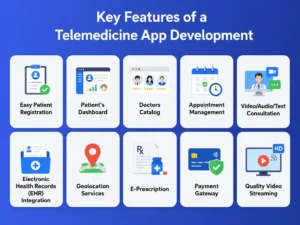
1. Easy Patient Registration
A seamless and secure registration process encourages user adoption. Apps should require minimal information while allowing users to upload additional documents, such as medical records or prescriptions, for convenience.
2. Patient’s Dashboard
An intuitive patient dashboard provides physicians with a comprehensive overview of the patient’s medical history, current condition, and personal information. This feature facilitates efficient diagnosis, treatment planning, and patient management.
3. Doctors Catalog
A well-organized doctors’ catalog helps match patients with suitable healthcare providers. It includes essential details about each doctor, such as their qualifications, specialties, experience, availability, and reviews.
4. Appointment Management
Integrated with calendar and notification features, appointment management simplifies scheduling for both patients and doctors. Patients receive reminders, while doctors can view, confirm, or cancel appointments as needed.
5. Video/Audio/Text Consultation
Telemedicine apps must support various consultation modes-video, audio, and text. These features ensure accessible, secure communication channels compliant with HIPAA regulations, offering convenience for both patients and doctors.
6. Electronic Health Records (EHR) Integration
EHR integration centralizes patient data, including medical history, test results, and prescriptions. This feature streamlines record-keeping, enhances data security, and supports efficient telehealth billing and early diagnosis.
7. Geolocation Services
Geolocation features help ensure compliance with local medical laws and improve accessibility. Patients can find nearby pharmacies, hospitals, and emergency services, along with directions and estimated travel times.
8. E-Prescription
E-prescription functionality improves efficiency by allowing physicians to deliver prescriptions directly to pharmacies. It minimizes errors, speeds up medicine distributing, and assures compliance with HIPAA and other regulations.
9. Payment Gateway
Secure and user-friendly payment gateways enable patients to pay bills conveniently through multiple methods. They also support automated invoicing, record-keeping, and adherence to payment security standards.
10. Quality Video Streaming
High-quality video streaming is critical for effective remote consultations. Telemedicine apps must ensure smooth, device-agnostic video performance to maintain a positive user experience and support accurate diagnosis.
By combining these features, telemedicine apps may significantly boost patient satisfaction, simplify healthcare processes, and maintain regulatory compliance.
Monetization Strategies of TeleHealth App
Monetizing your telemedicine app is an essential step for its financial success while offering value to the users.
Below, we are exploring the proven strategies that make your custom telemedicine app a revenue-generating powerhouse.
1. Freemium Model
Attract users by offering essential features for free while charging for advanced tools like detailed health analytics or priority scheduling. This approach lowers entry barriers and encourages upgrades.
2. Subscription Plans
Generate consistent revenue with monthly or annual subscriptions. Offer premium features such as unlimited consultations, advanced diagnostics, or priority access to specialists.
For Example: Many telemedicine platforms successfully implement this model to build sustainable revenue streams.
3. Fee-Per-Transaction
Charge users per interaction, such as consultations or prescription services. A tiered pricing system can cater to varying levels of service needs.
For Instance, Teladoc exemplifies this model, turning each interaction into a revenue opportunity while catering to diverse user needs.
4. Advertising Revenue
Strategically place ads within the app to ensure they remain non-intrusive yet effective. Partnering with health brands, earning commissions for sales made through the app. Advertising can become a significant secondary revenue stream as your app grows.
5. Licensing
Expand your reach by allowing other entities to use your telehealth software. Licensing opportunities can take your telemedicine app development to international markets, tailored to meet local regulations.
For example, licensing allows you to monetize your technology without directly managing all operational aspects.
To make your telemedicine software cost sustainable and gain profitability, adopting one or more of these strategies is essential for the long-term success in the competitive market of telemedicine platforms.
Current Trends in Telemedicine App Development
Telemedicine app development implemented advanced technologies to address digital healthcare requirements.
Here are the key trends that changing the healthcare sector:
1. VR/AR/MR Technology
- Virtual Reality (VR): Used in pain management and psychological therapy to provide immersive and interactive environments.
- Augmented Reality (AR): Assists surgeons with real-time overlays of medical data during procedures.
- Mixed Reality (MR): Combines VR and AR for detailed medical training and patient education using 3D models.
2. Machine Learning (ML)
- ML algorithms assist in analyzing patient data to identify early signs of diseases.
- Predictive analytics helps in creating personalized care plans and managing chronic conditions.
3. Big Data Analytics
- Helps clinicians make data-driven decisions using patient records, wearables, and other digital sources.
- Supports disease monitoring, prevention strategies, and improved care coordination.
4. AI and IoT Integration
- AI-powered tools, such as chatbots, streamline initial consultations and guide patients to appropriate care.
- IoT devices like wearables enable real-time health monitoring and proactive management of health issues.
These trends highlight the ongoing evolution of telemedicine, ensuring healthcare services remain accessible and efficient for diverse patient needs.
Popular Telemedicine App in 2026
In 2026, several telemedicine apps are expected to dominate the healthcare landscape, offering a seamless blend of technology and patient care:
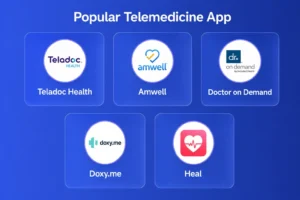
1. Teladoc Health
Teladoc Health is a leading telemedicine platform offering virtual consultations with doctors for various health needs. It also provides mental health support and integrated wellness services for a holistic approach to healthcare.
2. Amwell
Amwell connects patients with a broad network of healthcare professionals through video, chat, and phone consultations. The platform offers a wide range of medical services, from urgent care to specialty consultations.
3. Doctor on Demand
Doctor on Demand provides diverse healthcare services, including mental health counseling, urgent care, and pediatric consultations. It allows patients to easily access medical support through video calls, ensuring convenience and accessibility.
4. Doxy.me
Doxy.me is a user-friendly telemedicine app that enables secure and simple video consultations between patients and healthcare providers. It’s popular among doctors for its ease of use and compliance with privacy regulations.
5. Heal
Heal focuses on delivering personalized healthcare by offering both in-home doctor visits and virtual consultations. It aims to make healthcare more accessible and tailored to the specific needs of each patient.
These apps reflect the growing shift toward accessible, remote healthcare services, tailored for various needs.
Conclusion
Telemedicine app development cost in India depend on various factors like features, complexity, and platform. To create a successful app, it’s essential to focus on advanced technology, security, and user experience.
By partnering with a skilled Telemedicine app development company that specializes in telehealth solutions, you can ensure a seamless, compliant, and efficient app that meets the evolving demands of the healthcare industry.
Explore development options to bring your telemedicine app vision to life with advanced technology.
FAQs
1. Should I build a telemedicine app from scratch or customize an existing solution?
If your business has unique workflows, branding requirements, or specialized healthcare services, a custom-built app offers greater flexibility and scalability. White-label solutions are suitable for faster launches but often limit customization and future expansion.
2. What third-party services are commonly integrated into a telemedicine app?
Most telemedicine apps integrate services such as video conferencing APIs, payment gateways, cloud storage, SMS/email notifications, e-signature tools, pharmacy networks, and identity verification solutions to reduce development time.
3. How can a telemedicine app handle poor internet connectivity during consultations?
Modern telemedicine apps can automatically adjust video quality, switch to audio-only mode, reconnect sessions without data loss, or allow secure messaging when network conditions are unstable.
4. What ongoing costs should businesses expect after launching a telemedicine app?
Beyond development, businesses should budget for cloud hosting, server monitoring, security updates, API subscriptions, app store maintenance, technical support, feature enhancements, and compliance audits.
5. Can a telemedicine app support multiple hospitals or clinics on the same platform?
Yes. A multi-tenant architecture allows multiple healthcare organizations to operate independently on the same platform while maintaining separate users, data, branding, and administrative controls.
6. How can analytics improve a telemedicine platform after launch?
Analytics help track appointment completion rates, patient retention, consultation duration, no-show rates, and feature usage. These insights help optimize operations and improve patient engagement over time.
7. What should businesses prioritize in the first version (MVP) of a telemedicine app?
A strong MVP should focus on secure patient registration, appointment scheduling, video consultations, basic medical records, payments, and notifications. More advanced capabilities like AI diagnostics, wearable integration, and predictive analytics can be added in later releases.