


Key Takeaway
- Logistics Automation helps companies move goods faster, reduce errors and lower operational costs across storage, shipping and delivery.
- Automation in logistics uses tools like AI, RPA, cloud systems and robots to handle tasks automatically and improve accuracy.
- Businesses can reduce operational expenses by up to 20% and cut labor costs by 30 - 40% through smart logistics process automation.
- Faster freight processing, real-time tracking and better data accuracy are major benefits of logistics automation.
- Modern tools like AI route optimization, IoT sensors, blockchain and AGVs are key logistics technology trends in 2026.
- The right logistics automation process helps companies scale operations without hiring large teams or increasing costs.
- Partnering with a logistics software development company can reduce setup time and help businesses develop logistics software that fits their needs.
- Outsourcing and AI-driven solutions support strong logistics automation in cost reduction and improve overall efficiency.
- With proper planning and the right tools, businesses can control logistics automation costs and see long-term savings.
- Companies that adopt artificial intelligence in logistics and automation today will stay competitive and grow faster in the future.
Logistics is the system that moves goods from one place to another. It includes storage, packing, shipping and delivery. Today, many companies use logistics automation to make this work faster and cheaper. Automation uses software, robots and smart tools to handle tasks that people used to do by hand.
In this blog, you will learn how automation in logistics helps businesses save money, reduce errors and improve speed. You will also see the top logistics technology trends and tools that are cutting costs in 2026.
What is Automation in Logistics?
Automation in logistics means using technology to complete logistics tasks automatically without much human effort. It helps companies manage work like data entry, order tracking, warehouse handling and shipping updates in a faster and smarter way.
For example, robots can move boxes inside warehouses, software can read freight invoices and enter data into systems and AI tools can plan the best delivery routes. This complete setup is known as the logistics automation process and it helps reduce manual work while improving speed and accuracy.
Automation in logistics uses many tools that work together to create logistics process automation, such as:
- Warehouse robots that move and sort goods
- Cloud software for real-time tracking and storage
- AI tools for planning and decision-making
- Robotic Process Automation (RPA) for repetitive office tasks
- Smart tracking systems for shipments and inventory
All these technologies help logistics companies work more efficiently and reduce errors and costs.
How Automation Technology Is Transforming Logistics and Supply Chain Management
The impact of Artificial intelligence in logistics and automation is huge. Companies that use automation see better speed, accuracy and cost savings.
According to McKinsey, businesses that use logistics automation can reduce operational costs by up to 20%. They also improve delivery times and order accuracy.
Automation helps supply chains in many ways:
- Real-time tracking
- Faster order processing
- Better planning
- Less waste
- Lower labor costs
Because of these benefits, many companies now invest in logistics software development and smart tools.
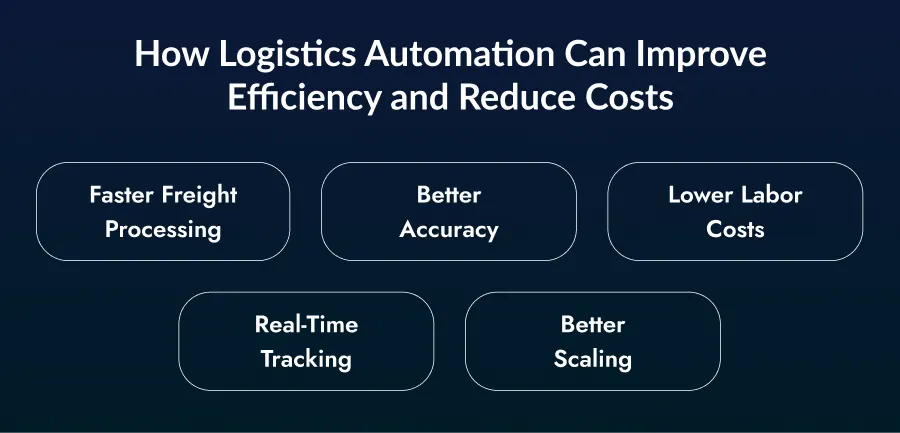
How Logistics Automation Can Improve Efficiency and Reduce Costs
Logistics Automation helps companies move goods faster and at a lower cost. It uses smart tools like AI, cloud systems and Robotic Process Automation to handle tasks automatically. This improves speed, reduces mistakes and saves money.
Many businesses now use the logistics automation process to increase efficiency and control expenses. Below are the main ways logistics automation in cost reduction works.
1. Faster Freight Processing
One of the biggest benefits of automation in logistics is faster freight processing. Automation tools can quickly read invoices, shipping papers and freight documents. They enter data into systems without manual typing. This reduces processing time by up to 50%. Faster processing means orders move quickly, shipments are not delayed and companies spend less on staff. Over time, this helps lower the overall Logistics Automation cost.
2. Better Accuracy
Manual data entry often leads to mistakes. Even small errors in shipment data or billing can cause delays and extra costs. The logistics process automation removes these errors by using software that captures and checks data automatically. Accurate data allows smooth deliveries, correct billing and fewer losses. This improves customer satisfaction and helps businesses avoid costly problems.
3. Lower Labor Costs
Robotic Process Automation (RPA) is a key part of Logistics Automation. It handles repetitive tasks like entering shipment details, updating order status and processing invoices. Since machines can do this work, companies do not need large teams for manual tasks. Businesses can reduce labor costs by 30 – 40%. This makes the Logistics Automation cost much lower in the long run and improves overall efficiency.
4. Real-Time Tracking
Cloud platforms and AI tools provide live tracking of shipments and inventory. Managers can tract there goods location. This visibility helps them fix problems quickly, avoid delays and make better decisions. Real-time tracking also reduces losses and improves delivery planning. With automation in logistics, companies can manage operations smoothly and save money.
5. Better Scaling
As businesses grow, order volume increases. Without automation, companies must hire more staff and spend more money. The logistics automation process allows companies to handle more orders without adding many new workers. Automated systems can manage large volumes of data and shipments easily. This helps businesses scale operations while keeping costs under control.
These points clearly show the benefits of logistics automation. By using modern tools and smart systems, companies can improve efficiency, reduce errors and achieve strong logistics automation for cost reduction for long-term success.
Why Logistics Outsourcing is the Best Strategy for Logistics Automation?
Many companies want to adopt logistics automation, but building systems in-house can be expensive and slow. That is why businesses choose logistics outsourcing. Instead of doing everything themselves, they work with experts or a logistics software development company.
These partners already have the tools and experience to start the logistics automation process quickly and at a lower cost. Outsourcing helps companies use automation in logistics without large investments and improves efficiency from day one.
A trusted outsourcing partner can support logistics process automation by offering:
- Custom automation tools for business needs
- Data processing and document management
- AI-powered and cloud-based services
- Lower setup and operational costs
This approach reduces the overall logistics automation cost and allows companies to see faster results. It also helps them gain the full benefits of logistics automation while focusing on core operations.
Example: AI-Driven Logistics Automation
Providers like ARDEM use AI outsourcing and robotic process automation to handle logistics tasks. Their services support logistics automation in cost reduction and improve accuracy.
They offer:
- Automated data capture from invoices and shipping documents
- Real-time processing and tracking
- Custom workflows
- Up to 99.9% accuracy
This type of outsourcing reduces errors, saves money and helps businesses scale with smart logistics automation.
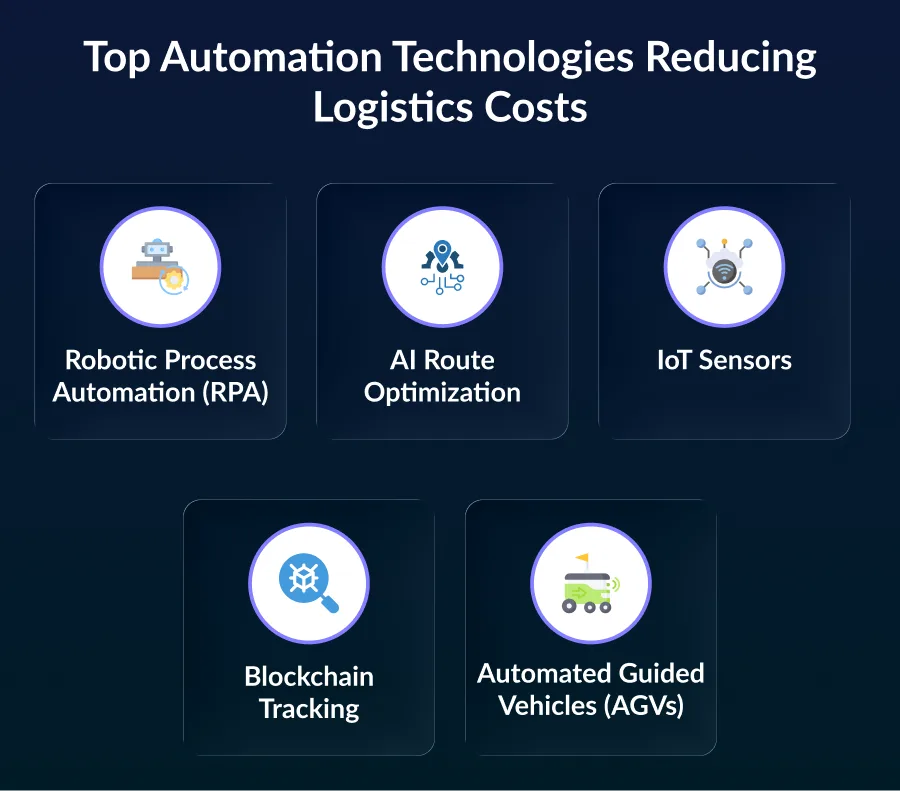
Top Automation Technologies Reducing Logistics Costs 2026
Below are the top tools helping businesses reduce costs in 2026. These solutions are major logistics technology trends and play a big role in Logistics Automation and cost savings.
1. Robotic Process Automation (RPA)
Robotic Process Automation handles repetitive office tasks like data entry, invoice processing and order updates. It reduces manual work by up to 50%, which lowers labor costs and improves speed. RPA is a key part of the modern logistics automation process.
2. AI Route Optimization
AI route optimization uses real-time data to find the best delivery routes. It helps save 20 – 30% on fuel and reduces delivery time. This improves efficiency and supports strong logistics automation in cost reduction for transport operations.
3. IoT Sensors
IoT sensors track vehicles, goods and warehouse machines in real time. They also help predict repairs before breakdowns happen. This reduces downtime by around 25% and improves overall performance in automation in logistics.
4. Blockchain Tracking
Blockchain technology improves shipment tracking and document security. It speeds up customs clearance and reduces delays at borders. This helps companies avoid extra storage and demurrage fees, lowering the total logistics automation cost.
5. Automated Guided Vehicles (AGVs)
Automated Guided Vehicles are warehouse robots that move goods without human help. They improve warehouse speed and accuracy and can boost throughput by up to 150%. AGVs are an important part of logistics process automation and modern warehouse management.
Step-by-Step Guide: Implement Logistics Automation 2026
Starting logistics automation may sound hard, but companies can do it step by step. A clear plan helps reduce risk and control the automation cost.
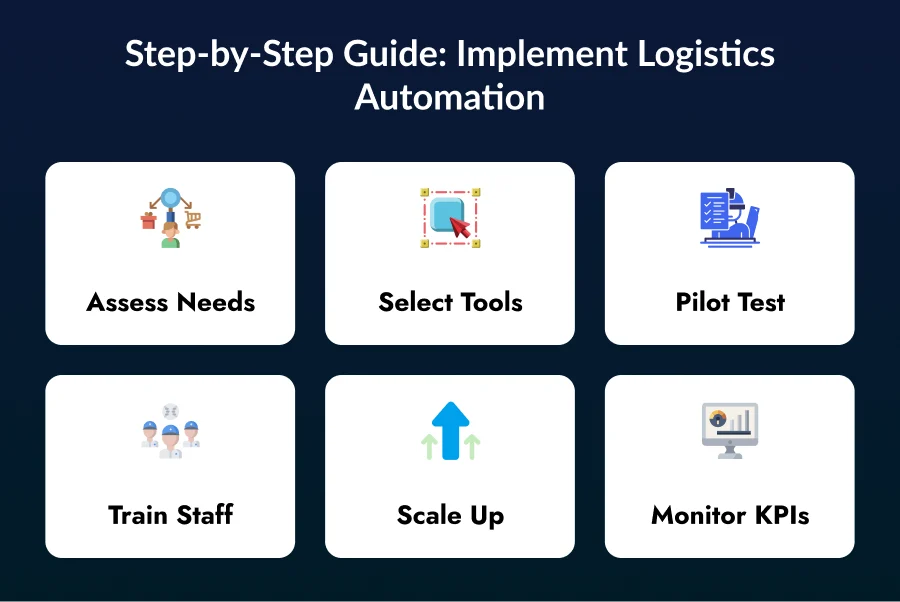
1. Assess Needs
First, check your current logistics operations. Find slow tasks, errors and extra costs. This helps you understand where automation in logistics can bring the most value and support logistics automation in cost reduction.
2. Select Tools
Choose the right tools like AI software, cloud systems and RPA. A good logistics software development company can help you select and develop logistics software that fits your business needs and can grow later.
3. Pilot Test
Start with a small test project. Automate one process, such as invoice entry or route planning. This helps you measure results and improve the logistics automation process before using it everywhere.
4. Train Staff
Teach your team how to use automation tools. Workers move from manual tasks to monitoring and managing systems. This helps them work better with artificial intelligence in logistics.
5. Scale Up
After testing, expand automation across warehouses, transport and tracking. This creates full logistics process automation across the supply chain.
6. Monitor KPIs
Track results like cost savings, speed and accuracy. Monitoring helps you see the real benefits of logistics automation and improve the system over time.
Overcoming Challenges in Logistics Automation 2026
Some companies worry about cost, integration, or security when starting Logistics Automation. But these problems have simple solutions.
- High Setup Costs: Cloud platforms and outsourcing reduce upfront spending. Companies can start small and grow slowly, keeping the logistics automation cost under control.
- System Integration: Old systems may not connect easily. API tools help connect old and new systems, making the logistics automation process smooth.
- Cybersecurity Risks: Use AI-based security tools to protect data and shipments. Safe systems build trust in automation in logistics.
- Regulations and Compliance: Automated systems help follow digital trade and shipping rules. This reduces errors and avoids penalties.
With proper planning, businesses can enjoy the full benefits of logistics automation without major problems.
How Developer Bazaar Technologies is Leading in Logistics Outsourcing with AI-Driven Logistics Automation?
Developer Bazaar Technologies is helping businesses adopt logistics automation through smart outsourcing and AI solutions. They support companies that want to automate without heavy investment. Their team helps design and manage the full logistics automation process.
They offer services such as:
- Custom tools to develop logistics software
- AI and RPA for faster data processing
- Real-time shipment tracking systems
- Cloud-based automation solutions
As a trusted software development company, they use Artificial intelligence in logistics to reduce manual work and errors. Their solutions improve speed, accuracy and visibility across the supply chain. This helps businesses achieve strong logistics automation in cost reduction and better efficiency.
FAQs
1. What is the average ROI for Logistics Automation?
Most companies see 250% return within two years. They save money through faster work and fewer errors.
2. How much can AI reduce fuel costs in transportation?
AI route planning can save about 15 -20% on fuel. It chooses the best routes and avoids traffic delays.
3. Is warehouse automation good for small businesses?
Yes. Small logistics firms can start with simple tools and robots. Many see returns within 12 – 18 months.
4. What role does blockchain play in cost reduction?
Blockchain automates documents and tracking. It can cut processing costs by 30% and reduce errors by 95%.
5. How does automation improve supply chain visibility?
IoT and real-time tracking provide accurate shipment updates. Managers can see goods at every step.
6. Will automation remove logistics jobs?
No. It changes jobs. Workers move to higher-skill roles like monitoring systems and data analysis.
7. What are the top Logistics technology trends in 2026?
Key trends include AI routing, smart warehouses, drone delivery and sustainable automation.
8. How can companies start automation on a budget?
Start with cloud RPA tools and small projects. This reduces the costs and shows quick results.
9. Does automation help with compliance?
Yes. Automated systems follow digital trade rules and reduce manual errors, making compliance easier.

RM Mishra
Co-Founder
Developer Bazaar technologies