

Artificial Intelligence (AI) is a crucial technology across industries. From customer support to content creation, AI tools help organizations work faster and smarter. However, as adoption increases, so do expenses. Many companies struggle to reduce AP API costs, especially when using multiple models and APIs.
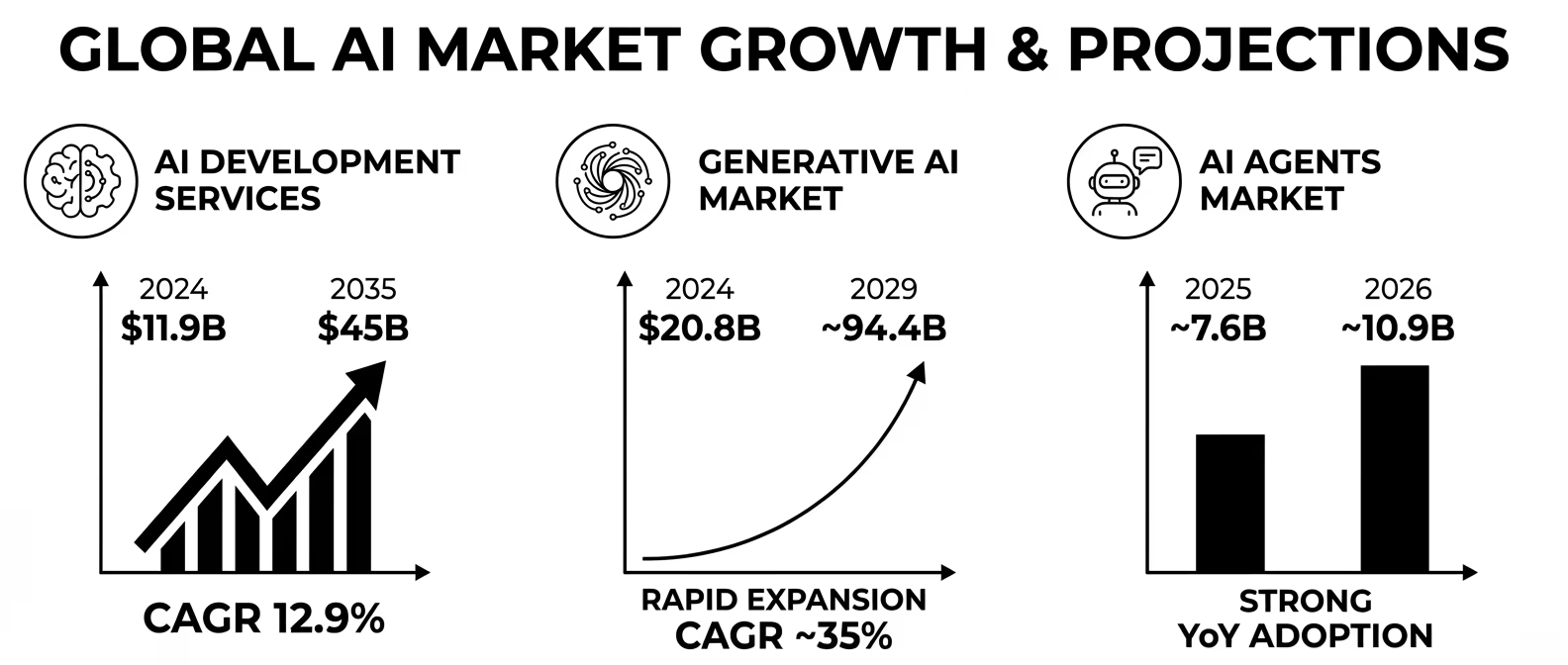
Global AI spending is set to surge between 2024 and 2027, with AI infrastructure leading the market at nearly $1.4 trillion in 2026. Significant investments are also expected in AI services and AI software, highlighting the rapid growth of the AI economy.
The good news is that businesses can significantly reduce AI API cost by up to 80% without sacrificing quality. With the right strategies, such as optimizing token usage, choosing the right models, and implementing cost-efficient practices, organizations can achieve maximum value from their AI investments.
This blog explores the key drivers of high AI costs and provides actionable insights into techniques for reducing AI API costs.
Understanding AI API Costs
Before learning how to reduce AI API cost, it is important to understand how these costs work. As traditional software that charges a fixed monthly fee, AI APIs follow a pay-as-you-use model.
This means you pay based on how much you use the AI service.
What Are AI APIs?
AI APIs allow developers and businesses to access artificial intelligence models for tasks such as:
- Writing and editing content
- Answering customer queries
- Translating languages
- Analyzing data
- Generating code
- Automating workflows
Popular AI providers include OpenAI, Anthropic, Claude and Google.
What Are Tokens?
AI models process text in small units called tokens.
- 1 token = 4 characters
- 1 token = ¾ of a word
- You are charged for both input and output tokens.
For example:
- Your question is counted as an input token.
- The AI response is counted as output tokens.
Understanding tokens is essential to reducing AI token cost and managing expenses effectively.
Key Factors That Influence AI Costs
| Factor | Description |
| Token Usage | More text means higher costs. |
| Model Selection | Advanced models cost more. |
| Request Frequency | Frequent API calls increase expenses. |
| Response Length | Longer responses consume more tokens. |
| Context Size | Larger context windows increase costs. |
By understanding these elements, businesses can implement effective AI cost optimization and reduce LLM API cost efficiently.
Why AI API Costs Are Skyrocketing?
AI API costs are high, they grow with usage. As you rely more on AI, your expenses increase automatically. This is why many businesses struggle to control their budgets.
Why This Becomes Expensive
- Pay Per Use: Every prompt and response costs money.
- Long Conversations: More text means more tokens and higher charges.
- Accumulating Context: AI remembers previous messages, increasing costs over time.
- Premium Model Pricing: Advanced models charge higher rates for better performance.
The Subscription Multiplication Problem
If you rely on AI for serious work, you are likely using multiple tools. Each model excels in different areas, which leads to multiple subscriptions.
Popular AI Platforms and Their Strengths
| Platform | Best For |
| ChatGPT | Creative writing and conversations |
| Claude | Long-form analysis and coding |
| Gemini | Research and multimodal tasks |
| Perplexity | Web-based search and insights |
| Grok | Social media and real-time perspectives |
The Cost Breakdown
| Tool | Monthly Cost |
| ChatGPT Plus | $20 |
| Claude Pro | $20 |
| Gemini Advanced | $20 |
| Perplexity Pro | $20 |
| Grok Premium | $30 |
Total: $110 per month or $1,320 per year
The real issue? Most users utilize only 20 – 40% of each subscription. This leads to wasted spending while businesses still pay additional API charges.
This is why adopting strategies to reduce OpenAI API cost has become essential for modern organizations.
The Hidden Cost Multipliers
Beyond visible expenses, several hidden factors quietly increase AI spending. These inefficiencies often go unnoticed but can inflate costs by 40- 70%, according to industry analyses. Identifying and fixing them is essential for effective AI cost optimization and long-term savings.
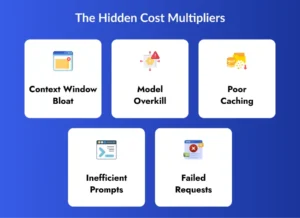
1. Context Window Bloat
Sending the entire conversation history with every request increases token usage unnecessarily. This leads to higher charges, even when only a small portion of the context is required.
Solution: Send only relevant information or summaries to reduce LLM API cost.
2. Model Overkill
Using powerful and expensive models for simple tasks wastes money and computing resources. Not every task requires advanced AI capabilities.
Example: Using GPT-4 for basic text classification when a smaller and cheaper model can perform the same task efficiently.
Solution: Choose the right model for each task to reduce GPT API cost and efficient AI API cost.
3. Poor Caching
Repeated queries without storing previous responses result in unnecessary and duplicate API calls. This increases both processing time and expenses.
Solution: Cache frequently used answers to avoid redundant requests and improve AI cost optimization while reducing overall API usage.
4. Inefficient Prompts
Using lengthy or overly polite prompts adds unnecessary tokens, increasing the cost of each request. Even small inefficiencies can lead to significant expenses at scale.
Example:
- Inefficient: “Could you please kindly explain…”
- Efficient: “Explain…”
Solution: Write clear and concise prompts to optimize AI API usage.
5. Failed Requests
Errors, timeouts, and repeated retries still consume tokens and incur charges. These hidden costs accumulate over time and impact your overall budget.
Solution: Implement proper error handling, logging, and monitoring systems to reduce OpenAI API cost and better performance.
Multi-Model AI Platforms: The Game-Changing Solution
As businesses continue to adopt artificial intelligence, managing multiple tools and subscriptions becomes expensive and complicated. Multi Model provides a smarter, more efficient way to reduce cost.
What Is a Multi-Model AI Platform?
A multi-model AI platform is a unified system that provides access to multiple large language models (LLMs) from different providers through a single dashboard. Instead of managing separate accounts for OpenAI, Anthropic, and Google, users can access all models in one place.
Think of it as Netflix for AI, one subscription gives you access to a wide range of premium AI tools at a fraction of the cost.
In What Ways Do Multi-Model Platforms Help in Reducing AI API Costs
Multi-model AI platforms help organizations optimize spending through smart technology, automation, and strategic resource allocation. Let’s explore the most effective AI API cost reduction techniques.
1. Subscription Consolidation
Managing multiple AI subscriptions can be expensive and inefficient. A multi-model platform combines them into a single, affordable solution.
| Approach | Monthly Cost |
| Multiple AI Subscriptions | $110/month |
| Multi-Model Platform | $9.90/month |
Savings: $100.10 per month or $1,201.20 annually.
This strategy alone can reduce costs by over 90% while maintaining access to premium tools.
2. Intelligent Model Selection
Not every task requires a powerful and expensive model. Multi-model platforms automatically select the most suitable and cost-efficient option.
| Use Case | Expensive Choice | Smart Choice | Savings |
| Simple Q&A | GPT-4o | GPT-3.5 Turbo | Up to 90% |
| Classification | Claude Opus | Claude Haiku | Up to 94% |
| Summarization | Gemini Pro | Gemini Flash | Up to 96% |
This approach helps organizations reduce GPT API cost, reduce LLM API cost without sacrificing quality.
3. Reduced Context Switching
Switching between multiple AI tools wastes time and increases token consumption due to repeated prompts and lost context.
Benefits of a Unified Platform:
- Eliminates redundant prompts.
- Maintains conversation continuity.
- Reduces unnecessary token usage.
4. Built-In Optimization Features
Leading platforms offer advanced tools designed for AI cost optimization.
- Conversation Caching: Reuses previous responses to avoid repeated costs.
- Smart Token Limiting: Controls usage and prevents overspending.
- Usage Analytics: Tracks and monitors AI expenses.
- Bulk Processing Discounts: Reduce costs for large workloads.
These features significantly optimize AI API usage and help organizations understand how to reduce AI token cost efficiently.
5. Support for AI Integrations and Development
Multi-model platforms simplify implementation through advanced services.
- AI Integration Services: Smooth integration into business workflows.
- LLM Development Services: Custom solutions tailored to enterprise needs.
- Token Optimization Services: Efficient prompt engineering and resource allocation.
- Optimizing Tokens for AI Agents: Provides intelligent automation at minimal cost.
These capabilities help reduce LLM development costs and enhance operational efficiency.

Real-World Success Stories: Reduce AI API Costs with Multi-Model Platforms
To truly understand the impact of multi-model AI platforms, it is important to look at real-life examples. These case studies demonstrate how individuals and businesses successfully reduce AI API cost without compromising quality.
Case Study 1: Freelance Content Creator
A freelance writer who uses AI tools for research, drafting, editing and fact-checking. While these tools improved her productivity, managing multiple subscriptions significantly increased her monthly expenses.
Before Using a Multi-Model Platform
- ChatGPT Plus – $20/month – She used ChatGPT for brainstorming ideas, drafting blog posts, and creating engaging content. It helped her work faster but added to her operational costs.
- Claude Pro – $20/month – She relied on Claude for in-depth research, long-form writing, and content refinement. Its analytical capabilities enhanced her work quality but required a separate subscription.
- Gemini Advanced – $20/month – Gemini was primarily used for fact-checking and gathering real-time information for accuracy in her articles.
- API Overages – $20/month – As her workload increased, she exceeded free limits and incurred additional API costs.
- Total Monthly Cost – $75 – $90 – Managing multiple tools became expensive and inefficient. Frequent switching between platforms also disrupted her workflow and consumed valuable time.
After Adopting a Multi-Model Platform
- Multi-Model Platform – $9.90/month – She gained access to multiple AI models through a single dashboard. This eliminated the need for separate subscriptions and streamlined her content creation process.
Results
- Monthly Savings – $65.10 (86% Reduction) – By consolidating tools, Sarah significantly reduced her expenses, achieving effective AI API cost reduction.
- Annual Savings – $781.20 – The savings allowed her to reinvest in marketing and professional development.
- Productivity Increase – 30% Faster Content Creation – With all tools in one place, she completed projects more efficiently and met tight deadlines with ease.
- Quality Improvement – Multi-Model Feedback Enhanced Accuracy – Access to multiple AI models enabled her to compare outputs, refine drafts, and produce high-quality content.
Case Study 2: TechStart Inc. – Software Startup
TechStart Inc. is a growing software startup that integrates AI into its products for automation, coding, and data analysis. However, rising AI expenses began to strain its budget.
Before Implementing a Multi-Model Platform
- Team Subscriptions – $550/month – Five developers each used multiple AI tools, resulting in high subscription costs and limited cost visibility.
- API Overages – $300/month – Heavy usage led to additional API charges, making expenses unpredictable and difficult to manage.
- Total Monthly Cost – $750 – $950 – The company struggled with uncontrolled spending and lacked clarity on which models delivered the best return on investment.
After Implementation
- Platform Subscription + Optimized API Usage – Approx $190/month – By adopting a multi-model AI platform, the company consolidated subscriptions and implemented intelligent model routing to optimize costs.
Results
- Monthly Savings – $560 – $760 – The company achieved significant savings by eliminating redundant subscriptions and optimizing token usage.
- Annual Savings – $6,720 – $9,120 – These savings were reinvested into product innovation and business expansion.
- Cost Reduction – 73 – 80% – The organization successfully reduced AI API cost without sacrificing performance.
- Performance Maintained – 94% User Satisfaction – Despite the cost reduction, the quality and reliability of AI-powered features remained consistent.
This example demonstrates how businesses can reduce OpenAI API cost, reduce LLM API cost, and achieve effective LLM cost optimization through strategic implementation.
Claude vs. GPT: Where the Savings Differ
Different AI models offer unique cost advantages. Understanding their strengths helps organizations achieve maximum savings.
Anthropic Claude
- Best For: Long-form content, research, and analysis.
- Cost Advantage: Prompt caching reduces repeated input costs.
- Batch Processing: Offers up to 50% savings for asynchronous workloads.
- Optimization Benefit: Ideal for scalable LLM cost optimization.
OpenAI GPT-4o and GPT-4o Mini
- Best For: Conversational AI, automation, and reasoning.
- Cost Strategy: Route routine tasks to GPT-4o Mini, which is significantly cheaper.
- Batch API: Provides up to 50% cost savings.
- Benefit: Helps businesses reduce GPT API cost and OpenAI API cost effectively.
Step-by-Step Guide to Reducing AI API Costs with Multi-Model Platforms
Follow this practical roadmap to cut costs by up to 80%. By adopting a multi-model AI platform, businesses can lower AI inference costs and achieve sustainable AI cost optimization.
Phase 1: Audit Your AI Spending
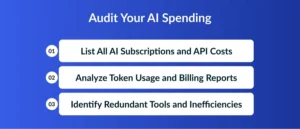
- List All AI Subscriptions and API Costs – Start by creating a complete list of all AI tools, subscriptions, and APIs your organization uses. Include platforms like OpenAI, Anthropic, and Google, along with their monthly expenses. This step helps identify where your money is going and highlights opportunities for AI API cost reduction.
- Analyze Token Usage and Billing Reports – Review usage dashboards and billing statements to understand how many tokens you consume and which services cost the most. This analysis reveals inefficiencies and helps determine how to reduce AI token cost. It also supports in better budget planning.
- Identify Redundant Tools and Inefficiencies – Look for overlapping tools that perform similar tasks or subscriptions that are underutilized. Eliminating these redundancies helps reduce LLM API cost and streamline operations. This step is essential for effective AI cost optimization and improved resource allocation.
Outcome: A Clear Understanding of Current AI Expenses – By the end of this phase, you will have a detailed overview of your AI spending. This clarity enables data-driven decisions and lays the foundation for reducing OpenAI API cost and optimizing overall usage.
Phase 2: Test a Multi-Model Platform
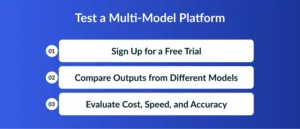
- Sign Up for a Free Trial – Register for a multi-model AI platform that provides access to multiple large language models through a single interface. Explore its features and understand how it simplifies AI integrations. This is the first step toward efficient LLM cost optimization.
- Compare Outputs from Different Models – Run the same prompts across various models such as GPT, Claude, and Gemini. Compare their responses to determine which model delivers the best balance of quality and cost.
- Evaluate Cost, Speed, and Accuracy – Assess each model based on response time, performance, and pricing. Identify cost-effective models for routine tasks and premium models for complex tasks. This reduced the GPT API cost.
Outcome: At the end of this phase, you will know which models are best suited for your needs. This enables smarter decision-making and supports efficient AI API cost reduction techniques.
Phase 3: Implement Migration
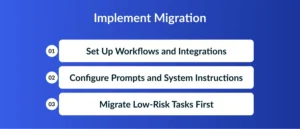
- Set Up Workflows and Integrations – Integrate the multi-model platform into your existing systems and workflows. Use AI integration services to automate processes and improve efficiency. This step helps in lowering LLM development cost.
- Configure Prompts and System Instructions – Create optimized prompts and standardized instructions for recurring tasks. Well-designed prompts help reduce AI token cost and improve output accuracy. This is a crucial step in optimizing tokens for AI agents.
- Migrate Low-Risk Tasks First – Begin by shifting simple tasks such as documentation, research, and content drafting. This approach minimizes risks while allowing teams to adapt to the new platform. Gradually expand migration to more critical operations.
Outcome: Streamlined Operations and Improved AI Cost Optimization – By the end of this phase, your organization will operate more efficiently. You will achieve better productivity and improved AI token optimization.
Phase 4: Optimize and Scale
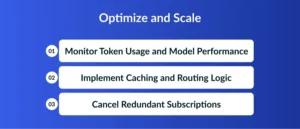
- Monitor Token Usage and Model Performance – Continuously track token consumption, response quality, and operational costs using analytics dashboards. Regular monitoring helps identify inefficiencies and long-term AI API cost reduction.
- Implement Caching and Routing Logic – Use intelligent model routing and caching to reuse responses and minimize unnecessary API calls. These strategies significantly reduce LLM API cost and lower AI inference cost while maintaining performance.
- Cancel Redundant Subscriptions – Once the migration is successful, discontinue unused or duplicate subscriptions. Redirect the savings toward innovation, research, or business growth. This step maximizes ROI and enhances AI cost optimization.
Outcome: Sustainable AI API Cost Reduction and Scalable Growth – With continuous optimization, organizations can scale their AI initiatives efficiently. Long-term savings, improved productivity, and successful digital transformation.
Common Mistakes to Avoid When Reducing AI API Spending
Reducing AI expenses is essential, but many organizations make avoidable mistakes that increase costs instead of lowering them. Understanding these conditions helps businesses to reduce GPT API cost and achieve long-term AI cost efficiency.
1. Optimizing Too Late
The Mistake: Many teams delay cost optimization until they become profitable or complete their product development.
Why It Hurts: Poor cost habits formed early become difficult and expensive to fix later. Retrofitting systems for AI token optimization can cost significantly more than planning.
The Solution: Integrate cost-saving strategies from day one. Start optimizing tokens for AI agents early to lower AI inference cost and control expenses.
2. Over-Engineering Custom Solutions
The Mistake: Companies attempt to build their own multi-model AI management systems to save subscription fees.
Why It Hurts: Developing a custom solution requires substantial engineering time and increases LLM development cost. The expense often outweighs the savings.
The Solution: Use reliable platforms and professional AI integration services. This approach reduces complexity while accelerating deployment through expert LLM Development Services.
3. Choosing Models Based on Reputation Instead of Testing
The Mistake: Many organizations use premium models like GPT-4 for every task, assuming they always deliver the best results.
Why It Hurts: Advanced models are expensive and unnecessary for simple tasks. This leads to inflated costs and inefficient resource utilization.
The Solution: Test different models and select the most cost-effective option. This strategy helps reduce GPT API cost and efficient AI API cost management.
4. Ignoring Free Tiers and Credits
The Mistake: Businesses often pay for subscriptions without taking advantage of free tiers or promotional credits.
Why It Hurts: Overlooking these opportunities results in unnecessary spending during the early stages of AI adoption.
The Solution: Utilize free tiers and trial credits before committing to paid plans. This enables smarter budgeting and supports AI token optimization.
5. Not Monitoring Usage Metrics
The Mistake: Some teams assume that adopting a multi-model platform automatically solves cost issues.
Why It Hurts: Without monitoring token usage and performance, inefficiencies go unnoticed and expenses continue to rise.
The Solution: Conduct regular audits and use analytics dashboards to track spending. Utilising token optimization services makes sure continuous AI cost optimization and improved ROI.
The Future of AI Cost Optimization in a Multi-Model World
The AI landscape is evolving rapidly, and understanding future trends helps businesses stay competitive. Multi-model platforms are set to play a central role in shaping the future of AI cost optimization.
1. Continued Price Reduction
AI model costs are declining due to technological advancements and increased competition. New providers are entering the market, driving prices lower.
Impact: Organizations that adopt multi-model platforms can instantly switch to more affordable options, helping them lower AI inference costs.
2. Rise of Specialized AI Models
Instead of relying on one general-purpose model, companies are adopting task-specific AI solutions tailored for industries such as healthcare, finance, and education.
Impact: Selecting the right model for each task reduces waste and improves performance.
3. Hybrid Cloud and Edge AI Deployment
Businesses are increasingly combining cloud-based AI with edge computing to improve speed and reduce dependency on expensive APIs.
Impact: This hybrid approach minimizes latency, reduces costs, and enhances operational efficiency while lowering LLM development costs.
4. Value-Based and Outcome-Based Pricing
AI providers are shifting from token-based pricing to value-driven models, such as paying per task completed or outcome delivered.
Impact: Organizations will need better analytics and token optimization services to measure ROI and cost-effective AI adoption.
5. AI Cost Optimization as a Competitive Advantage
Companies that master AI cost optimization will innovate faster and deliver AI-powered services at lower prices.
Impact: Businesses use AI integration services and LLM development services will gain a strategic edge in the digital economy.
Bottom Line: Learning to optimize API usage is essential for sustainable growth and long-term success.

Conclusion: Sustainable AI Investments
Reducing AI expenses is not just about cutting costs, it is about investing wisely in scalable and efficient technology. Organizations that adopt multi-model AI platforms can significantly reduce GPT API cost, improve performance, and maximize their return on investment.
Most teams overspend because they treat AI tools like traditional software. Instead, success lies in strategic optimization, intelligent model selection, and efficient token management. By adopting AI token optimization, businesses can reduce unnecessary expenses while maintaining high-quality outputs.
Organizations that adopt these strategies can lower AI inference cost, reduce LLM development cost, and build sustainable AI-driven ecosystems.
FAQs
1. How can businesses optimize AI API usage?
Businesses can optimize AI usage by monitoring token consumption and selecting the most suitable models for each task. Using analytics tools helps track performance and identify cost-saving opportunities.
2. How does AI token optimization help reduce costs?
AI token optimization reduces unnecessary words in prompts and responses, lowering overall token usage. This minimizes API charges while maintaining response accuracy and quality. As a result, organizations achieve significant cost savings and improved efficiency.
3. Can multi-model platforms help reduce GPT API cost?
Yes, multi-model platforms intelligently route tasks to the most cost-effective AI models. They allow businesses to use premium models only when necessary. This approach helps reduce GPT API cost without compromising performance or quality.
4. What role do AI integration services play in cost optimization?
AI integration services streamline the deployment of AI solutions across business systems. They reduce operational complexity and improve workflow efficiency. This leads to better performance, lower costs, and optimized AI investments.
5. How do LLM development services reduce LLM development cost?
LLM development services provide expert guidance in designing scalable and cost-efficient AI solutions. They implement optimized architectures and best practices to reduce resource consumption. This shortens development time and significantly lowers overall project costs.
6. How can organizations lower AI inference cost?
Organizations can lower AI inference cost by using smaller models for routine tasks. Batch processing and intelligent model routing further reduce computational expenses. These practices help in efficient performance with minimal operational costs.