





Projects Completed
Happy Clients
Delivery Rate
Communication
Apps Downloads
Years of Growth
 By
Developer Bazaar Technologies
By
Developer Bazaar Technologies

The hotel industry is growing fast, and technology is playing a huge role in its success. One of the most important tools hotels use today is a Hotel Management Software System. This type of software helps hotels handle bookings, manage guests, organize payments, and keep track of daily operations.
In this guide, we will explain what hotel management software is, why hotels need it, how to develop it, its cost, challenges, future trends, and more. The goal is to keep everything simple, clear, and easy to understand.
Hotel Management Software is a computer program that helps hotels manage their everyday work. It works like a digital assistant for hotel staff. With this software, hotels can:
It makes the hotel run smoothly without mistakes and saves both time and money.
Running a hotel may look easy from the outside, but in reality, it involves hundreds of small tasks every single day. From taking reservations and checking in guests to managing staff and handling payments, mistakes can happen quickly if everything is done manually.
This is why hotels today rely on hotel management computer software. It not only saves time but also improves guest satisfaction and helps hotels grow faster.
When you develop hotel management software, you reduce the chances of double bookings, lost reservations, or billing errors.
For example, if your hotel has 15 rooms, a small mistake in reservations can cost you thousands in lost revenue. Software keeps everything organized so you can run operations without stress.
Hotels work well only when employees share the right information at the right time. A custom hotel management software keeps all guest details such as room type, booking history, and special requests, in one place. This way, staff from different departments can work together easily and serve guests better.
Guest data is one of the most valuable assets for a hotel. Without proper systems, this information can be at risk of theft or loss.
By using hotel property management software, all guest information is stored safely and protected with security measures, reducing the chances of data breaches. Guests also feel more confident knowing their personal information is safe.
Handling hotel finances manually can be slow and full of errors. A hotel booking management software makes it easier to generate invoices, track expenses, and manage payments. This means fewer mistakes, quicker processing, and better control over your hotel’s income.
Investing in hotel management software development is not just about saving time, it’s about making your hotel smarter, safer, and more profitable.
Whether you want to create hotel booking software for small operations or a complete system for large chains, the right solution helps you serve guests better and grow your business.
Investing in a hotel management software system is one of the best ways to reduce manual work, improve guest experience, and boost revenue. A well-built system automates daily tasks, organizes data, and provides detailed reports to help hoteliers make better decisions.
The first step is to clearly define what your hotel needs. A small property may only require room booking and billing features, while a large chain might need advanced tools like revenue management, AI-powered chatbots, or travel app integrations.
Understanding your hotel’s pain points will help you plan the right system and estimate the cost to develop hotel management software.
Next, decide which features are most important. These usually include reservation and room management, front desk operations, housekeeping automation, POS systems for restaurants or spas, and guest communication tools.
Once features are finalized, your development partner or mobile app development company will suggest the best programming languages, frameworks, and third-party tools like PMS, CRM, and payment gateways for smooth integration.
A solid team ensures your software is built properly. You can either outsource to a trusted hotel booking software development company or hire your own team. Typically, the team includes a project manager, developers, database experts, and UI/UX designers. They should be skilled in modern technologies like Java, Python, .NET, SQL, or Node.js.
When you develop hotel management software, scalability and security are key. Scalable architecture makes sure your system can handle more bookings and users as your hotel grows.
Strong security features protects guest data and financial details from breaches. At this stage, the focus is also on designing a clean, user-friendly interface for both staff and guests.
With the requirements and design in place, developers start building the core modules such as the booking engine, payment and billing system, room and housekeeping management, and revenue management tools.
After development, rigorous testing is done to remove bugs and check performance. If you are switching from an old system, data migration is also carried out.
Once testing is complete, the software is launched. Staff need proper training to use the system effectively. The hotel booking software development company usually provides technical support, collects feedback from staff and guests, and helps optimize the software for better results.
These steps make sure that when you create hotel booking software, it is secure, scalable, and designed to meet your business goals while offering guests a smooth and professional booking experience.
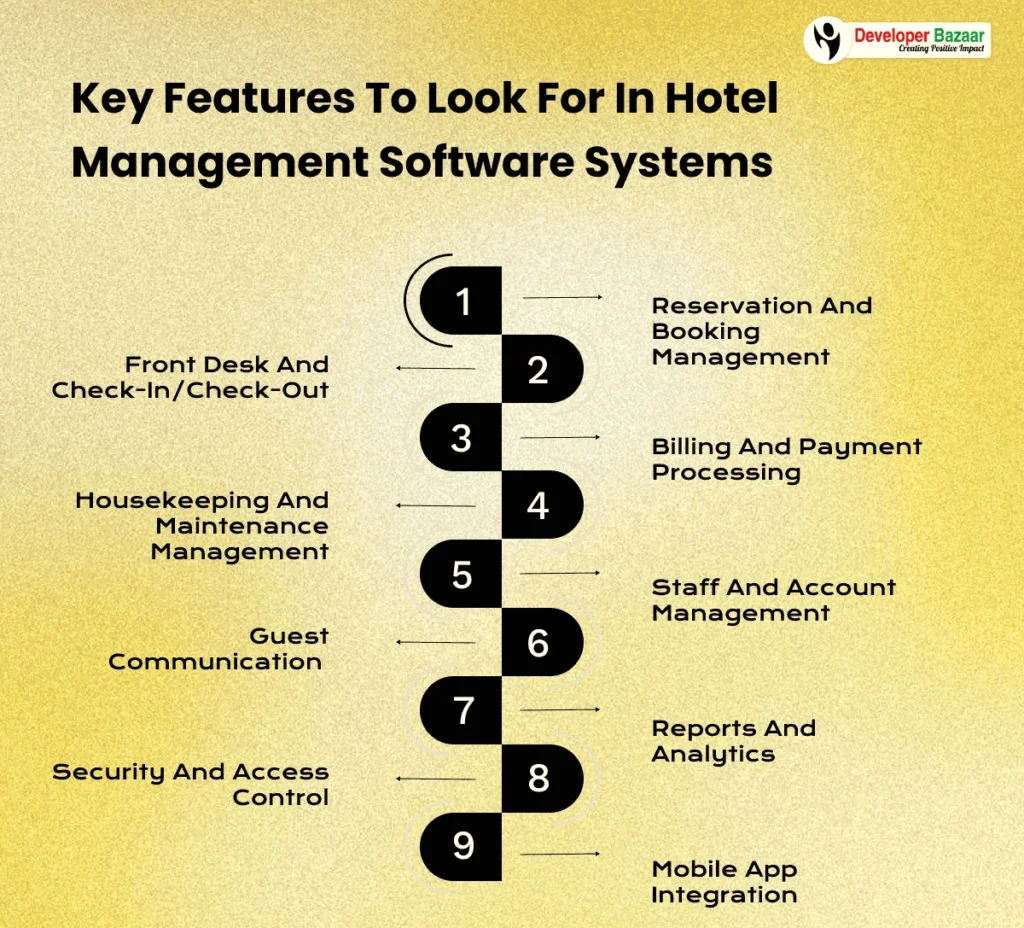
When you develop hotel management software, it is important to include features that help both hotel staff and guests. The right features make daily tasks easier, improve guest experience, and increase revenue.
Here at the most important features every system should have:
Your software should make room booking simple for both admins and guests. Admins can manage reservations, update room availability, and assign rooms, while guests can book, modify, or cancel reservations directly through the hotel website, app, or other travel platforms. This ensures a smooth hotel booking software experience.
Front desk staff need tools to handle quick check-ins and check-outs. For guests, a self-service or mobile check-in option reduces waiting time and makes their stay more convenient.
A strong billing system makes it easy to generate invoices, track payments, and support multiple payment options. It also reduces errors and helps guests pay securely through cards, UPI, or online wallets.
Admins should be able to assign cleaning schedules and track housekeeping tasks in real-time. Maintenance management features also help staff monitor facilities, fix issues quickly, and provide guests with a comfortable stay.
Managing staff schedules, attendance, and performance is easier with the right tools. On the guest side, account management allows travelers to save personal details, manage preferences, and use loyalty programs for a personalized stay.
The software should allow staff to send real-time notifications and updates to guests about bookings, offers, or check-in details. Concierge services like transport booking, local recommendations, and activity planning make the guest experience even better.
Detailed analytics give admins insights into hotel occupancy, revenue, guest behavior, and staff performance. These reports help hotels make smart decisions and plan better strategies.
When you create hotel booking software, security must be a priority. Features like access control, secure payment gateways, and data privacy tools protect both guest information and hotel records.
A mobile app makes hotel operations more flexible. Guests can book rooms, request services, and check in through their smartphones, while staff can manage reservations and tasks on the go.
This is where travel app development and AI in travel can play a big role in offering a modern, user-friendly experience.
Including these features in your system will not only improve hotel operations but also enhance guest satisfaction. Whether you are building a small hotel app or looking at the cost to develop hotel management software for a big chain, these features are essential for long-term success.
Using a hotel management software system makes running a hotel much easier and more profitable.
Here are some of the biggest benefits:
When you develop hotel management software, it helps hotels take care of guests faster. From quick bookings to sending confirmation emails, reminders, or even WhatsApp updates, everything becomes smooth. Guests feel valued, and customer satisfaction increases.
The system helps hotels keep track of rooms, supplies, and even kitchen items. It shows real-time updates on availability and prices, so hotels can plan better and avoid confusion. This makes resource management simple and efficient.
With hotel management software, hotels can manage reservations without manual work. The system accepts bookings, processes payments, and handles check-ins/check-outs automatically. This saves staff time and reduces errors in booking.
The software creates easy-to-read reports about revenue, occupancy rates, and expenses. These reports help hotel owners make smarter decisions, improve weak areas, and plan for growth.
Hotels can increase earnings by using tools like dynamic pricing, seasonal discounts, and special offers for loyal guests. A hotel booking app or software also helps attract more online customers who prefer digital reservations.
Even small hotels can compete with big chains by using a professional hospitality management system. Features like mobile booking, faster service, and personalized guest experiences make smaller hotels look more advanced and reliable.
When you create hotel management software or a complete hotel management system, you save time, reduce costs, improve guest experience, and grow your revenue at the same time.
The cost to develop hotel management software depends on what kind of system you want to build. A small hotel may only need a basic booking app, while a large hotel chain may require an advanced system with many features. The more features and integrations you add, the higher the cost will be.
On average, here’s what you can expect:
| Type of Software | Estimated Cost | Development Time | Features Included |
|---|---|---|---|
| Basic Hotel Booking App | $10,000 - $20,000 | 2 - 4 months | Simple features like online room booking, check-in/check-out, basic billing, and basic reports. |
| Intermediate Hotel Management Software | $20,000 - $40,000 | 4 - 8 months | More features like advanced reservation system, inventory tracking, CRM (Customer Relationship Management), and detailed reports. |
| Advanced Hotel Management System | $40,000 - $60,000 | 9+ months | Full-featured system with AI in travel, real-time booking, dynamic pricing, third-party integrations (like OTAs & POS), mobile app integration, and advanced analytics. |
If you only want to develop a hotel management app, the cost will usually be lower compared to creating a complete hotel management system.
It is always best to consult with a trusted mobile app development company before starting, as they can give you a more accurate cost estimate based on your specific requirements.
The cost to develop hotel management software or a hotel booking app depends on many factors.
Understanding them will help you plan your budget better:
The more features you add, the higher the cost. For example, basic modules like room booking and billing cost less, while advanced ones, such as CRM, inventory management, housekeeping, or AI in travel industry, increase development costs.
A small property may only need a simple hotel booking system, but a large chain or resort may require a full hotel management system with multi-property support, revenue management, and advanced analytics. The bigger the system, the more it costs.
A simple design is cheaper, while a modern and user-friendly UI/UX design takes more effort, time, and cost. Good design improves guest experience but adds to development expenses.
Hiring a large, highly skilled team increases costs compared to a small team. Also, location matter a mobile app development company in UAE , USA or Europe may charge $80 – $100 per hour, while in Asia, the cost could be as low as $25 – $40 per hour.
If you want to integrate APIs like payment gateways, OTAs (Booking.com, Expedia), POS systems, or travel app development tools, it adds extra cost and time.
Hotels deal with sensitive guest data. Adding strong security, privacy measures, and compliance with industry regulations will increase the development cost but keep your system safe.
The cost does not stop at launch. Regular updates, bug fixes, and technical support are important to keep your hotel management software system running smoothly, which also adds to the overall budget.
The cost to develop hotel booking software depends on your needs, system type, and level of customization.
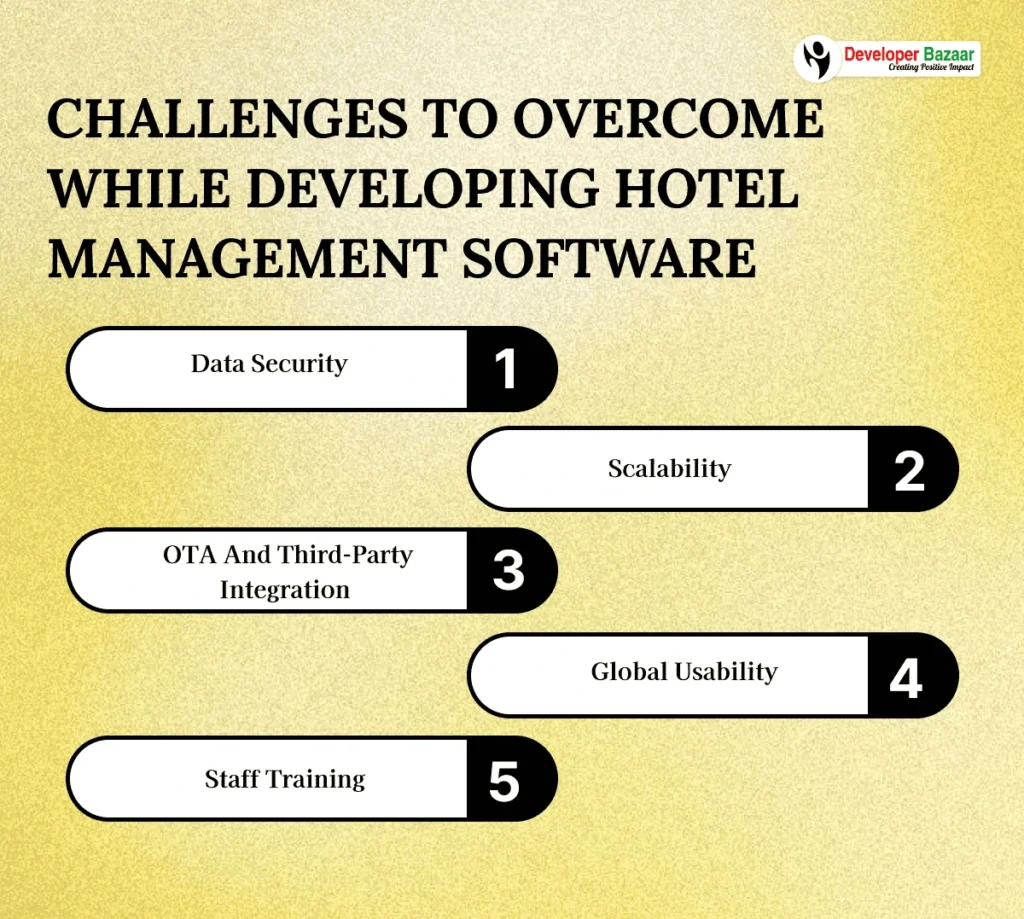
When you develop hotel management software or build a hotel booking app, you may face some common challenges. Knowing them early helps you plan better:
Hotels deal with sensitive information like guest names, booking records, and payment details. Protecting this data from hackers and cyber threats is one of the biggest challenges in hotel booking software development. Strong encryption and secure access are a must.
A hotel management software system must grow with your business. A small hotel may start with fewer rooms, but as it expands into multiple properties, the software should handle more users, bookings, and transactions without slowing down.
Hotels often depend on Online Travel Agencies (OTAs) like Expedia, Booking.com, or Airbnb. Synchronizing reservations across all platforms without errors is a tricky task but essential for smooth hotel operations.
If you plan to attract international guests, your hotel management system should support multiple currencies and languages. This makes it easy for global travelers to book rooms and make payments.
Even the best hotel booking software will fail if staff find it difficult to use. Making the system simple, user-friendly, and providing proper training are important to ensure smooth adoption.
Overcoming these challenges with the right mobile app development company make sure your hotel management software is secure, scalable, and guest-friendly.
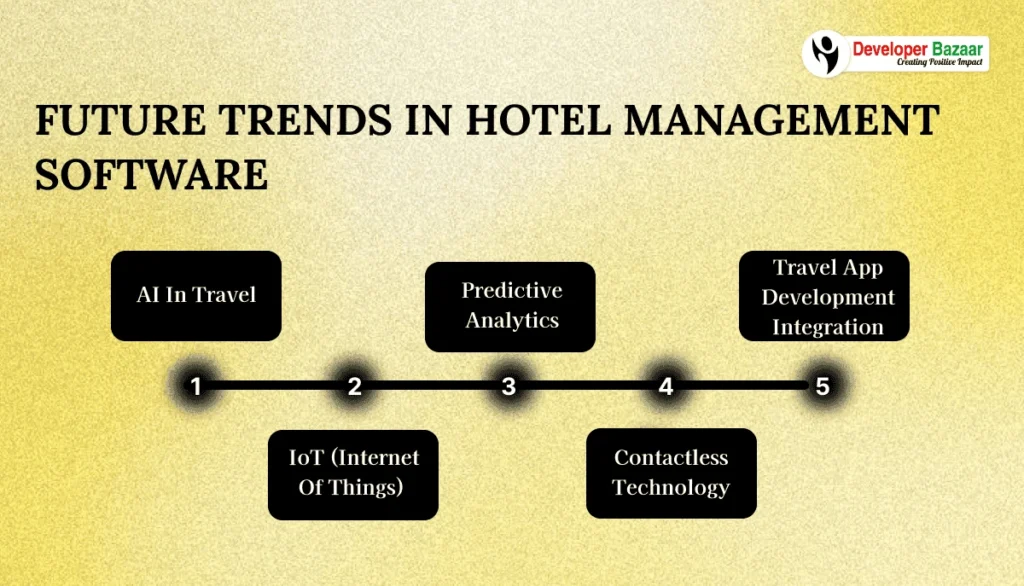
The future of hotel management software systems is full of innovation. Here are some important trends that will shape the industry:
Artificial Intelligence is changing the way hotels interact with guests. AI chatbots can answer questions 24/7, handle bookings, and give personalized suggestions, making customer service faster and smarter.
Hotels are adding smart devices in rooms, like voice assistants and mobile-controlled lighting or air conditioning. This gives guests more comfort and creates a modern “smart room” experience.
With predictive analytics, hotels can forecast demand, set dynamic pricing, and prepare for peak seasons. This helps increase revenue and ensures the right resources are available at the right time.
Guests now prefer safe and convenient options. Contactless check-ins, digital payments, and keyless room entry through mobile apps are becoming the new standard in the hospitality industry.
Hotels are now connecting booking systems with flight, taxi, and travel apps. This integration gives guests a smooth end-to-end travel experience, from booking flights to checking into the hotel.
If you want to develop a complete hotel management system, choosing the right partner is important. Developer Bazaar Technologies is a leading mobile app development company trusted for travel app development. Here’s why they stand out:
Whether you run a small boutique hotel or a large chain, their team builds software tailored to your exact needs. This ensures you get the right features without unnecessary extras.
They use advanced technologies to build strong, scalable, and future-ready apps. Your system can easily handle growth as your hotel expands.
Guest safety is a priority. Their software includes strong security features like encryption and secure payments, while also ensuring fast and smooth performance.
They deliver high-quality solutions at affordable prices. This means you get maximum value without overspending on development.
Developer Bazaar Technologies offers regular updates, bug fixes, and long-term support to keep your hotel management software always up to date.
By working with a professional team, you save time, reduce errors, and get a strong software system that improves both hotel operations and guest satisfaction.
Building a hotel management software system is one of the best investments for modern hotels. It makes hotel operations faster, smoother, and more professional. From planning to development, testing, and scaling, every step is important. The cost to develop hotel management software may vary, but with the right team, it brings long-term success. Future trends like AI, IoT, and travel app integration will make these systems even more powerful.
If you are ready to create hotel management software, work with an expert mobile app development company Developer Bazaar Technologies to get the best results.
The cost of developing hotel booking software depends on features, design, and complexity. On average, it can range from $20,000 for a basic app to over $60,000 for an advanced hotel management system with AI and integrations.
Yes, small hotels can benefit from hotel management software. Basic versions are affordable and allow small businesses to manage room reservations, billing, and guest check-ins easily.
Yes, hotels can create a hotel booking app for guests. This makes it easier for customers to check availability, book rooms, and even make payments directly from their smartphones.
Technologies like AI chatbots, IoT-powered smart rooms, and predictive analytics will make hotel software more efficient. These trends will improve customer experience and help hotels optimize operations.
Good hotel management software comes with strong security features like encryption, role-based access, and secure payments. This ensures sensitive guest data, such as personal details and credit card information, remains safe.
The development time depends on the complexity of the project. A basic system may take 2 – 4 months, while a full-featured solution with AI, IoT, and mobile apps can take 9 months or more.
Co-Founder
Developer Bazaar technologies


This minimum viable product guide will help founders understand how to create a minimum viable product, validate ideas, reduce risk, and launch faster. Key Takeaways: Validate your startup idea before investing heavily in development to reduce...
This minimum viable product guide will help founders understand how to create a minimum viable product, validate ideas, reduce risk, and launch faster. Key ...
Key Takeaways: White-label mortgage CRM solutions provide a customizable platform that helps lenders simplify loan management and improve customer engagement. Essential features such as loan origination, document management, automation, compliance tracking, and customer communication enhance operational...
Key Takeaways: White-label mortgage CRM solutions provide a customizable platform that helps lenders simplify loan management and improve customer engagement. Essential features such as ...
Businesses now manage large inventories, faster deliveries, multiple warehouses, and real-time order tracking. Manual processes and spreadsheets often create delays, stock errors, and higher operational costs. This is why many companies choose to develop warehouse management...
Businesses now manage large inventories, faster deliveries, multiple warehouses, and real-time order tracking. Manual processes and spreadsheets often create delays, stock errors, and higher ...
In the last few years, global disruptions, rising customer demands, and fast-changing markets have made supply chain systems more complex. Many businesses tried to depend on ready-made tools, but they quickly realized those tools cannot handle...
In the last few years, global disruptions, rising customer demands, and fast-changing markets have made supply chain systems more complex. Many businesses tried to ...
Key Takeaways: The global Dealer Management System (DMS) market is expected to reach approximately US$ 10.8 billion by 2026, driven by the growing need for automation, inventory management, and customer retention. Custom dealership management systems provide...
Key Takeaways: The global Dealer Management System (DMS) market is expected to reach approximately US$ 10.8 billion by 2026, driven by the growing need ...

What will logistics look like by 2030? Will robots deliver packages? Will warehouses run without people? Will goods move faster and safer across the world? The logistics industry is changing very fast. New tools like Artificial...
What will logistics look like by 2030? Will robots deliver packages? Will warehouses run without people? Will goods move faster and safer across the ...

Key Takeaway Logistics Automation helps companies move goods faster, reduce errors and lower operational costs across storage, shipping and delivery. Automation in logistics uses tools like AI, RPA, cloud systems and robots to handle tasks automatically...
Key Takeaway Logistics Automation helps companies move goods faster, reduce errors and lower operational costs across storage, shipping and delivery. Automation in logistics uses ...
Did you know how much does it really cost to build a smart queue management system in 2026? In 2026, many businesses want to reduce long waiting lines and provide faster service. A queue management system...
Did you know how much does it really cost to build a smart queue management system in 2026? In 2026, many businesses want to ...

Did you know that Microsoft just invested $1.5 billion in Dubai-based G42, while OpenAI partnered with UAE companies for the $500 billion Stargate Project? This isn’t coincidence—it’s recognition that Dubai has become the world’s most strategic...
Did you know that Microsoft just invested $1.5 billion in Dubai-based G42, while OpenAI partnered with UAE companies for the $500 billion Stargate Project? ...

Blog Summary: This guide explains Remote Patient Monitoring Software in simple words. You’ll learn what it means, how it works, its growing market value, and the key benefits for patients and doctors. We also cover development...
Blog Summary: This guide explains Remote Patient Monitoring Software in simple words. You’ll learn what it means, how it works, its growing market value, ...

Complete the form below and validate your idea now.
✔ Your idea is 100% protected by our Non Disclosure Agreement.
