

AI in education is changing how students learn and how teachers teach. Today, schools and colleges use smart tools that understand students’ needs and help them learn better. Artificial intelligence in education can give personal lessons, check homework, and even answer questions anytime. It also helps teachers save time and focus more on teaching.
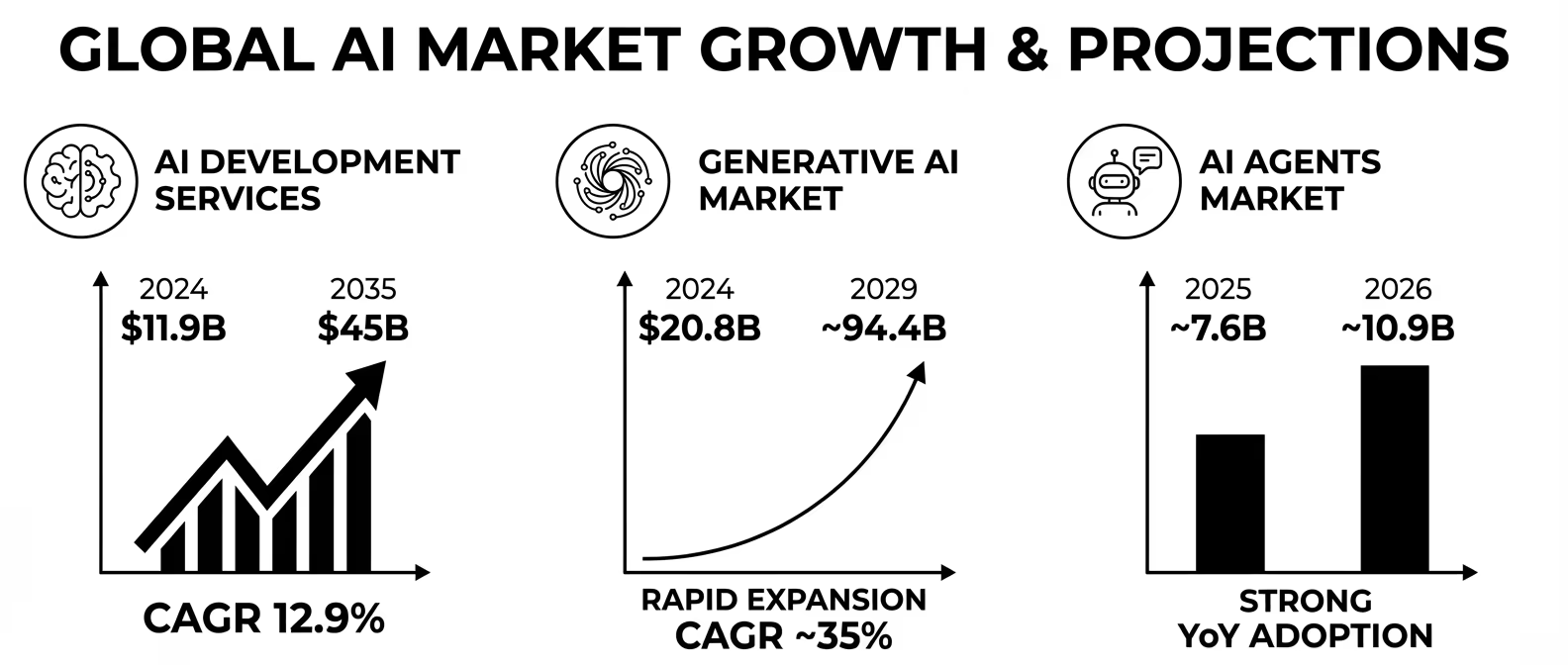
The use of AI in education apps is growing fast. Many schools and EdTech startups now use AI to create smart learning apps for iOS, Android, and cross-platform app development. These apps help students learn at their own pace and get better results. Experts say the AI education market may reach around USD 20.54 billion by 2027. This shows that AI will play a big role in the future of learning.
In this blog, we will explore the growing role of AI, its benefits, real use cases of AI in education, and how schools and startups can use it to improve learning.
The Growing Role of AI in Education
The role of AI in education is growing every year. Schools, colleges, and training centers now use AI to make learning smarter and more fun. AI can understand how each student learns and then give lessons that match their level. This makes learning easier for both fast learners and slow learners.
One of the biggest changes is personalized learning. AI studies a student’s behavior, speed, and interests. Then it creates a custom learning path for that student. This helps students learn better and feel more confident.
AI also helps teachers find weak areas in students. Teachers can quickly see where students are struggling and give extra help. AI chatbots and virtual assistants can answer student questions anytime, even after school hours.
AI tools like virtual reality (VR) and augmented reality (AR) make learning more exciting. Students can explore space, history, or science through interactive lessons. This makes learning fun and easy to understand.
Many trends in education apps now include AI features such as smart recommendations, voice assistants, and automated grading. Because of this, more institutions want to develop an education app with AI features to stay ahead in the digital world.
Benefits of Artificial Intelligence in Education
There are many benefits of AI in education for students, teachers, parents, and school management. AI helps improve learning quality, saves time, and makes education more accessible for everyone.
For Students
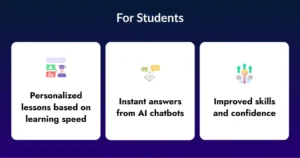
Personalized lessons based on learning speed
AI studies how fast or slow a student learns and then adjusts lessons to match their level. This helps students understand topics better without feeling stressed or left behind. Personalized learning also makes students more confident in their studies.
Instant answers from AI chatbots
AI chatbots can answer student questions anytime, day or night. Students do not have to wait for the next class to clear their doubts. This helps them stay consistent in learning and solve problems quickly.
Improved skills and confidence
With regular feedback and practice, students can improve their weak areas. AI suggests exercises and learning paths that help them build skills step by step. This boosts confidence and supports overall academic growth.
For Teachers
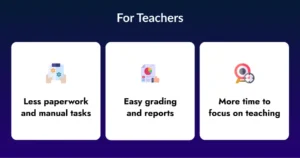
Less paperwork and manual tasks
AI can manage tasks like attendance, scheduling, and record keeping automatically. This reduces the workload for teachers and saves time. Teachers can focus more on teaching and supporting students instead of doing paperwork.
Easy grading and reports
AI tools can check quizzes, assignments, and tests quickly. Teachers get ready reports and performance data without spending hours on grading. This makes the evaluation process faster and more accurate.
More time to focus on teaching
When AI handles repetitive tasks, teachers get more time to interact with students. They can spend more time explaining concepts and mentoring students. This improves the classroom experience and learning quality.
For Parents
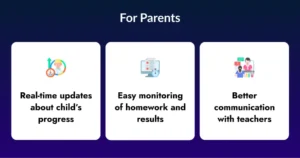
Real-time updates about child’s progress
AI systems allow parents to see their child’s performance and progress anytime. They can check grades, attendance, and learning activities in real time. This helps parents stay involved in their child’s education.
Easy monitoring of homework and results
Parents can track homework completion and test results through AI-powered apps. They can understand where their child needs extra help. This makes it easier to support learning at home.
Better communication with teachers
AI tools make communication between parents and teachers simple and quick. Parents can get updates, feedback, and notifications instantly. This builds better coordination and improves student outcomes.
For Schools and Institutions
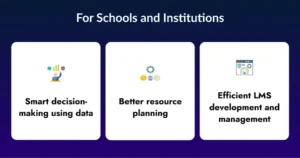
Smart decision-making using data
AI collects and analyzes large amounts of student and school data. School management can use this data to make better decisions about curriculum and teaching methods. This improves overall education quality.
Better resource planning
AI helps schools manage classrooms, staff schedules, and learning materials efficiently. It predicts needs and helps allocate resources in a smarter way. This reduces waste and improves productivity.
Efficient LMS development and management
AI makes LMS development more powerful with features like analytics, automation, and personalized dashboards. Schools can manage courses, students, and teachers easily through AI-enabled systems. This improves the overall management of digital learning platforms.
Real-World Examples of AI in Education
Artificial intelligence in education is already being used by many popular learning platforms. These platforms use smart algorithms to improve learning, give feedback, and personalize lessons. Below are some well-known examples of AI in education.
1. Duolingo
Duolingo uses AI models like BirdBrain and smart algorithms to understand how each learner studies. The app adjusts lesson difficulty, suggests practice exercises, and gives instant feedback. This makes language learning fun, personalized, and effective for millions of users.
2. Coursera
Coursera uses generative AI to build course content and improve learning. Its AI coach can create assignments, reading lists, and study suggestions automatically. This helps learners get personalized learning paths and improves course completion rates.
3. Google Classroom
Google Classroom uses AI to help teachers manage classes, assignments, and grading. It can recommend learning material based on student performance and give insights into progress. This helps teachers track growth and improve classroom learning easily.
These real-world platforms show how AI in education apps is improving learning experiences and making education more data-driven and efficient.
Emerging Technologies in Education to Pair with AI
AI works even better when combined with other modern tools. These technologies are part of the latest trends in education app development and can improve digital learning.
1. Virtual Reality (VR)
Virtual reality creates a 3D digital environment where students can explore and interact. It helps students understand subjects like science, medicine, and engineering through immersive experiences. For example, students can explore the human body or visit historical places in virtual classrooms.
2. Augmented Reality (AR)
Augmented reality adds digital information to real-world objects. Students can point their device at an object and see extra information or animations. This makes learning more interactive and helps students understand topics in a practical way.
3. Internet of Things (IoT)
IoT devices collect data from classrooms such as attendance, temperature, and student activity. Teachers and school management can use this data to improve learning environments. When combined with AI in education, IoT helps create smarter classrooms and better decision-making.
These technologies help businesses and institutions develop an education app with advanced learning features and strong AI recommendation systems.
Challenges and Their Potential Solutions for AI in Edtech Sector
While AI in education offers many benefits, there are also some challenges that schools and institutions must handle carefully. Below are the key challenges along with their possible solutions.
1. Data Privacy Concerns
Challenge:
AI systems need large amounts of student data to work well. This data may include grades, attendance, and personal information. If not protected properly, it can create privacy and security risks for students and schools.
Solution:
Schools should use strong data protection methods like encryption, secure logins, and user authentication. They must also create clear privacy policies and limit access to sensitive data. This will help keep student information safe and build trust in artificial intelligence in education.
2. Cost of Implementation
Challenge:
Setting up AI tools and systems can be expensive. Schools may need to invest in software, hardware, and training. This can be difficult for institutions with limited budgets.
Solution:
Schools can reduce costs by using ready-made SaaS AI tools instead of building everything from scratch. Partnering with a trusted education app development company can also help create affordable AI solutions. This makes it easier to adopt AI in education without a huge investment.
3. Lack of Technical Expertise
Challenge:
Many teachers and school staff may not have enough knowledge to use AI tools. Without proper training, they may find it hard to integrate AI into teaching and daily tasks.
Solution:
Schools should provide training sessions, workshops, and support for teachers. This will help them understand how AI works and how to use it in classrooms. With proper guidance, teachers can use AI tools confidently and improve learning experiences.
4. Generative AI Abuse
Challenge:
Students may misuse AI tools for cheating, copying assignments, or creating false content. This can affect learning quality and academic honesty.
Solution:
Schools should create clear guidelines for responsible AI use. They can use plagiarism detection tools and monitoring systems to prevent misuse. Teachers should also educate students about ethical AI use and the importance of honesty in learning.
5. Limited Tools for Measuring Impact
Challenge:
It can be difficult to measure how effective AI tools are in improving learning outcomes. Many schools do not have proper systems to track AI’s impact on student performance.
Solution:
Schools should first define clear goals for using AI. Then they can create custom metrics and track student performance and engagement. This helps measure the real impact of AI in education and improves decision-making for future learning strategies.
Major Use-cases of AI in Education
AI in education is helping schools, colleges, and EdTech platforms create smarter learning systems. Below are the major use cases of AI in education that improve teaching, learning, and management.
1. Advanced Tutoring Systems
AI-powered tutoring systems give students personal support just like a private teacher. The system studies student answers, finds weak areas, and gives simple explanations. This helps students understand difficult topics and learn at their own speed.
2. Automated Grading and Evaluation
Artificial intelligence in education can check assignments, quizzes, and exams quickly and fairly. It gives instant feedback so students know where to improve. Teachers save time and can focus more on helping students personally.
3. AI-Powered Chatbots and Assistants
AI chatbots help students anytime by answering questions and guiding them through lessons. They are available 24/7 and support learning outside the classroom. These assistants also give AI recommendations for lessons and practice materials.
4. Educational Entertainment and Gamification
AI makes learning fun by turning lessons into games and interactive activities. Students earn rewards and complete challenges while learning. This keeps them engaged and helps them remember concepts better.
5. Interactive and Educational Games
AI-driven games create interactive stories and learning simulations. They adjust based on student actions and provide personalized feedback. These games improve creativity, problem-solving skills, and teamwork among students.
6. Smart Curriculum Planning
AI analyzes student data and suggests changes to the curriculum. It helps schools update lessons based on student needs and new learning standards. This makes curriculum planning faster and more effective for teachers and institutions.
What AI Development Services Offer Developer Bazaar technologies for Education?
AI development services help schools, startups, and enterprises build smart education platforms. An experienced education app development company can create AI-based solutions that improve learning and management.
1. AI/ML Consulting
Experts analyze the needs of schools and suggest the best AI tools. This helps institutions use AI in education for better decision-making and improved student engagement.
2. PoC and MVP Development
AI teams build Proof of Concept (PoC) and Minimum Viable Product (MVP) solutions. This allows schools to test AI features before full implementation. It reduces risk and ensures the solution fits the education sector.
3. Generative AI Integration
Generative AI can automate tasks like report creation, lesson planning, and content generation. This saves time for teachers and improves productivity. It also helps in building smart learning platforms.
4. Custom AI Model Development
AI models can be trained to understand educational terms and student behavior. This improves communication, analytics, and personalized learning. These models also power recommendation engines in AI in education apps.
5. AI Agents and Copilots
AI copilots help with curriculum planning, student support, and data analysis. They automate reminders, progress tracking, and academic planning. This improves efficiency for both teachers and administrators.
6. LMS and App Integration
AI systems can be integrated into existing platforms through advanced LMS development. This allows institutions to manage courses, students, and data easily. Businesses can also develop an education app with AI-powered dashboards and analytics.
Conclusion
The future of learning is smart, personalized, and technology-driven. Artificial intelligence in education helps students learn faster, teachers teach better, and schools operate more efficiently. From automated grading to smart tutoring, AI is transforming every part of education.
Institutions and startups that adopt AI early can create engaging and effective learning experiences. By using AI tools and strong LMS development, they can build platforms that support students anytime and anywhere.
FAQs
1. What is AI in education?
AI in education refers to using smart technology to improve teaching, learning, and school management. It includes tools like chatbots, automated grading, and personalized learning systems.
2. How does artificial intelligence in education help students?
It provides personalized lessons, instant feedback, and smart recommendations. Students can learn at their own pace and get help anytime.
3. Can AI replace teachers?
No, AI supports teachers by reducing their workload. Teachers still play the main role in guiding and mentoring students.
4. How can businesses develop an education app with AI?
Businesses can work with an experienced education app development company to build AI-powered apps with smart dashboards, analytics, and LMS development features.
5. Is AI in education expensive to implement?
The cost depends on features and scale. Using ready-made AI tools and cloud solutions can make implementation more affordable for schools and startups.