

An eCommerce app helps people buy and sell products using their mobile phones. Today, many people prefer shopping online because it is easy and fast. If you want to grow your business, building an eCommerce app is a smart idea.
In this blog, you will learn why you should invest in an eCommerce app, the types of apps, important features, development steps, and the cost involved.
Reasons Why You Should Invest in eCommerce App Development
The global eCommerce market is growing at a very fast pace. In 2026, the market is estimated to reach around USD 41 trillion and is expected to grow further to USD 155.98 trillion by 2033, with a strong CAGR of 21.6%.
This rapid growth is driven by increasing internet usage and the rising number of smartphone users, especially in regions like the Asia Pacific, Latin America, and Africa. Affordable mobile data and low-cost smartphones are helping more people shop online for the first time, making eCommerce a powerful and expanding industry.
Focus on the below reason that you should consider for ecommerce app development:
1. Active Smartphone Users
Today, smartphones are a big part of everyday life. People use them for searching products, comparing prices, and shopping online. Because of this, businesses must be present on mobile devices.
An eCommerce app makes your store available 24/7. Customers can browse and shop anytime, whether they are at home, traveling, or relaxing. This easy access increases your chances of getting more customers and sales.
2. Higher Demand
Online shopping has become very popular in recent years. People prefer buying products from home because it saves time and effort. They do not need to stand in long queues or travel to stores.
An eCommerce app makes shopping even easier. Users can quickly browse products, check reviews, and place orders within minutes. This smooth and fast experience helps meet customer expectations and keeps them satisfied.
3. Revenue Growth
An eCommerce app opens new ways to increase your business income. It allows you to reach more customers beyond your local area. You can also promote your products through special offers and discounts.
With features like loyalty programs and personalized recommendations, customers are more likely to return. Repeat customers help boost your long-term revenue and make your business more successful.
Different Types of eCommerce Applications
In this competitive market, different types of applications are available for your ecommerce business. Below are 4 types of applications:
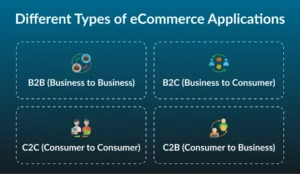
1. B2B (Business to Business)
B2B apps are used when one business sells products or services to another business. These apps are common among wholesalers, manufacturers, and suppliers. They help manage bulk orders and long-term partnerships.
Such apps also make it easier to handle supply chains, pricing, and large transactions. They improve efficiency and help businesses save time and costs in their operations.
2. B2C (Business to Consumer)
B2C is the most popular eCommerce model. In this type, businesses sell products directly to customers through an app or website. It is commonly used in online shopping platforms.
Customers can easily browse products, compare options, and make purchases. These apps focus on providing a smooth and enjoyable shopping experience to attract and retain users.
3. C2C (Consumer to Consumer)
C2C apps allow individuals to sell products or services to other individuals. These platforms act as a middleman to manage listings, payments, and transactions.
People can sell used items, handmade products, or services easily. The platform usually charges a small fee for each transaction, making it beneficial for both users and the platform owner.
4. C2B (Consumer to Business)
In the C2B model, individuals offer products or services to businesses. This is the opposite of the B2C model. It is common in the freelance and creative industries.
For example, photographers can sell their images, and freelancers can offer services to companies. This model gives individuals opportunities to earn money while helping businesses find useful resources.
Step-by-Step Guide to Building an eCommerce App
Follow simple steps to plan, design, and develop your eCommerce app.
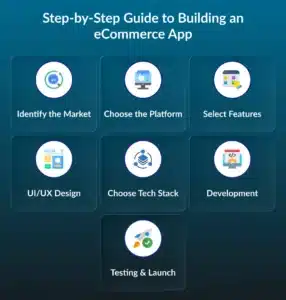
Step 1: Identify the Market
The first step is to clearly understand your market and target audience. You need to know who your customers are, what they like, and how they shop online. This helps you build an app that matches their needs.
You should also study your competitors. Look at their apps, features, pricing, and customer reviews. This will help you find gaps and improve your own idea. Setting clear goals and KPIs (like sales, downloads, or user retention) will guide your entire development process.
Step 2: Choose the Platform
Next, decide which platform you want your app to run on. You can choose Android, iOS, or both, depending on your target audience. Each platform has its own advantages, development time, and cost.
If you want to save time and budget, you can choose a cross-platform app development approach. This allows you to build one app that works on both platforms. Choosing the right platform ensures better performance and helps you reach more users effectively.
Step 3: Select Features
In this step, you decide what features your app will have. Start by selecting basic features like user login, product search, shopping cart, and secure payment options. These are necessary for any eCommerce app.
After launching, you can gradually add advanced features like AI recommendations or AR/VR. This step-by-step approach helps you control costs and improve your app based on real user feedback.
Step 4: UI/UX Design
Design plays a very important role in the success of your app. A clear design helps users navigate easily and find products without confusion. The app should look attractive and work smoothly on all devices.
Good UI/UX design improves user experience and keeps users engaged. When users enjoy using your app, they are more likely to stay longer and complete purchases, which increases conversions.
Step 5: Choose Tech Stack
Choosing the right technology stack is very important for building a strong app. You need to decide whether to use hybrid, native, or backend technologies based on your app’s requirements.
The tech stack affects your app’s speed, performance, and scalability. A good choice ensures your app runs smoothly, handles more users, and grows easily as your business expands.
Step 6: Development
This is the stage where your app is actually built. Developers start coding the front-end (what users see) and the back-end (server, database, and logic). All features and functionalities are integrated during this phase.
Proper planning and teamwork are very important here. The time taken for development depends on how complex your app is and how many features you want to include.
Step 7: Testing & Launch
Before launching your app, it must go through proper testing. This includes checking for bugs, fixing errors, and ensuring the app is secure and fast. Both manual and automated testing are done to ensure quality.
Once the app works perfectly, it is launched on platforms like Google Play Store or Apple App Store. A smooth launch creates a strong first impression and helps attract more users to your app.
Must-Have Features to Incorporate in an eCommerce App
Discover the key features needed to make your eCommerce app successful.
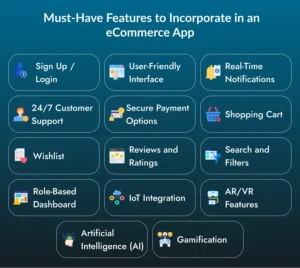
1. Sign Up / Login
An easy sign-up and login process helps users quickly access your app. They should be able to create an account using email, phone number, or social media. This feature allows users to save their details, track orders, and manage their profiles easily. A smooth login process also improves user experience and reduces drop-offs.
2. User-Friendly Interface
Your app should be easy to understand and use, even for first-time users. A layout that is simple to navigate and helps users find what they need without confusion. When users enjoy using your app, they are more likely to stay longer and complete purchases. A good interface directly improves customer satisfaction and retention.
3. Real-Time Notifications
Notifications keep users updated about their activities on the app. They can receive alerts about order status, delivery updates, and special offers. These timely updates help users stay informed and engaged. It also encourages them to revisit the app and make more purchases.
4. 24/7 Customer Support
Customers may face issues or have questions at any time. Providing round-the-clock support ensures they get help whenever needed. You can offer support through live chat, email, or phone calls. Quick and helpful responses build trust and improve customer loyalty.
5. Secure Payment Optionshttps://developerbazaar.com/payment-gateway-integration-process/
Security is very important in online transactions. Your app should offer safe payment methods like debit cards, credit cards, wallets, and UPI. Using secure payment gateways protects user data and builds confidence. When users feel safe, they are more likely to complete their purchases.
6. Shopping Cart
The shopping cart allows users to add products before buying them. They can review items, update quantities, or remove products easily. This feature helps users organize their purchases and ensures a smooth checkout process. It also reduces confusion during payment.
7. Wishlist
A wishlist lets users save products they like but are not ready to buy. They can come back later and purchase those items easily. This feature increases user engagement and helps businesses understand customer preferences. It also improves the chances of future sales.
8. Reviews and Ratings
Customers can share their experiences by giving reviews and ratings. This helps other users make better buying decisions. Positive reviews build trust and credibility for your app. It also gives businesses feedback to improve products and services.
9. Search and Filters
A strong search feature helps users quickly find what they are looking for. Filters like price, size, color, and ratings make the process easier. This saves time and improves the shopping experience. When users find products quickly, they are more likely to make a purchase.
10. Role-Based Dashboard
Different users need different access in the app. Customers need to track orders, sellers manage products, and admins control the system. A role-based dashboard organizes these tasks clearly. It improves efficiency and ensures that each user can perform their role easily.
11. IoT Integration
IoT allows smart devices to connect with your app. For example, a smart fridge can automatically order groceries when items run out. This feature adds convenience and makes the shopping experience more advanced. It also helps businesses stay ahead with modern technology.
12. AR/VR Features
AR and VR allow users to see products in real life before buying them. For example, they can try clothes or place furniture in their room virtually. This improves confidence in buying decisions and reduces product returns. It also makes shopping more interactive and fun.
13. Artificial Intelligence (AI)
AI helps personalize the shopping experience for users. It suggests products based on their behavior and preferences. It also powers chatbots for instant support and helps analyze user data. This leads to better customer experience and increased sales.
14. Gamification
Gamification adds fun elements like points, rewards, and badges to the app. It encourages users to interact more with the platform. These features keep users engaged and motivated to shop more. It also helps build long-term customer loyalty.
How Much Does it Cost for eCommerce App Development?
The cost of building an eCommerce app is not fixed. It depends on different factors like features, design, technology, and overall complexity. A basic app with general features will cost less, while an advanced app with modern technologies like AI or AR/VR will cost much more.
| App Type | Features Included | Estimated Cost |
| Basic App | Login, product listing, cart, easy checkout | $15,000 – $50,000 |
| Mid-Level App | Advanced UI/UX, payment gateways, notifications | $50,000 – $150,000 |
| Advanced App | AI, AR/VR, real-time analytics, custom integrations | $150,000 – $300,000+ |

Conclusion
Building an eCommerce app is one of the best ways to grow your business in today’s digital world. More people are shopping online, and having your own app helps you reach them easily. It also allows you to offer a better and more personalized shopping experience.
However, success does not come from just building an app. You need a clear plan, the right features, and a strong focus on user experience. Start with an MVP, understand your users, and keep improving your app over time.
With the right strategy and partnering with best ecommerce app development company, your eCommerce app can help you increase sales, build customer loyalty, and stay ahead of your competitors.
FAQs
1. How long does it take to build an eCommerce app?
Building an eCommerce app usually takes around 3 to 9 months. The time depends on how complex your app is and how many features you want to include. If you start with an MVP, you can launch faster. Advanced apps with custom features and integrations will take more time to develop and test properly.
2. What is the best platform for eCommerce apps?
The best platform depends on your target audience and budget. If your users are mostly on Android or iOS, you can choose one platform accordingly. For startups, a cross-platform solution is often a better option. It saves time and cost while allowing your app to run on both Android and iOS devices.
3. Can I start with a small budget?
Yes, you can definitely start with a small budget by building an MVP. This version includes only the essential features needed to launch your app. Once your app starts gaining users, you can invest more and add advanced features. This step-by-step approach helps reduce risk and manage costs effectively.
4. Is AI necessary for an eCommerce app?
AI is not necessary in the beginning, but it becomes useful as your app grows. It helps improve user experience through personalized recommendations and chat support. You can add AI features later when you have enough user data. This will make your app smarter and more efficient over time.
5. How do eCommerce apps make money?
eCommerce apps make money in different ways. The most common method is through product sales, where you earn profit on each purchase. They can also generate revenue through advertisements, subscription plans, and commission fees from sellers. Multiple income sources help increase overall profitability.