

Why has online food delivery become one of the fastest-growing businesses in the world, and why are startups competing to develop a Foodora clone app in 2026?
The answer is simple, people want food delivered quickly, easily, and without effort. With busy work schedules, online payments, and smartphone usage increasing every year, food delivery apps have become a daily habit.
This guide explains how to build an app like Foodora, how the business works, and why creating a Foodora-like food delivery app is a smart business move in 2026.
Stats Related to the Food Delivery Industry
The food delivery industry is growing at a very fast rate. These statistics clearly show why many businesses want to develop a food delivery app like Foodora.
- China is the largest food delivery market, with a value of $40.2 billion in 2024
- The global food delivery app market is expected to reach $213 billion by 2030
- Uber Eats is the most downloaded food delivery app worldwide
- Delivery Hero has the highest number of collective users across platforms
- In the United States, DoorDash holds over 65% market share
- Meituan is the most popular food delivery app in China, followed by Ele.me
These numbers prove that building a Foodora-like food delivery app is a long-term business opportunity.
Foodora Introduction
Foodora was founded in 2009 with one clear goal, to make food ordering simple and fast. The company started in Europe and later expanded to many countries across Europe, Asia, and North America.
Foodora allowed users to order food from local restaurants using a mobile app. Customers could place orders from home, offices, or even parties. The platform focused strongly on speed, ease of use, and reliable delivery.
One thing that made Foodora special was its strong delivery network. Delivery partners make sure that food reaches customers quickly and safely. Over time, Foodora added new features to improve the experience for users and restaurant owners.
Because of continuous innovation, Foodora became a strong name in the food delivery industry. Today, it inspires many startups to create an app like Foodora.
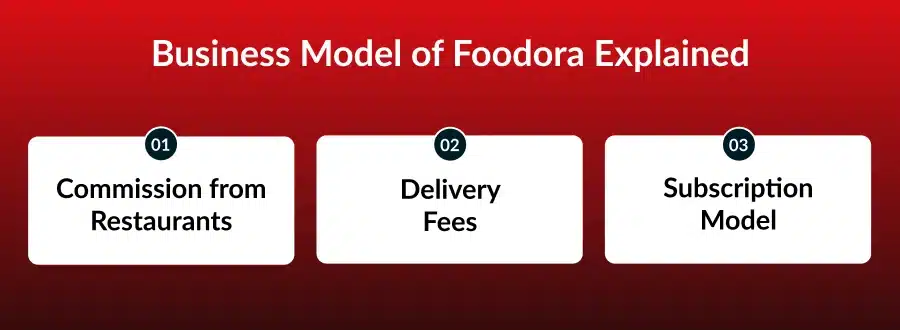
Business Model of Foodora Explained
Foodora uses a smart and flexible business model. This model helps Foodora earn money from different sources while keeping customers, restaurants, and delivery partners satisfied. Let’s understand each part in detail.
1. Commission from Restaurants
This is Foodora’s main source of income.
When a customer orders food using the Foodora app, the restaurant pays Foodora a small percentage of the order value. This percentage is called a commission.
Restaurants agree to pay this commission because Foodora helps them in many ways:
- Foodora brings more customers to the restaurant
- Restaurants get online visibility without spending money on marketing
- Restaurants receive more orders without managing their own delivery staff
For example, if a customer places a ₹1,000 order and the commission rate is 20%, Foodora earns ₹200 from that order. The restaurant keeps the remaining amount.
This model works well because restaurants earn more sales, and Foodora earns money on every successful order.
2. Delivery Fees
Foodora also earns money from delivery fees paid by customers.
When a customer places an order, the app shows a delivery charge. This charge usually depends on:
- The distance between the restaurant and the customer
- Time of delivery (peak hours may cost more)
- Location or city
This delivery fee helps Foodora manage its delivery operations. The money is used to:
- Pay delivery partners
- Cover fuel and logistics costs
- Maintain fast and reliable delivery services
Customers are willing to pay this fee because it saves them time and effort. They can enjoy restaurant food at home without having to travel.
3. Subscription Model
Foodora offers a premium subscription plan for regular users.
In this model, customers have to pay a monthly or yearly fee. In return, they get special benefits such as:
- Free delivery on selected orders
- Extra discounts on food
- Priority delivery during busy hours
This subscription model is helpful for both customers and Foodora:
- Customers save money if they order food often
- Foodora earns fixed and recurring income
This also helps Foodora build loyal users who prefer the app over competitors.
Why This Hybrid Model Works So Well
Foodora does not rely on a single income source. Instead, it earns from:
- Restaurant commissions
- Customer delivery fees
- Paid subscriptions
This hybrid revenue model makes sure steady income and supports fast business growth. That is why many startups choose this model when they want to build a food delivery app like Foodora.
By using the same business approach, new businesses can grow faster and stay competitive in the food delivery market.
What is a Foodora Clone App?
A Foodora clone app is a ready-made solution that copies the main features of the Foodora platform. It helps entrepreneurs develop an app like Foodora without starting from zero.
Without spending years building everything, businesses can use a clone app as a base. This base already includes:
- User registration
- Restaurant listings
- Menu browsing
- Order placement
- Live order tracking
- Online payments
Using a clone app reduces development time and cost. It also helps startups launch faster in the market.
A Foodora clone app can be customized easily. You can change the design, logo, features, payment options, and even delivery rules. This flexibility makes it easier to create an app like Foodora that matches your brand.
Top Features to Include in Your Foodora Clone App
When you develop a Foodora clone app, features play the most important role in success. Good features make food ordering easy, fast, and stress-free. If users enjoy using your app, they will come back again and again.
Below are the must-have features:
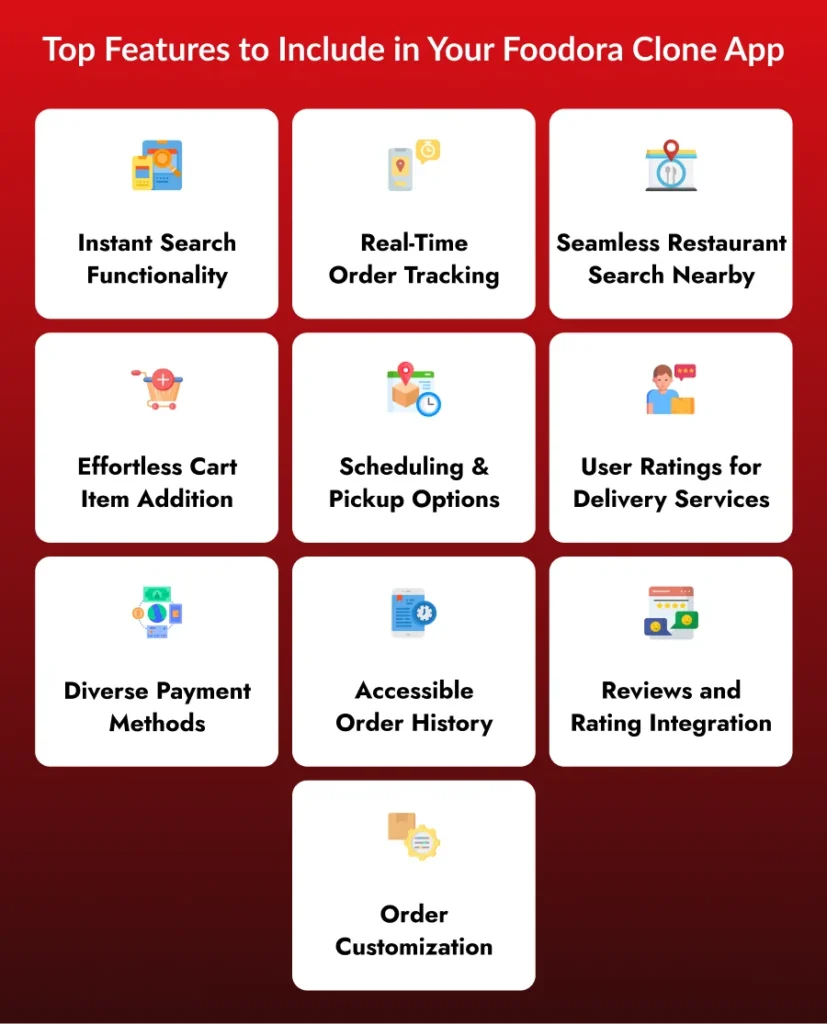
1. Instant Search Functionality
Instant search helps users find what they want within seconds. Users can search by restaurant name, food item, or cuisine such as pizza, burgers, or Indian food. Filters allow users to narrow results based on price, ratings, or distance. This feature saves time and removes frustration, especially when users are hungry and want quick results.
2. Real-Time Order Tracking
Real-time order tracking allows users to see their food journey from the restaurant to their doorstep. The app shows the delivery partner’s live location on a map along with the estimated arrival time. This keeps users informed and reduces anxiety. When users know exactly where their food is, they trust the app more.
3. Seamless Restaurant Search Nearby
This feature uses GPS to show restaurants near the user’s location. Users do not need to search manually. The app automatically displays nearby options, making food discovery easy. It also helps reduce delivery time and delivery cost. At the same time, local restaurants get more visibility and orders.
4. Effortless Cart Item Addition
A smooth cart system makes ordering simple. Users can add items, remove items, or change quantities with just one tap. They can also see the total price clearly. This feature avoids confusion and allows users to customize their order without any difficulty.
5. Scheduling & Pickup Options
Scheduling allows users to place orders for a future time. This is helpful for office lunches, parties, or planned meals. Pickup options let users collect food directly from the restaurant. These choices give users more control and flexibility over how and when they want their food.
6. User Ratings for Delivery Services
After delivery, users can rate the delivery partner based on speed and behavior. This feedback helps improve service quality. Good delivery partners get better ratings, and poor service gets noticed. This system builds trust and enables better service for future orders.
7. Diverse Payment Methods
The app should offer multiple payment options like credit cards, debit cards, UPI, wallets, and cash on delivery. Different users prefer different payment methods. Providing many options makes checkout smooth and reduces order cancellations.
8. Accessible Order History
Order history allows users to see all their past orders in one place. They can quickly reorder their favorite meals without searching again. This feature saves time and gives users a more personal experience.
9. Reviews and Rating Integration
Users can leave reviews and ratings for restaurants and food items. These reviews help new users decide where to order from. Restaurants also learn what customers like and what they need to improve. This creates transparency and trust in the platform.
10. Order Customization
Order customization helps users to change food items based on their preferences. They can select spice level, remove ingredients, or choose dietary options like vegetarian or gluten-free. This allows users to get food exactly the way they want, increasing satisfaction.
Process To Develop Foodora Clone App
Building a Foodora clone app requires proper planning and the right approach. If you follow each step carefully, you can avoid common mistakes and create a successful food delivery app.
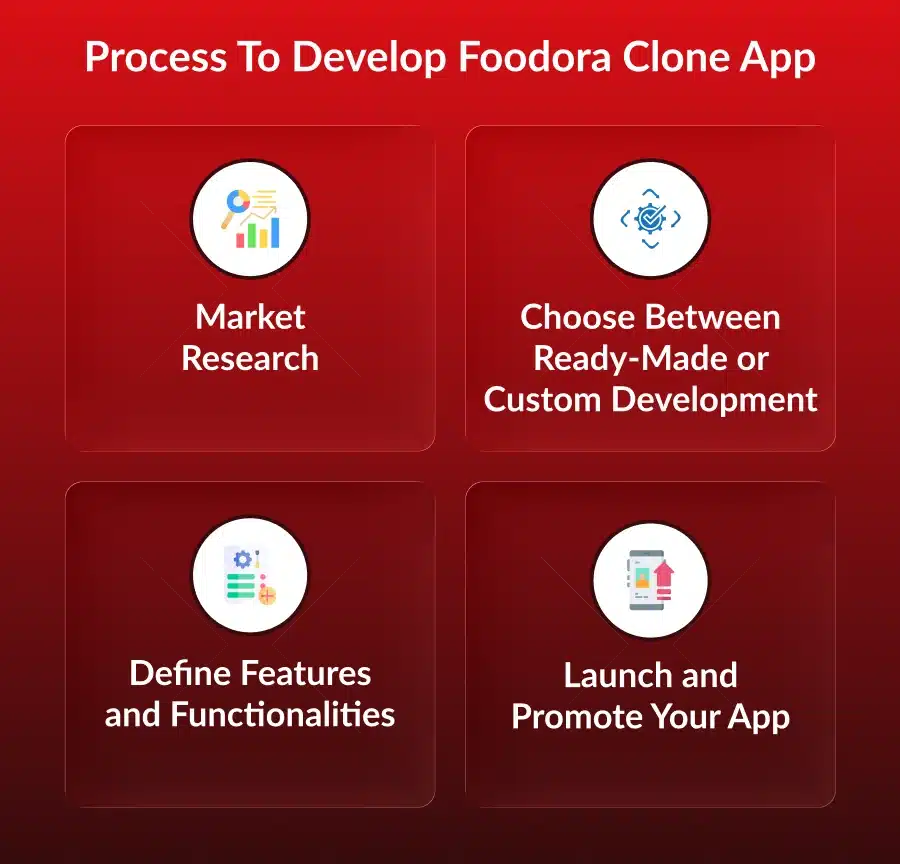
Step 1: Market Research
Market research is the first and most important step. You need to study existing food delivery apps like Foodora, Uber Eats, and DoorDash. Look at their features, pricing, and user reviews.
You should also understand your target users. Find out:
- What type of food they order
- What problems they face while using food delivery apps
- What features they like the most
This research helps you understand what works and what does not. It allows you to build an app that solves real user problems and stands out in the market.
Step 2: Choose Between Ready-Made or Custom Development
In this step, you decide how you want to build your app.
Custom Development: Custom development means building the app from scratch. You get full control over design and features. However, this option costs more and takes a long time to develop. It also requires a skilled development team.
Ready-Made Software: Ready-made software comes with pre-built features and a tested system. This option helps you launch faster and reduces development costs. You can still customize the design and features to match your brand.
Because of lower cost and faster launch, many startups choose ready-made platforms to build a food delivery app like Foodora.
Step 3: Define Features and Functionalities
Once you choose the development approach, you need to decide what features your app will have. Focus on features that make food ordering easy and smooth.
Important features include:
- Easy restaurant search
- Simple cart and checkout process
- Real-time order tracking
- Multiple payment options
Make sure the app is easy to use, loads fast, and works smoothly on all devices. A simple and clean app design improves user experience and increases repeat orders.
Step 4: Launch and Promote Your App
Before launching, test your app properly on Android and iOS devices. Testing helps you find and fix bugs so users get a smooth experience.
After testing, publish your app on Google Play Store and Apple App Store. Once the app is live, focus on promotion. Use:
- Social media marketing
- Online ads
- Special discounts and offers for new users
Good marketing helps you reach more users and grow your app quickly.
How Much Does It Cost to Build Foodora Clone App?
The cost to develop an app like Foodora depends on features, platform, and technology.
| App Type | Estimated Cost |
|---|---|
| Android App | $15,000 - $25,000 |
| iOS App | $18,000 - $30,000 |
| Cross Platform App Development | $25,000 - $45,000 |
| Cross Platform App Development | $25,000 - $45,000 |
| Admin Panel & Backend | $8,000 - $15,000 |
| Advanced Features | $10,000 - $20,000 |
Total cost to develop an app like Foodora: $25,000 to $80,000+.
A reliable mobile app development company can help control costs.
How Food Delivery Software Makes Building a Foodora Clone App Easy
Building a food delivery app from the beginning can be complex, time-consuming, and expensive. You need to manage design, development, testing, and maintenance. This is where food delivery software becomes very helpful.
Food delivery software provides a ready-made system that already includes important features needed to build a Foodora clone app. Instead of starting from scratch, you can use this software as a strong base and customize it according to your business needs.
How food delivery software helps you:
Faster App Launch
Ready-made food delivery software comes with pre-built features like restaurant listings, order management, payments, and delivery tracking. This helps you launch your app much faster and enter the market quickly.
Lower Development Cost
Since the core features are already developed, you save a lot of money on development. This significantly reduces the cost to develop an app like Foodora and makes it affordable for startups.
Easy Restaurant Management
The software allows restaurant owners to manage menus, prices, availability, and orders easily from a dashboard. This reduces manual work and improves efficiency.
Smooth Order Handling
Orders flow automatically from users to restaurants and delivery partners. This reduces errors and faster order processing and delivery.
Scalable and Customizable Solution
A good food delivery app development company offers software that grows with your business. You can add new features, support more users, and expand to new locations without issues.
Companies like Developer Bazaar Technologies specialize in providing customizable food delivery software solutions. As an experienced software development company, they help businesses build scalable, secure, and user-friendly Foodora clone apps tailored to specific business goals.
By choosing the right food delivery software and development partner, you can build a Foodora-like food delivery app faster, smarter, and with less risk.
Conclusion
Developing a Foodora clone app in 2026 is a smart business move because the demand for online food delivery continues to grow every year. People prefer fast and reliable food ordering through mobile apps via cross-platform app development.
This guide explained everything you need to know, from the Foodora business model and must-have features to the step-by-step process and the cost to develop an app like Foodora. By choosing the right features, following proper planning, and using ready-made food delivery software, you can reduce risk, save cost, and launch faster.
Working with an experienced food delivery app development company like Developer Bazaar Technologies can help you build a scalable, secure, and user-friendly solution.
Whether you want to build an app like Foodora, create an app like Foodora, or develop a food delivery app like Foodora, the right technology partner and strategy will help you succeed in this competitive market.
FAQs
Q1. How does food delivery software help in launching a clone app?
Food delivery software provides ready-made features and customization, helping you launch a Foodora clone app faster and at a lower cost.
Q2. What features are important in a Foodora clone app?
Key features include real-time order tracking, multiple payment options, ratings, nearby restaurant search, and order customization.
Q3. How much time does it take to launch a clone app?
Using ready-made software, you can launch your app within a few months.
Q4. Can a Foodora clone app grow as the business expands?
Yes, modern food delivery platforms support easy scaling as users and restaurants increase.
Q5. Do I need to hire a full development team?
No, ready-made software reduces the need for a full team, as a mobile app development company can manage the technical work.

RM Mishra
Co-Founder
Developer Bazaar technologies