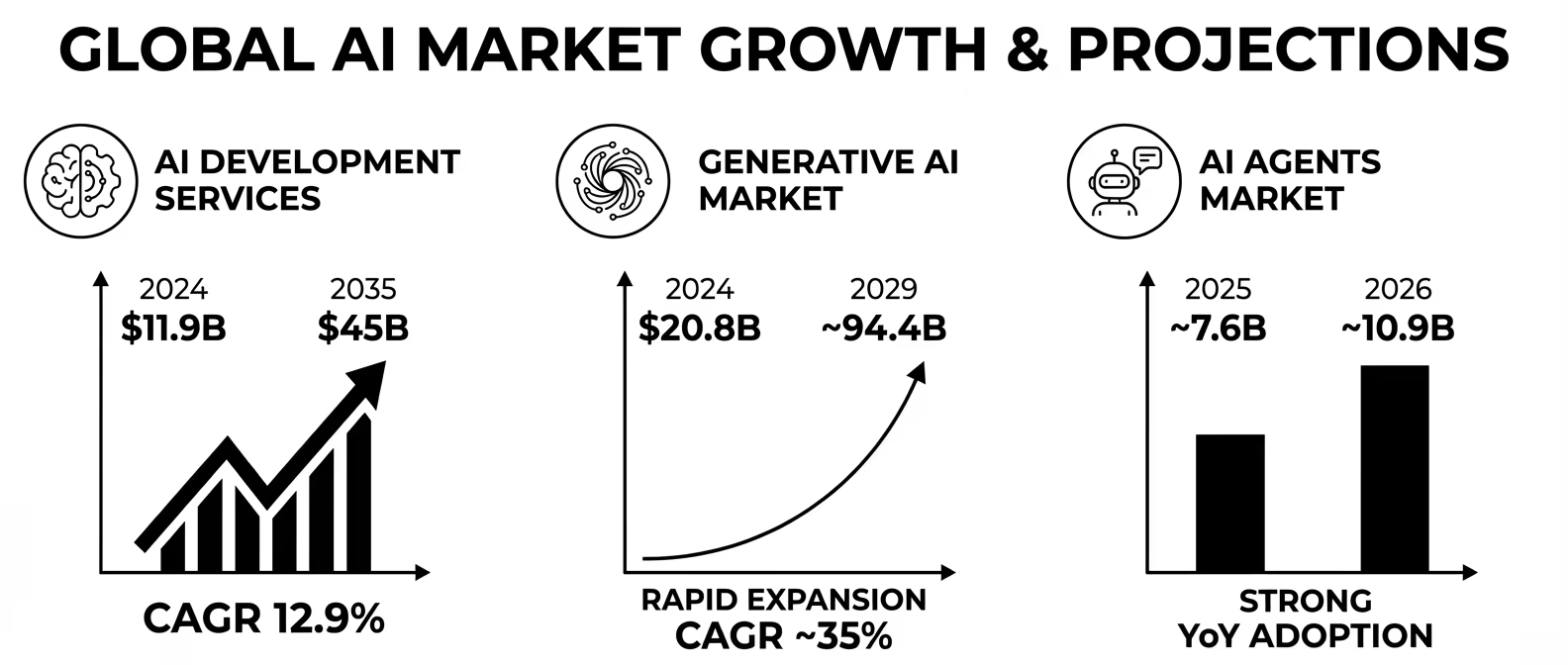

People today care more about what they eat, but they have less time to plan healthy meals. This is where technology takes the place. An AI nutritionist app works like a smart food coach that helps users eat better every day.
The global nutrition app market is growing fast and is expected to reach $4.56 billion by 2030. This growth clearly shows one thing: now is the best time to create an AI nutritionist app.
Modern users want to explore something new with the trending technologies for calorie tracking. They want smart apps that understand their lifestyle, food habits, and health goals. Businesses that build AI nutritionist apps can meet this demand while making good profits.
In this guide, you will learn:
- Why businesses should invest in AI nutrition apps in 2026
- Real-world use cases across industries
- Advanced Features needed to develop an AI nutritionist app
- How to Develop an AI Nutrition App
Why Should Businesses Develop an AI Nutrition App in 2026?
In 2026, people care deeply about their health, but they also live with busy schedules. Between work, family duties, social media, and entertainment, most people don’t have the time or energy to plan meals, count calories, or follow strict diet charts. They want help that feels simple, smart, and personal.
This is exactly why businesses should develop an AI nutrition app in 2026. These apps solve everyday food problems using technology that is already proven and trusted.
Understand why the demand is growing so fast and why businesses should act now.
1. People Want Personal Nutrition, Not Generic Diet Plans
Traditional diet plans follow a “one-size-fits-all” approach. They often fail because:
- Everyone has a different body
- Food habits vary by culture and lifestyle
- Health goals are not the same for all users
An AI nutrition app fixes this problem by creating personalized meal plans. It studies user data such as age, weight, activity level, food preferences, and health goals. Then it suggests meals that actually fit the user’s life.
When users feel understood, they stay longer. This builds trust and long-term engagement for businesses.
2. Consistency Is Hard, but AI Makes It Easy
Most people start diet tracking with excitement, but they stop within a few days. The reason is simple: manual food logging feels boring and time-consuming.
AI-powered nutrition apps make this process easy by offering:
- Barcode scanning for packaged foods
- Photo recognition for meals
- Smart food suggestions based on past habits
This automation removes effort from the user’s daily routine. When tracking feels simple, people stay consistent, and businesses retain more users.
3. Users Expect Smart and Adaptive Digital Experiences
Modern users expect apps to adapt to their lifestyle, just like Netflix or Spotify does. Static apps feel outdated.
AI nutrition apps:
- Track progress in real time
- Adjust meal plans automatically
- Send helpful reminders and tips
For gyms, wellness brands, and healthcare providers, this means higher user engagement and better results. An engaged user is far more likely to stay loyal to a brand.
4. AI Nutrition Apps Create Strong Business Value
From a business point of view, AI nutrition apps are not just helpful tools, they are powerful growth engines.
By building custom AI nutrition applications, businesses can:
- Strengthen customer relationships
- Offer premium features through subscriptions
- Open new revenue channels
- Stand out in a crowded health and wellness market
These apps position businesses as trusted health partners rather than simple service providers.
5. The Timing Is Perfect in 2026
The demand for digital health solutions is high. AI technology is advanced and affordable. Users are already comfortable using health apps.
Businesses that develop AI nutrition apps now will:
- Get ahead of competitors early
- Build long-term customer loyalty
- Lead the future of digital wellness
Use Cases of AI Nutrition App Development Across Industries
AI nutrition apps are no longer limited to people who want to lose weight or go to the gym. These apps are being used across many industries to improve health, boost engagement, and reduce long-term costs. Since everyone eats food every day, AI nutrition apps fit naturally into almost every business that focuses on people’s well-being. Below are the key industries where AI nutrition app development is creating real impact.
1. Fitness Centers and Gyms
Fitness centers focus on workouts, but exercise alone is not enough to achieve results. AI nutrition apps help gyms offer complete fitness solutions by combining workout plans with personalized meal guidance. Members can track what they eat, follow diet plans, and see how food affects their performance. This leads to faster results, higher satisfaction, and longer membership retention.
2. Wellness and Lifestyle Brands
Wellness and lifestyle brands use AI nutrition apps to stay connected with customers beyond product purchases. These apps recommend meals, healthy recipes, or supplements based on individual habits and goals. When users receive useful and relevant suggestions, they trust the brand more. This trust encourages repeat purchases and builds long-term customer loyalty.
3. Healthcare Providers and Telehealth Platforms
Healthcare providers use AI nutrition apps to monitor patients’ diets outside clinic visits. Patients can log meals, track progress, and share reports with doctors in real time. This helps doctors give better advice and ensures patients follow their nutrition plans. As a result, treatment becomes more effective and easier to manage remotely.
4. Corporate Wellness Programs
Companies use AI nutrition apps to promote healthier eating habits among employees. These apps help improve overall health, reduce sick days, and increase workplace productivity. Features like team challenges and progress tracking make healthy eating more engaging. A healthier workforce also means better morale and lower healthcare costs for employers.
5. Health Insurance Companies
Health insurance companies use AI nutrition apps to support preventive care. By encouraging healthier eating habits, insurers help users avoid lifestyle-related diseases. Healthier customers make fewer claims, which reduces long-term costs. At the same time, insurers strengthen their image as partners in wellness, not just claim processors.
What Key Features Should an AI Nutrition App Include?
When building a smart nutrition app, features play the most important role in its success. The right features make the app easy to use, helpful, and engaging. Below are the must-have features every business should include when developing an AI nutrition app:
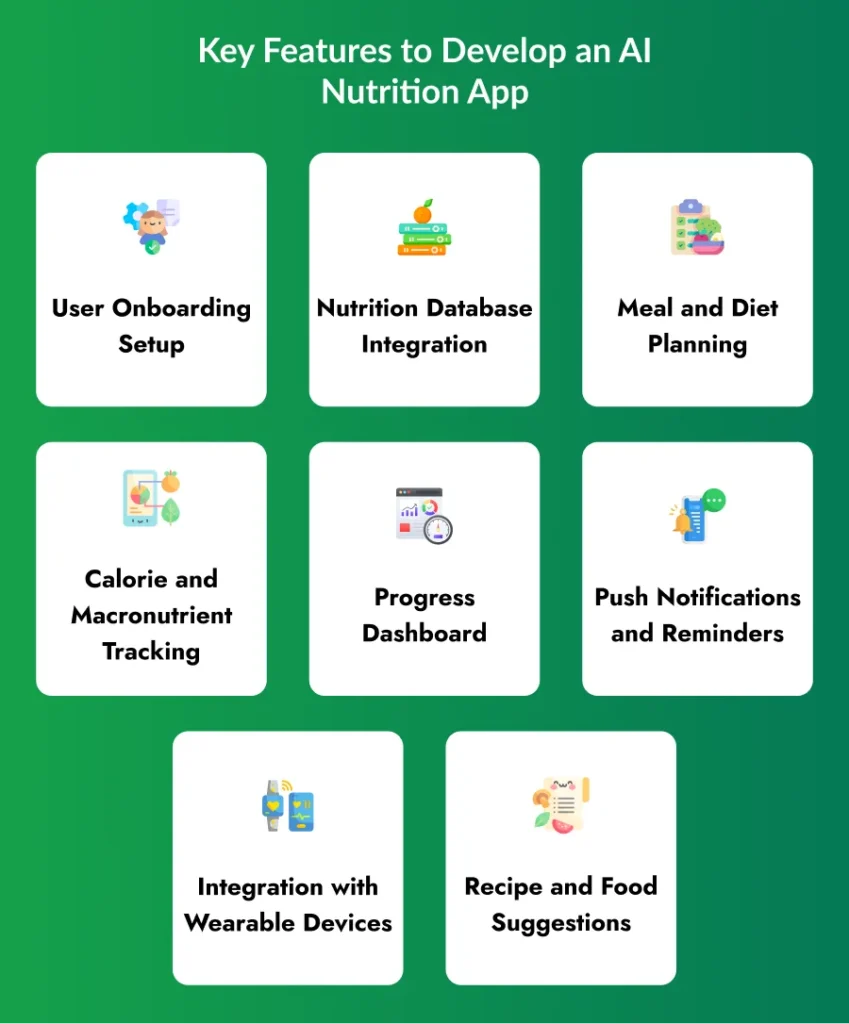
1. User Onboarding Setup
This is the first step when a user opens the app. During onboarding, the app collects important details such as health goals, dietary preferences, allergies, age, and activity level. This information helps the AI understand the user better. Proper onboarding is important because personalization starts here. The more accurate the data, the better the nutrition recommendations.
2. Nutrition Database Integration
The app must connect to trusted nutrition databases like USDA, Edamam, or regional food sources. This ensures accurate calorie counts and nutrient values for different foods. Reliable data builds user trust and helps them make informed food choices, especially when tracking global or local cuisines.
3. Meal and Diet Planning
This feature creates personalized meal plans based on the user’s goals, lifestyle, and preferences. Whether the goal is weight loss, muscle gain, or balanced eating, AI adjusts the plan accordingly. Meal planning helps users stay on track while still allowing flexibility for real-life eating habits.
4. Calorie and Macronutrient Tracking
Tracking calories, proteins, fats, and carbohydrates helps users understand what they eat every day. This feature gives clear insights into whether their diet is balanced or not. Over time, users become more aware of their food habits and can make healthier choices.
5. Progress Dashboard
A progress dashboard shows visual charts, graphs, and weekly summaries of food intake and goals achieved. Seeing progress clearly and simply motivates users to continue their journey. This feature keeps users engaged and makes their efforts feel rewarding.
6. Push Notifications and Reminders
Push notifications gently remind users to log meals, drink water, or stick to their diet plans. These reminders help build healthy habits and prevent users from forgetting or losing interest. Well-timed notifications reduce app drop-off and improve long-term engagement.
7. Integration with Wearable Devices
Connecting the app with wearable devices like Fitbit, Apple Health, or Google Fit provides a complete health picture. The app can track physical activity, calories burned, and daily movement. This helps the AI give more accurate nutrition advice based on real activity data.
8. Recipe and Food Suggestions
The app suggests meals and snacks based on the user’s remaining daily calories and nutrients. This removes the stress of deciding what to eat next. Recipe suggestions add convenience and make the app feel like a helpful food coach rather than just a tracking tool.
Advanced Features in AI Nutrition Tracking App Development
Once the basic features are added, advanced AI capabilities can be added on that truly change it into a smart digital food coach. These features make the app more interactive, more personal, and much more useful in daily life.
Below are six powerful advanced features that help businesses build a custom AI nutrition app that users trust.
1. AI-Powered Meal Recommendations
This feature uses machine learning to suggest meals based on user goals, food preferences, dietary restrictions, and daily activity levels. Unlike fixed diet charts, these recommendations change in real time. If a user skips a meal or eats more than planned, the app automatically adjusts future meal suggestions. This flexibility makes healthy eating easier to follow.
2. Computer Vision for Food Recognition
With this feature, users simply take a photo of their meal. The app identifies the food, estimates portion size, and calculates calories and nutrients. This reduces the effort of manual food logging and makes tracking faster and more fun. It also helps users stay consistent without feeling tired of logging every meal.
3. Chat-Based AI Nutritionist Assistant
A generative AI chat assistant works like a pocket dietitian. Users can ask questions such as “What is a healthy dinner option?” or “Suggest a vegetarian protein instead of chicken.” The assistant responds with smart, personalized answers. This conversational support makes the app feel friendly and supportive, not robotic.
4. Integration with Wearables and Smart Devices
By connecting with wearables like Apple Watch, Aaptiv, or glucose monitors, the app collects real-time health data. It understands what users eat and how their bodies react. This helps the app give more accurate and personalized nutrition advice, especially for fitness-focused or health-conscious users.
5. Smart Recipe Suggestions and Food Substitutions
Users can enter the ingredients they have at home, and the app suggests healthy recipes they can cook right away. For people with allergies or diet restrictions, the app also recommends smart ingredient substitutes. This makes meal planning stress-free and inclusive for everyone.
6. Personalized Health Insights and Trend Analysis
Advanced AI analyzes long-term eating habits and identifies patterns, such as low fiber intake or high sugar consumption on weekends. The app then shares easy-to-understand insights with practical tips. These insights help users improve their habits step by step instead of feeling overwhelmed.
Key Steps to Develop an AI Nutrition App for Businesses in 2026
To create an AI nutritionist app, businesses must follow a clear step-by-step process. Just like cooking a good meal, skipping steps can ruin the final result. A structured approach helps reduce risks, save money, and build a successful product.
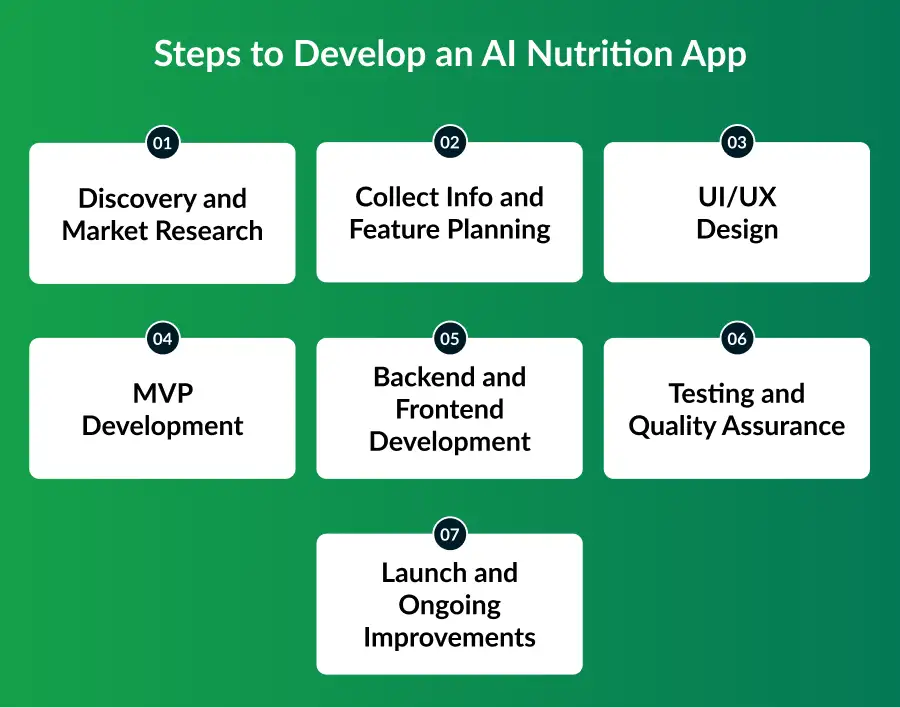
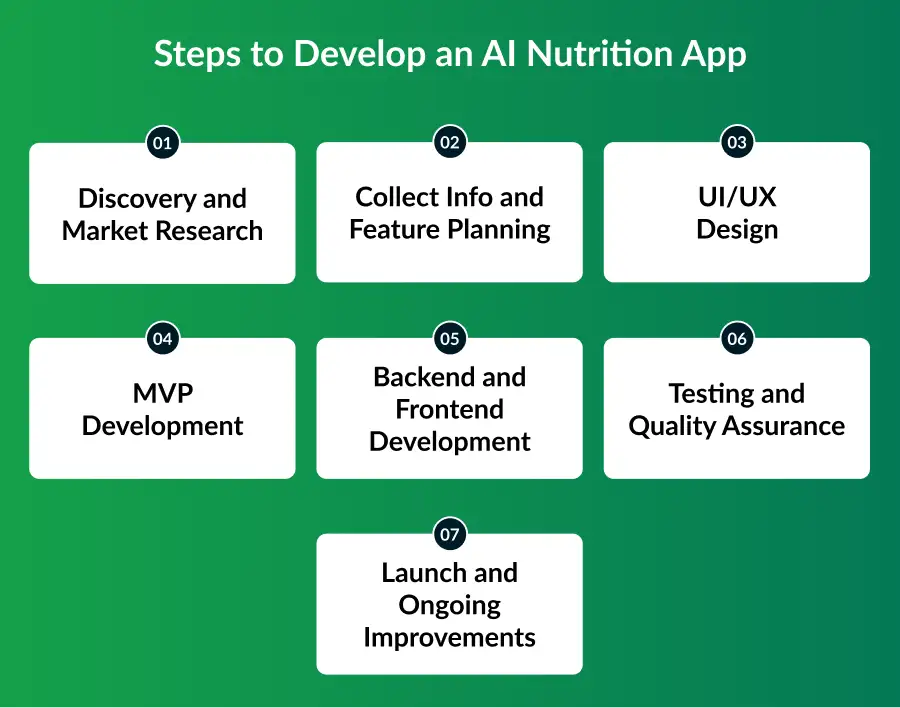
Step 1: Discovery and Market Research
Every successful AI nutritionist app starts with research. Businesses first study the nutrition app market to understand user needs and trends. They analyze popular apps to see what works and what users dislike. This step also includes creating user profiles, such as gym users, office workers, or patients. Research makes sure you are building a nutrition app that solves real problems, not guessing blindly.
Step 2: Collect Info and Feature Planning
In this step, businesses decide what features the app will have. Core features like onboarding, food logging, and dashboards come first. Advanced features like AI recommendation, chat assistants, and grocery suggestions come later. Businesses also decide if the app is for individuals or companies. Proper planning avoids confusion and helps control the AI nutritionist app development cost.
Step 3: UI/UX Design
A simple and friendly design makes users happy. If an app feels confusing, users will leave, even if the AI is powerful. Designers create wireframes and test how users log food or check progress. Features like voice input, large fonts, and simple screens help everyone use the app easily. Good design makes building a smart nutrition app successful.
Step 4: MVP Development
An MVP is the first working version of the app with only essential features. Businesses launch it to a small group of users and collect feedback. This helps test ideas early without spending too much money. MVP development is very important when you build AI nutritionist app solutions for long-term growth.
Step 5: Backend and Frontend Development
Now, developers turn designs into a real app. The backend handles data, AI logic, and API integration with food databases like USDA or Edamam. The frontend focuses on fast and smooth mobile screens. Many businesses work with a cross platform app development company to build one app for both Android and iOS.
Step 6: Testing and Quality Assurance
Testing ensures everything works properly before launch. Developers test food logging, AI suggestions, notifications, and wearable syncing. They also check if the app works well on different devices. Strong testing builds trust and reduces user complaints.
Step 7: Launch and Ongoing Improvements
Launching the app is just the beginning. After launch, businesses track user behavior, fix issues, and add new features. AI models improve over time using real user data. Regular updates keep users engaged and help the app grow successfully.
Security Compliance in AI Nutrition App Development
When users use an AI nutritionist app, they share personal health and food data. Protecting this data is very important. Security builds trust and keeps businesses safe from legal problems.
HIPAA Compliance (For the U.S.)
If your app works with doctors or healthcare providers, HIPAA rules apply. These rules protect health data by using secure logins, encrypted storage, and limited access. A trusted Healthcare App development company ensures these rules are followed.
GDPR Compliance (For Global Users)
GDPR protects user privacy in many countries. Users must know what data is collected and why. They should also be able to delete their data anytime. Clear privacy policies and consent screens make users feel safe.
Data Encryption and Secure Storage
Apps must encrypt all data while storing and sharing it. This protects information from hackers. Cloud platforms like AWS or Azure help store data safely. Regular security checks keep systems strong.
Privacy-Friendly AI Models
Advanced AI systems can learn without exposing personal details. This allows apps to improve recommendations while respecting privacy. Users feel more comfortable sharing data when privacy comes first.
How Much Does It Cost to Build an AI Nutrition App?
| App Type | Features Included | Estimated Cost |
|---|---|---|
| Basic AI Nutrition App | Core features like onboarding, food logging, and calorie tracking | $30,000 - $40,000 |
| Mid-Level AI Nutrition App | Personalization, AI recommendations, progress tracking, and analytics | $40,000 - $60,000 |
| Advanced AI Nutrition App | Advanced AI models, food image recognition, chat-based AI assistant, wearable integration | $60,000 - $110,000 |
What Factors Affect the Cost of AI Nutrition App Development?
The total cost to build an AI nutrition app is not fixed. It depends on several important factors that influence development time, effort, and resources. Below are the key factors mentioned:
1. App Features and Complexity
The number and type of features directly affect the development cost. A basic app with food logging and calorie tracking costs less and takes less time. When you add advanced features like food image recognition, AI chat assistants, and real-time diet suggestions, the app becomes more complex. More complexity means more development hours, which increases the overall cost.
2. Design and User Experience (UI/UX)
Design plays a big role in how users interact with the app. Simple designs with standard layouts cost less to build. Custom designs with animations, easy navigation, accessibility features, and multi-language support require more effort. A well-designed app keeps users engaged longer, which adds value but also increases the development budget.
3. Platform Choice (Android, iOS, or Both)
If you build the app for only one platform, such as Android or iOS, the cost is lower. Developing the app for both platforms increases the cost because more testing and optimization are required. Many businesses choose cross-platform development to save time and money while still reaching a wider audience.
4. AI and Machine Learning Integration
AI is the core of a nutrition app, but it also affects cost. Using ready-made AI tools and APIs is faster and more affordable. Building custom AI models requires skilled developers, training data, and testing, which increases the cost. Most businesses use a combination of both to balance accuracy and budget.
5. API and Third-Party Integrations
Integrating food databases, wearable devices, payment systems, and health platforms adds extra development work. Features like Payment Gateway integration and wearable syncing improve user experience but also increase costs. Each integration requires setup, testing, and ongoing maintenance.
6. Testing, Maintenance, and Updates
Testing ensures the app works smoothly on different devices and platforms. More features mean more testing effort, which adds to the cost. After launch, regular updates, bug fixes, and performance improvements are needed. Ongoing maintenance is essential for long-term success and should be included in the budget.
Why Developer Bazaar Technologies is the Best AI Nutrition App Development Company?
Choosing the right development partner is just as important as having a great app idea. Developer Bazaar Technologies stands out as a trusted AI nutrition and Fitness app development company because it focuses on quality, clarity, and real business results.
First, the team has strong experience in AI, healthcare, and health & fitness app development. They understand how nutrition apps work, how AI recommendations should behave, and how to keep user health data secure. This means businesses get an app that is smart, safe, and reliable.
Second, Developer Bazaar Technologies builds custom AI nutritionist apps, not one-size-fits-all solutions. Every app is designed based on the client’s goals, target users, and budget. Whether you want to build a basic MVP or a full-featured AI-powered platform, the team adapts to your needs.
Third, they offer end-to-end development services. From idea validation and UI/UX design to AI integration, API integration, payment gateway integration, testing, and launch, everything is handled under one roof. This reduces delays, confusion, and extra costs.
Finally, their focus on clear communication, simple design, and future-ready technology makes them a reliable long-term partner. Businesses that want to build an AI nutritionist app that users love can trust Developer Bazaar Technologies to deliver results.
Conclusion
AI nutrition apps are no longer optional, they are becoming a core part of modern health and wellness solutions. People want personalized, easy-to-use tools that help them eat better without stress. At the same time, businesses want new ways to engage users, build loyalty, and grow revenue.
By choosing to develop an AI nutritionist app in 2026, businesses can stay ahead of the market and meet rising customer expectations. With the right features, strong security, smart AI recommendations, and an experienced Ai app development partner, an AI nutrition app can become a powerful digital asset.
If you are planning to create an AI nutritionist app, now is the perfect time to turn your idea into reality.
FAQs
1. What is an AI nutritionist app?
A: An AI nutritionist app is a smart mobile app that uses artificial intelligence to give personalized diet plans, meal suggestions, and nutrition advice.
2. How long does it take to build an AI nutrition app?
A: A basic version usually takes 3 – 6 months, while a full-featured AI nutrition app can take 8 – 10 months.
3. What is the cost to develop an AI nutritionist app?
A: The cost typically ranges from $30,000 to $110,000+, depending on features, AI complexity, and platforms.
4. Can AI nutrition apps integrate with wearables?
A: Yes, AI nutrition apps can integrate with devices like Fitbit, Apple Health, and Google Fit for better tracking.
5. Is user data safe in AI nutrition apps?
A: Yes, when built correctly with encryption and compliance standards like HIPAA and GDPR, user data remains secure.
6. Can businesses monetize AI nutrition apps?
A: Yes, businesses can earn through subscriptions, in-app purchases, corporate wellness plans, and partnerships.
7. Why choose Developer Bazaar Technologies for AI nutrition app development?
A: They offer custom solutions, strong AI expertise, healthcare compliance knowledge, and end-to-end development support.

RM Mishra
Co-Founder
Developer Bazaar technologies