

Healthcare is becoming more digital every year. Hospitals, clinics, startups, and healthcare companies are now using mobile apps to offer better medical services. These custom mHealth app developments help patients connect with doctors, track their health, receive reminders, and even attend online consultations from home.
However, building a medical app is not a simple mobile application. Healthcare apps must follow strict security rules, protect patient information, and provide accurate medical services.
This comprehensive guide explains everything required to build a healthcare mobile app. Whether you are a startup founder, healthcare provider, or entrepreneur, you will learn how to build mHealth app solutions for modern healthcare needs successfully.
Note: mHealth apps are mobile healthcare solutions that connect patients and providers digitally and building one successfully requires compliance, security, and the right tech stack.
What is an mHealth App?
An mHealth app is a smartphone or tablet application that delivers healthcare services digitally. These apps help users manage health-related activities directly from their mobile devices.
mHealth app development is the process of creating mobile applications that improve healthcare services and patient experiences.
These apps can:
- Monitor health conditions
- Offer online doctor consultations
- Track fitness activities
- Store medical records
- Send medicine reminders
- Monitor chronic diseases
- Improve communication between doctors and patients
Modern healthcare app development focuses on app functionality and user experience.
Global Healthcare Market, Everyone Should Know
The healthcare industry is growing very fast worldwide. Rising chronic diseases and aging populations are increasing the demand for healthcare services and mobile applications.
According to the Technavio market report:
- The healthcare services market is expected to increase by USD 7589.9 billion between 2025 and 2030.
- The market is growing at a CAGR of 9.1%.
- North America currently dominates the healthcare market with over 40% market share.
- Adult care services generated the highest revenue in recent years.
- Hospitals and clinics remain the largest healthcare service providers globally.
This rapid growth creates huge opportunities for businesses investing in mhealth app development services.
Different Types of mHealth Applications
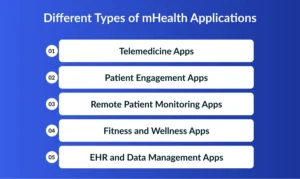
There are many types of healthcare applications available. Each app is designed to solve specific healthcare problems and improve medical services. Below are some of the most popular types of mHealth applications used worldwide.
1. Telemedicine Apps
Telemedicine apps allow patients to connect with doctors remotely through video calls, voice calls, or chat features. These apps make healthcare services more accessible, especially for people living in rural or remote areas where hospitals and clinics may not be easily available.
Most telemedicine apps include features like appointment booking, online prescriptions, secure messaging, digital payments, and virtual consultations. Popular examples include Amwell and Teladoc Health.
2. Patient Engagement Apps
Patient engagement apps help users stay connected with healthcare providers and manage their medical activities more efficiently. These applications give patients easy access to medical records, appointment schedules, prescriptions, and health reminders directly from their smartphones.
These apps also improve communication between doctors and patients through secure messaging systems. Applications like MyChart increase transparency and encourage patients to take better control of their healthcare journey.
3. Remote Patient Monitoring Apps
Remote patient monitoring apps are designed to track patient health conditions in real time using wearable devices and smart medical sensors. These applications are especially helpful for managing chronic diseases such as diabetes, heart disease, and high blood pressure.
The apps monitor important health data like heart rate, glucose levels, blood pressure, and oxygen levels. They also send real-time alerts and share patient data directly with healthcare providers. A popular example is Dexcom, which helps patients monitor blood sugar levels more effectively.
4. Fitness and Wellness Apps
Fitness and wellness apps help users maintain healthy lifestyles by tracking physical activities and wellness habits. These applications motivate people to stay active and improve both physical and mental health through personalized recommendations and activity monitoring.
Common features include step tracking, calorie counting, sleep monitoring, workout planning, hydration reminders, and mental wellness support. Popular fitness apps such as Fitbit and Strava are widely used around the world for daily fitness tracking and performance improvement.
5. EHR and Data Management Apps
Electronic Health Record (EHR) and data management apps help hospitals and healthcare providers store, manage, and access patient information digitally. These applications replace traditional paperwork and make medical workflows faster, secure and more organized.
Healthcare professionals can use these apps to access patient history, prescription records, lab reports, appointment schedules, and treatment plans from a single system. Popular platforms like Epic and Cerner PowerChart improve operational efficiency and healthcare data management across departments.
Step-by-Step Guide to Create a Medical App
Building a successful mhealth app development requires proper planning, the right technology, and a strong focus on patient safety. Below is a step-by-step process followed by many businesses and healthcare organizations to develop mhealth app solutions successfully.
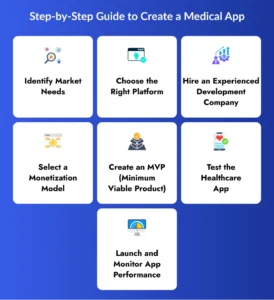
Step 1: Identify Market Needs
The first step in healthcare mobile app development is understanding the problems users face and how your app can solve them. You should identify your target audience, such as patients, doctors, hospitals, or fitness users, and understand their specific needs.
Businesses also decide the type of healthcare application they want to build, such as telemedicine apps, fitness apps, patient monitoring systems, or EHR platforms. Proper market research helps reduce risks and improve the chances of building a successful app.
Step 2: Choose the Right Platform
The next step is selecting the platform where your app will be launched. Businesses can choose Android, iOS, web applications, or cross-platform app development depending on their target audience and budget.
Choosing the right platform is important because it affects app performance, development time, user experience, and overall app development cost.
Step 3: Hire an Experienced Healthcare App Development Company
Partnering with a trusted healthcare app development company can simplify the entire development process. Experienced companies understand healthcare regulations, security standards, and advanced technologies required for medical applications.
Professional teams usually include UI/UX designers, developers, testers, project managers, and healthcare consultants. Skilled mHealth app developers make sure the app is secure, scalable, and aligned with business goals.
Step 4: Select a Monetization Model
Every business wants its app to generate revenue. Before development begins, it is important to choose the right monetization strategy for your healthcare app.
Most healthcare apps use subscription plans, freemium models, paid consultations, advertisements, or premium healthcare services. Choosing the right model helps businesses recover the cost to develop mHealth app solutions and achieve long-term profitability.
Step 5: Create an MVP (Minimum Viable Product)
An MVP is a basic version of the app with only essential features. It helps businesses test the idea in the real market before investing in full-scale development.
Creating an MVP allows developers to gather user feedback, identify issues early, and improve the app based on real user experiences. This approach saves time, reduces development risks, and improves product quality.
Step 6: Test the Healthcare App
Testing is one of the most important steps in medical app development because healthcare apps handle sensitive patient data and critical medical services. Every feature should work smoothly and securely before launch.
Developers perform different types of testing, including security testing, performance testing, UI/UX testing, device testing, and functionality testing. Proper testing helps improve app quality, reduce bugs, and protect user trust.
Step 7: Launch and Monitor App Performance
Once the app passes all testing stages, it is ready for launch on app stores or web platforms. However, the work does not stop after deployment.
Businesses should continuously monitor app performance, user feedback, crash reports, and security updates. Regular updates help improve features, fix bugs, and keep the healthcare app compliant with changing industry standards.
Key Features for Mobile Health Application Development in 2026
Healthcare technology is evolving rapidly, and user expectations are higher than ever. In 2026, businesses must focus on advanced, secure, and user-friendly features while building modern healthcare applications.
Below are some essential features required for successful mHealth application development.
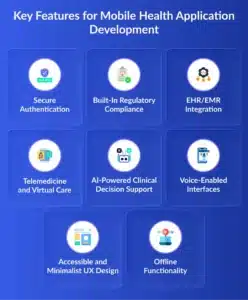
1. Secure Authentication
Healthcare apps manage highly sensitive patient information, so strong security is a necessity. Secure authentication systems like multi-factor authentication and role-based access control help ensure that only authorized users can access medical data. These security features protect patient privacy and improve trust among healthcare providers and users.
2. Built-In Regulatory Compliance
Modern healthcare apps must follow healthcare regulations such as HIPAA and GDPR to protect patient information for legal compliance. Compliance features include encrypted data storage, audit logs, and secure data access controls. Businesses investing in custom mHealth app development should prioritize compliance from the beginning of the project.
3. EHR/EMR Integration and Interoperability
Healthcare apps should integrate smoothly with hospitals, pharmacies, laboratories, insurance systems, and Electronic Health Record platforms. FHIR APIs and interoperability standards help healthcare providers share patient data securely across systems. Strong integration improves workflow efficiency and patient care quality.
4. Telemedicine and Virtual Care
Telemedicine has become one of the most important features in modern healthcare apps. Patients now expect online consultations, remote care, and digital healthcare access from anywhere. Advanced telemedicine app development solutions now include AI-powered diagnosis support, video consultations, remote prescriptions, and 5G-enabled virtual care services.
5. AI-Powered Clinical Decision Support
Artificial Intelligence is transforming healthcare mobile app development. AI-powered features can analyze symptoms, predict health risks, provide treatment suggestions, and improve decision-making for healthcare professionals.
AI also helps automate repetitive tasks and improve patient engagement through smart healthcare recommendations.
6. Voice-Enabled Interfaces
Voice technology is becoming increasingly popular in healthcare applications because it improves accessibility and user convenience. Many users now prefer voice commands for routine healthcare tasks.
Voice-enabled interfaces make healthcare apps easier for elderly users, visually impaired patients, and users who prefer hands-free interactions.
7. Accessible and Minimalist UX Design
Simple and easy-to-use interfaces are now a top priority in healthcare app development. Healthcare apps should include large buttons, high-contrast layouts, simple navigation, and easy-to-read language. An accessible design improves usability for patients of all age groups and enhances overall engagement.
8. Offline Functionality
Healthcare apps should continue working even when internet connectivity is weak or unavailable. Offline functionality is especially important in rural and remote areas. Users should still be able to access critical health information, prescriptions, and reports without an active internet connection.
Major Benefits of mHealth App Development?
Modern mHealth app development services offer significant benefits for both healthcare providers and patients. These applications improve healthcare accessibility, automate workflows, and enhance patient engagement.
Benefits for Healthcare Providers
Better Patient Monitoring: Healthcare apps allow doctors to monitor patient conditions remotely and communicate with patients in real time. Remote monitoring supports early diagnosis and better chronic disease management.
Data-Driven Decision Making: It collects and organizes large amounts of patient data securely. Doctors and healthcare professionals can use this data to make faster and more accurate medical decisions.
Higher Operational Efficiency: Healthcare mobile applications automate many administrative tasks such as appointment scheduling, billing, patient record management, and communication.
Benefits for Patients
Improved Accessibility: Patients can access healthcare services from anywhere using mobile devices. This is especially useful for people living in rural or underserved areas.
Affordable Healthcare Services: This reduces the need for frequent hospital visits and encourages preventive care. This helps lower medical expenses for patients over time.
Better Health Awareness: It provides users with instant access to medical information, health tracking, reminders, and personalized recommendations.
Key Challenges and Their Solutions to Develop mHealth App
Although mHealth application development offers many advantages, businesses also face several challenges during the development process. Understanding these challenges and applying the right strategies can improve project success.
1. Data Privacy and Security
Healthcare apps handle highly sensitive patient data, making security one of the biggest challenges in healthcare app development. Data breaches can damage user trust and lead to legal penalties.
Best Solution: Businesses should use strong encryption, secure authentication systems, role-based access control, and regular security audits.
2. User Engagement and Retention
Some users stop using healthcare apps if the interface feels too complex or if the app does not provide enough value.
Best Solution: Developers should focus on user-friendly design, personalized experiences, and smart notifications. Simple navigation and engaging experiences help improve long-term user retention.
3. Interoperability Challenges
Healthcare applications often need to integrate with hospitals, labs, pharmacies, wearable devices, and insurance systems. Different standards and protocols can make integration difficult.
Best Solution: Using standardized APIs such as FHIR and working with experienced mHealth app developers can simplify integrations and improve system compatibility.
4. Regulatory Compliance
Healthcare regulations vary across countries and regions. Failing to follow compliance standards can result in legal issues and operational risks.
Best Solution: Businesses should work with legal experts and experienced healthcare technology partners to make sure compliance with local and international healthcare regulations before app launch.
5. High Development Costs
Advanced features such as AI integration, wearable connectivity, and cloud infrastructure can increase the overall mhealth app development cost.
Best Solution: Businesses can start with an MVP to validate the idea first and then gradually add advanced features based on user feedback and business growth.
Future Trends of Mobile Healthcare App Development
Below are some of the biggest trends shaping the future of healthcare mobile app development in 2026 and beyond.
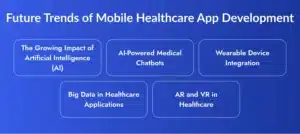
1. The Growing Impact of Artificial Intelligence (AI)
AI in healthcare industry is changing by making healthcare apps smarter, faster, and more accurate. AI-powered healthcare applications can analyze medical data, detect symptoms, provide treatment suggestions, and automate repetitive healthcare tasks.
Modern mhealth application development now uses predictive analytics, virtual assistants, and personalized healthcare recommendations.
2. AI-Powered Medical Chatbots
Healthcare chatbots are emerging as one of the most valuable features in modern medical app development. These AI-powered virtual assistants help users get quick answers to common healthcare questions without waiting for human support.
Medical chatbots can assist with appointment booking, symptom checking, medicine reminders, mental health support, and patient engagement.
3. Wearable Device Integration
The use of wearable devices like smartwatches and fitness bands is growing rapidly across the healthcare industry. These devices collect important health data such as heart rate, sleep patterns, activity levels, oxygen saturation, and calorie tracking.
Integrating wearable technology into healthcare apps allows doctors and patients to monitor health conditions more effectively.
4. Big Data in Healthcare Applications
Healthcare apps generate massive amounts of patient and medical data every day. Big Data technologies help healthcare providers that can identify health trends, improve treatment plans, support medical research, and enhance patient care.
Businesses offering mHealth app development services are increasingly using data analytics to create smarter healthcare solutions.
5. AR and VR in Healthcare
Augmented Reality (AR) and Virtual Reality (VR) are creating new opportunities in healthcare app development. These technologies are being used for medical training, surgery simulations, patient education, and mental health therapies.
AR and VR can improve healthcare experiences by making medical procedures easier to understand and enhancing healthcare learning environments.
Why Choose Developer Bazaar Technologies for Healthcare App Development Company?
Choosing the right healthcare app development company is essential for building a secure, scalable, and user-friendly healthcare application. Developer Bazaar Technologies offers reliable mhealth app development services for startups, hospitals, clinics, and healthcare enterprises.
1. Proven Healthcare Expertise
Developer Bazaar Technologies has experience in building advanced healthcare applications, including telemedicine platforms, patient monitoring systems, fitness apps, and EHR solutions. The team focuses on improving patient care and operational efficiency through modern healthcare mobile app development solutions.
2. Security and Compliance Focus
Healthcare apps manage sensitive patient information, making security a top priority. The company follows strong security practices for healthcare regulations like HIPAA and GDPR. Their team implements secure authentication, encrypted data storage, and compliance-ready systems to build safe and trustworthy healthcare applications.
3. Custom Healthcare Solutions
Every healthcare business has unique requirements. Custom mHealth app development solutions tailored to specific business goals. Whether you want to create telemedicine apps, AI-powered healthcare platforms, or wearable-integrated solutions, the company develops scalable applications designed for long-term growth.
4. Skilled mHealth App Developers
The company has experienced mhealth app developers with expertise in AI, cloud computing, wearable integrations, and cross-platform technologies. Their technical knowledge helps businesses build high-performance healthcare applications with seamless user experiences.
5. Transparent Workflow and Scalable Solutions
The company follows a transparent development process with clear communication and regular project updates. The team builds scalable and future-ready healthcare applications that support advanced integrations and evolving healthcare technologies.

Conclusion
From telemedicine and remote patient monitoring to wearable integrations and AI-powered healthcare systems, mHealth app development is helping healthcare providers deliver faster, smarter, and more accessible care.
Building a successful healthcare app requires much more than coding. Businesses must focus on security, compliance, user experience, scalability, and advanced technologies to create reliable healthcare solutions.
As technologies like Artificial Intelligence, Big Data, wearable devices, and voice-enabled systems continue to evolve, the future of healthcare mobile app development looks extremely promising. Companies investing in innovative healthcare solutions today can gain a strong competitive advantage in the growing digital healthcare market.
Whether you want to develop a telemedicine platform, patient engagement app, remote monitoring solution or AI-powered healthcare system, partnering with an experienced healthcare app development company can help turn your idea into a secure and scalable healthcare application.
FAQs
1. How long does it take to develop an mHealth app?
The time required to develop an mHealth app depends on the app’s complexity, features, integrations, and overall development requirements. A basic healthcare app may take around 3 to 6 months, while advanced applications with AI, wearable integrations, and compliance requirements may take 9 to 12 months or longer.
2. What are the major challenges in mHealth app development?
Some common challenges in health application development include data security, healthcare compliance, interoperability with medical systems, user engagement, and integration with wearable devices and healthcare platforms.
3. How much does it cost to develop an mHealth app?
The mHealth app development cost depends on app complexity, features, technologies, platform selection, and compliance requirements. A basic app may cost around $20,000 to $50,000, while advanced healthcare solutions with AI and cloud integrations can exceed $200,000.
4. Why is security important in healthcare mobile app development?
Healthcare apps store highly sensitive patient information, including medical records and health reports. Strong security measures help protect patient data, prevent cyberattacks and ensure compliance with healthcare regulations like HIPAA and GDPR.
5. What technologies are commonly used in healthcare app development?
Modern healthcare app development commonly uses technologies like Artificial Intelligence, cloud computing, wearable integrations, blockchain, IoT, and Big Data analytics to improve healthcare services and patient experiences.
6. Why should businesses invest in telemedicine app development?
Telemedicine app development helps healthcare providers offer remote consultations, improve patient accessibility, reduce operational costs, and provide healthcare services more efficiently. It also helps patients receive faster medical support from anywhere.