

Key Takeaways:
- The global Dealer Management System (DMS) market is expected to reach approximately US$ 10.8 billion by 2026, driven by the growing need for automation, inventory management, and customer retention.
- Custom dealership management systems provide greater flexibility, scalability, and integration capabilities compared to off-the-shelf solutions.
- DMS development costs typically range from $50,000 to $250,000+, depending on features, integrations, AI capabilities, and customization requirements.
- Core modules such as inventory management, CRM, sales processing, accounting, and service management have the biggest impact on development costs.
- Security, regulatory compliance, and third-party integrations should be planned from the beginning to avoid costly upgrades later.
- AI-powered features such as lead scoring, demand forecasting, and intelligent pricing are becoming competitive advantages for dealerships in 2026.
- A phased development approach helps businesses launch faster, control costs, and continuously improve the platform based on user feedback.
- Choosing an experienced development partner is critical for building a secure, scalable, and future-ready dealership management solution.
Running a dealership today is not easy. Dealers must manage inventory, sales, finance, service operations, and customer relationships at the same time. When these processes are handled manually or through different tools, it can lead to confusion, delays, and errors.
This is why many businesses are adopting a Dealership Management System (DMS). It is a centralized platform that helps manage everything from inventory tracking to customer communication in one place. A well-built system improves efficiency, reduces operational costs, and supports better decision-making.
Dealer Management System Market
The demand for Dealer Management Systems (DMS) continues to grow as automotive businesses seek better ways to manage operations, inventory, and customer relationships.
According to Transparency Market Research, the global dealer management system market is projected to reach approximately US$ 10.8 billion by 2026, expanding at a CAGR of 6.7%. This growth is driven by increasing adoption of inventory management solutions, fleet management analytics, workflow automation, and customer retention technologies.
In 2026, many dealerships and automotive businesses are investing in custom dealership management system development rather than relying on off-the-shelf software. Custom DMS solutions offer greater flexibility, seamless integration with existing business processes, enhanced scalability, and personalized features that address specific operational requirements.
As the automotive industry becomes more data-driven, customized dealer management platforms are helping businesses improve efficiency, streamline dealer operations, and deliver better customer experiences.
But one important question remains: What is the Dealership Management System Development Cost in 2026?
In this guide, we will explore the key features, benefits, and factors that influence the Cost to Develop Custom DMS software.
What is Dealership Management System?
A Dealership Management System is software designed to help dealerships manage their daily operations from one platform. It acts as a central hub where businesses can track inventory, manage customers, process sales, handle accounting, and monitor service operations.
Whether it is an automobile dealership, a food distribution business, or a building materials dealer, a Custom Dealership Management System helps organize all business processes and improves overall efficiency.
Instead of using different software for sales, inventory, and finance, a DMS connects everything together. This means teams can work faster, access real-time data, and make better business decisions.
Some of the main tasks a DMS manages include:
- Inventory tracking
- Sales management
- Customer relationship management
- Finance and accounting
- Service department operations
- Reporting and analytics
The global demand for DMS software is growing rapidly. The market is expected to grow steadily over the next decade as more businesses adopt digital tools to improve their operations.
This growing demand is also increasing interest in Dealership Management System Development services that build customized solutions for businesses.
Dealership Management System Development Cost: 2026 Overview
The cost to develop a dealership management system varies depending on several factors. Just like building a house, the final price depends on size, features, technology, and customization requirements.
Development cost varies based on the scope of features, the technology stack chosen, the complexity of integrations, and the location and seniority of the development team. Below is a structured cost overview:
| DMS Type | Typical Cost Range | Best For |
| Basic DMS | $50,000 – $150,000 | Small & independent dealerships |
| Mid-Tier DMS | $150,000 – $250,000 | Growing dealerships, multi-location |
| Enterprise / AI-Powered DMS | $250,000+ | Large networks, advanced automation |
| SaaS / Off-the-Shelf DMS | $300 – $1,500/month | Dealerships with limited budgets |
7 Key Factors That Influence DMS Development Cost
Below are the major factors that affect DMS development cost:
1. Number of Modules and Features
Every additional feature adds development hours. A system with advanced inventory management, CRM, F&I processing, service department tools, accounting, and AI analytics will cost significantly more than a lightweight sales-and-inventory tool. Define your must-have features before requesting quotes.
2. Customization Requirements
Off-the-shelf DMS products offer fixed workflows. Custom DMS development allows you to model the software around your exact business processes. Unique workflows, custom approval chains, and proprietary pricing logic increase development scope, but deliver higher long-term value.
3. Technology Stack and Infrastructure
Modern DMS platforms are built on cloud-native architectures using React or Angular frontends, Node.js or Python backends, PostgreSQL or MongoDB databases, and AWS, Azure, or Google Cloud for hosting. Microservices architecture improves scalability but increases initial development complexity and cost.
4. Third-Party Integrations
Most dealerships need the DMS to integrate with existing tools: manufacturer systems (OEM data feeds), accounting platforms (QuickBooks, SAP), CRM tools (Salesforce), vehicle data providers (VIN decoders, Black Book, KBB), and digital advertising platforms. Each integration adds cost and testing effort.
5. Security and Compliance Features
DMS platforms handle sensitive customer PII, financial records, and credit application data. Compliance with data protection regulations (GDPR, CCPA, India’s DPDP Act) requires investment in encryption, role-based access controls, audit trails, and penetration testing. Skipping this in early development creates expensive problems later.
6. AI and Automation Capabilities
AI-powered features, demand forecasting, lead scoring, automated follow-ups, intelligent inventory pricing, and chatbot-based customer support are increasingly expected in 2026. Integrating AI development services adds to initial cost but delivers measurable ROI through reduced manual workload and improved conversion rates.
7. Development Team Location and Experience
Hourly rates vary significantly by region and team seniority. A senior-level development team in India typically costs $40 – $80/hour, compared to $150 – $250/hour for equivalent expertise in North America or Western Europe. Partnering with an experienced software development company that understands dealership operations reduces rework and delivers faster time-to-market.
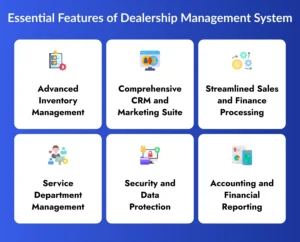
Essential Features That Drive the Dealership Management System a Powerhouse
A powerful Dealership Management System includes several important modules that help manage dealership operations smoothly. These features directly affect the Dealership Management System Development Cost because the more advanced the system is, the more development work it requires.
1. Advanced Inventory Management
Inventory is one of the most important parts of any dealership business. A DMS helps businesses track all products in real time. This feature shows whether products are available in the warehouse, in transit, or already sold. It also keeps detailed records of product specifications, pricing, and history.
Key capabilities include:
- Vehicle or product database
- VIN decoder for automobile dealerships
- Pricing and cost analysis tools
- Stock aging reports
- Inventory valuation tracking
- Online listing integration
- Ordering system
- Multi-location inventory tracking
With this feature, dealerships can avoid overstocking or running out of products.
2. Comprehensive CRM and Marketing Suite
A strong CRM module helps dealerships build long-term relationships with customers. It stores customer details, communication history, and purchase records in one place. This helps businesses understand customer behavior and offer personalized services.
Important CRM and marketing features include:
- Customer database
- Lead management system
- Communication logs
- Task scheduling tools
- Email and SMS integration
- Customer segmentation tools
- Sales pipeline tracking
- Reporting and analytics dashboards
- Campaign management tools
- Social media integration
- Customer loyalty program management
These tools help dealerships improve customer engagement and increase sales.
3. Streamlined Sales and Finance Processing
Sales and financial processing are at the core of every dealership. A DMS simplifies the entire sales journey from creating quotes to completing the final paperwork. Modern systems even support paperless transactions and remote deal completion.
Key features include:
- Quote generator
- Deal structuring tools
- Credit application processing
- Finance and insurance product management
- Digital contract tools
- Compliance checks
- Commission calculations
- Trade-in valuation systems
This feature reduces paperwork and speeds up the sales process.
4. Service Department Management
Service operations are essential for dealerships, especially in the automobile industry. A DMS helps manage the entire service workflow efficiently. Technicians can record inspection results, upload photos or videos, and update service status in real time.
Important service management tools include:
- Appointment scheduling
- Digital multi-point inspections
- Repair order management
- Labor time guides
- Parts inventory management
- Technician productivity tracking
- Customer communication tools
- Warranty claim processing
This improves service efficiency and enhances customer satisfaction.
5. Security and Data Protection
Dealerships handle sensitive customer and financial information. Therefore, security must be a top priority. A well-designed Custom Dealership Management System includes strong security features to protect data and ensure regulatory compliance.
Key security features include:
- User authentication systems
- Role-based access control
- Two-factor authentication
- Single sign-on capabilities
- Data encryption
- Audit logs and activity monitoring
- Secure cloud storage
- Compliance management tools
- Disaster recovery and backup systems
These tools protect businesses from data breaches and cyber threats.
6. Accounting and Financial Reporting
Financial management is another critical part of a dealership business. A DMS accounting module helps manage daily transactions and financial reporting. Businesses can track revenue from different departments such as sales, service, and parts.
Essential financial features include:
- General ledger management
- Accounts payable and receivable
- Payroll systems
- Financial statement generation
- Bank reconciliation tools
- Budget planning tools
- Cash flow analysis
- Tax reporting systems
These features help business owners make better financial decisions.
7. Smooth Integration Capabilities
Modern dealerships often use multiple software tools. A DMS must integrate easily with these systems to ensure smooth data flow. Integration features allow the system to connect with manufacturer systems, CRM tools, accounting platforms, and online marketplaces.
Key integration capabilities include:
- API support
- Third-party application marketplace
- Data import and export tools
- Manufacturer system connectors
- Website integration
- CRM integrations
- Accounting software connectors
- Business intelligence tool integrations
These integrations improve productivity and reduce manual work.

5 Steps to Building a Successful Dealership Management System in 2026
A well-planned dealership management system development process helps businesses improve productivity, reduce errors, and increase profits. Below are five important steps that help businesses build a successful custom dealership management system.
Step 1: Understand Your Business Needs
Start by analyzing how your dealership operates. Review how you manage inventory, sales, customer information, and daily workflows. Identify challenges and define the features you need. A clear plan at this stage helps avoid unnecessary costs and delays later.
Step 2: Design an Easy-to-Use System
Even the most powerful DMS won’t deliver results if it’s difficult to use. Focus on creating a simple and user-friendly interface. Use wireframes, prototypes, and user feedback to build dashboards and workflows that employees can navigate easily on both desktop and mobile devices.
Step 3: Build a Secure and Scalable Foundation
A strong technical foundation is essential for long-term success. Choose the right database, implement security measures from the beginning, and design the system to handle future growth. Modern cloud-based architectures make it easier to scale as your business expands.
Step 4: Develop and Integrate in Phases
Instead of building everything at once, start with the most important modules such as inventory management, CRM, and sales tracking. Test these features with real users, then gradually add advanced capabilities like service management, financing tools, and AI-powered insights. This approach reduces risks and speeds up deployment.
Step 5: Test, Launch, and Improve Continuously
Before going live, thoroughly test the system for performance, security, and usability. Once launched, monitor how the platform performs, gather user feedback, and release regular updates. Continuous improvements help keep your DMS efficient, secure, and aligned with changing business needs.
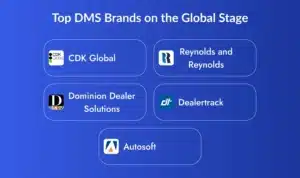
Top DMS Brands on the Global Stage: Who’s Got Success in the Automotive World?
While many businesses invest in Custom DMS Development, some dealerships prefer ready-made DMS solutions from well-known providers. Here are some of the top DMS companies that have achieved success in the automotive industry.
1. CDK Global
CDK Global is one of the most recognized providers of dealership management system solutions. The company offers a wide range of tools that help dealerships manage inventory, sales, and customer relationships. Their platform is widely used by large dealerships and automotive groups across the world.
2. Reynolds and Reynolds
Reynolds and Reynolds is known for its innovative and user-friendly dealership software. Their systems are designed for dealerships of different sizes, from small independent dealers to large enterprise dealer networks. The company focuses on improving dealership operations through automation and advanced analytics.
3. Dealertrack
Dealertrack, a brand of Cox Automotive, provides powerful dealership software solutions. Their platform focuses on improving finance and insurance processes while also helping dealerships manage operations more efficiently. Dealertrack tools help businesses simplify transactions and improve customer experiences.
4. Dominion Dealer Solutions
Dominion Dealer Solutions offers flexible DMS platforms designed to meet specific dealership needs. Their systems combine dealership management tools with digital marketing and inventory solutions. This helps dealerships manage both operations and online customer engagement.
5. Autosoft
Autosoft mainly focuses on independent dealerships. Their DMS software is known for being easy to use and affordable. It helps dealerships manage sales, inventory, and financial processes while improving operational efficiency.
How to Choose the Right Model for Your Dealership Management System in 2026?
Choosing the right system model is very important before starting dealership management system development. The decision directly affects the DMS Development Cost and long-term business success.
Here are a few factors that help businesses choose the right model.
1. Budget Planning
Businesses must decide whether they want to invest a large amount up front or pay gradually over time. Some companies choose ready-made software, while others invest in a custom DMS for better flexibility. The available budget plays a major role in determining the cost.
2. Future Business Growth
Dealerships planning to expand in the future should invest in scalable systems. A flexible system ensures that new features, integrations, and users can be added easily. A well-planned system prevents additional development costs later.
3. Customization Requirements
Every dealership operates differently. If your business has unique workflows, custom reporting needs, or special integrations, a custom development may be the better option. Customized solutions provide full control over features, design, and functionality.
4. Technology and AI Capabilities
Modern dealerships are adopting smart technologies to improve decision-making. Using AI development services, businesses can integrate AI features such as sales prediction, automated customer support, and intelligent inventory recommendations. Working with an experienced AI software development company helps implement these technologies effectively.
5. Risk and Vendor Dependence
When businesses rely on third-party software, they may face issues such as vendor lock-in or limited customization. Building custom software gives businesses full ownership and control over the platform.

Developer Bazaar Technologies: Your Trusted DMS Development Partner
Building a dealership management system can feel challenging, especially if your business does not have an internal technology team. This is where the right development partner becomes important.
Developer Bazaar Technologies specializes in delivering advanced SaaS development services and dealership management system development solutions tailored to business needs.
Why Choose Developer Bazaar Technologies?
Industry Expertise: Our team understands dealership operations and builds systems that improve workflow, efficiency, and customer management.
Custom Solutions: We develop fully custom software designed specifically for your business processes and goals.
Advanced Technology Integration: Our solutions include modern technologies such as AI development services and intelligent systems that help dealerships make better business decisions.
Reliable Support and Maintenance: Our support continues even after deployment. We provide updates, system monitoring, and maintenance to ensure your platform runs smoothly.
Transparent and Competitive Pricing: We offer flexible pricing models and clear project planning to help businesses manage the cost effectively.
With the right technology partner, your dealership can build a powerful platform that supports long-term growth.
Conclusion
A dealership management system has become a necessity in 2026. As businesses grow and operations become more complex, managing everything manually becomes difficult.
Investing in dealership management system development allows businesses to streamline operations, manage inventory efficiently, improve customer relationships, and make smarter decisions using data.
Although the cost can vary depending on features and complexity, the long-term benefits often outweigh the investment. A well-designed custom dealership management system can improve productivity, increase profitability, and support future growth.
By choosing the right technology, planning carefully, and working with an experienced development partner, dealerships can build a system that drives long-term success.

FAQs
1. Which DMS modules should dealerships prioritize if they have a limited budget?
If budget is a concern, start with inventory management, CRM, and sales management modules. These features deliver the highest operational impact and can later be expanded with accounting, service management, and AI-powered tools.
2. What integrations typically add the most cost to DMS development?
OEM systems, finance and insurance platforms, VIN decoders, accounting software, CRM platforms, and marketplace integrations often require significant development and testing efforts, making them major cost drivers.
3. How much can AI features increase DMS development costs?
Adding AI capabilities such as lead scoring, inventory forecasting, dynamic pricing, and automated customer engagement can increase development costs by 15% – 40%, depending on the complexity of the models and data requirements.
4. What are the hidden costs businesses often overlook when building a custom DMS?
Many businesses focus only on development costs and overlook expenses such as cloud hosting, security audits, third-party API subscriptions, maintenance, employee training, and ongoing feature enhancements.
5. When does a custom DMS become more cost-effective than a SaaS solution?
A custom DMS often becomes more cost-effective when dealerships operate multiple locations, require extensive customization, need deep integrations, or face high monthly subscription costs from SaaS providers over several years.
6. How can dealerships reduce DMS development costs without sacrificing quality?
The best approach is to launch with an MVP containing essential modules, prioritize high-value features first, use cloud infrastructure, and follow an iterative development process instead of building every feature at once.