
The online grocery industry is growing rapidly, driven by changing consumer habits and increasing demand for convenience. Businesses across the United States are investing in digital platforms to deliver groceries faster and more efficiently.
Understanding the cost to build a grocery delivery app is essential for making informed decisions and ensuring long-term profitability. This blog provides a comprehensive breakdown of development costs, essential features, and key factors that influence investment.
What is a Grocery Delivery App Solution?
A grocery delivery app solution is a smart digital platform that lets users order groceries online and have them delivered to their doorstep. It connects customers, vendors, delivery partners, and administrators in a single ecosystem.
For users, it offers an easy shopping experience with features such as product browsing, secure payments, and real-time order tracking. For vendors and businesses, it simplifies operations through inventory management, logistics coordination, and data analytics.
Key Stakeholders in a Grocery Delivery App
- Customers: Browse products, place orders, and track deliveries.
- Vendors: Manage inventory, pricing, and product listings.
- Delivery Partners: Timely and accurate deliveries.
- Admin Panel: Oversees operations, payments, and platform performance.
This interconnected system enhances operational efficiency, improves customer satisfaction, and increases revenue.
As a result, investing in grocery app development services is a strategic move for modern businesses.
Why Businesses Should Build a Grocery Delivery App in 2026?
The demand for online grocery services is stronger than ever. According to Business Wire, the global online grocery market is expected to surpass USD 2,158.53 billion by 2030, growing at a CAGR of 25.3%. This surge presents a significant opportunity for businesses in the United States.
- Rising Demand for Convenience: Modern consumers prefer quick grocery shopping. A digital platform allows fast delivery experiences.
- Rapid Market Growth: The industry continues to expand, but competition is increasing. Investing early allows businesses to capture market share and build brand loyalty.
- Scalability with Modular Architecture: Most of the apps use flexible systems that support multi-vendor operations, high order volumes, and expanding customer bases.
- Reduced Operational Costs: Advanced platforms optimize routes, automate workflows, and improve inventory management, reducing logistics expenses.
- Faster Time-to-Market: With the help of a reliable grocery delivery app development company, businesses can launch quickly and gain a competitive advantage.
- Data-Driven Decision Making: Apps collect valuable customer data, enabling businesses to offer personalized experiences and improve retention.
Investing in Instacart clone app development can help businesses establish a strong presence in the competitive market.
The Cost to Build a Grocery Delivery App in the USA
The grocery delivery app development cost depends on multiple factors, including complexity, platform, design, and integrations.
1. Cost Based on Project Complexity
| Level of Complexity | Description | Average Cost Range |
| Basic MVP | Login, product listing, cart, checkout, admin panel | $35,000 – $50,000 |
| Intermediate | Advanced UI, real-time tracking, payment integration | $50,000 – $90,000 |
| Advanced | AI features, analytics, multi-vendor support | $90,000 – $140,000 |
| Enterprise-Grade | Complex integrations, automation, multi-region support | $140,000 – $270,000+ |
This table provides a realistic overview of the cost of building a grocery delivery app in the USA.
2. Cost Based on Platform Selection
| Platform | Description | Average Cost Range |
| iOS | Native app for Apple users | $25,000 – $90,000 |
| Android | Serves a wider audience | $25,000 – $90,000 |
| Hybrid | Single codebase for both platforms | $30,000 – $100,000 |
Choosing a hybrid approach helps reduce the overall app development cost while ensuring faster deployment.
3. Cost Based on Design Complexity
| Design Type | UI/UX Elements | Average Cost Range |
| Basic UI/UX | Standard templates and layouts | $10,000 – $25,000 |
| Custom UI/UX | Brand-focused design and animations | $25,000 – $60,000 |
A well-designed interface improves engagement and boosts customer retention.
4. Cost Based on Backend Architecture
| Backend Level | Description | Average Cost Range |
| Basic | Simple APIs and limited users | $10,000 – $25,000 |
| Moderate | Scalable APIs and real-time updates | $25,000 – $60,000 |
| Advanced | Microservices and cloud-native systems | $60,000 – $120,000 |
A strong backend is essential for secure grocery app development tech.
5. Cost Based on Features and Third-Party Integrations
| Feature Level | Description | Average Cost Range |
| Basic | Core features and minimal integrations | $20,000 – $35,000 |
| Moderate | Payments, maps, and notifications | $35,000 – $50,000 |
| Advanced | AI, analytics, and automation | $50,000 – $120,000+ |
Integrations such as payment gateways, GPS tracking, and analytics tools significantly influence development costs.
6. Cost Based on Platform Security
| Security Level | Description | Average Cost Range |
| Basic | Standard authentication and protection | $5,000 – $15,000 |
| Standard | Secure APIs and encryption | $15,000 – $40,000 |
| Advanced | Multi-layer security and fraud detection | $40,000 – $100,000+ |
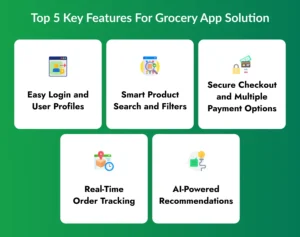
Top 5 Key Features For Grocery App Solution
A successful grocery delivery platform needs the right features for a smooth and convenient user experience. This grocery app feature guide highlights the essential functionalities that help businesses attract customers, increase sales and stay competitive.
1. Easy Login and User Profiles
A simple and quick login process allows users to sign up using email, phone numbers, or social media accounts. User profiles store personal details, delivery addresses, and order history, making future purchases faster and more convenient.
2. Smart Product Search and Filters
Advanced search and filtering options help users find products quickly based on categories, brands, prices, and availability. This improves user satisfaction and saves time, encouraging customers to return to the platform.
3. Secure Checkout and Multiple Payment Options
A secure checkout system makes sure safe transactions. Supporting multiple payment methods such as credit cards, debit cards, digital wallets and UPI boosts trust and provides flexibility for users.
4. Real-Time Order Tracking
Real-time GPS tracking allows customers to monitor their orders from dispatch to delivery. It provides accurate delivery updates and estimated arrival times, improving transparency and building customer confidence.
5. AI-Powered Recommendations
AI-driven recommendations analyze user behavior and purchase history to suggest relevant products. This personalization allows the shopping experience, boosts engagement, and increases overall sales.
These features are essential for businesses planning Getir clone grocery app development or a grocery app like Gopuff.
How to Avoid Cost Escalations in Grocery App Development
Building a grocery delivery app requires careful planning and smart decision-making. By following the best practices below, businesses can control expenses, reduce risks and make successful project delivery.
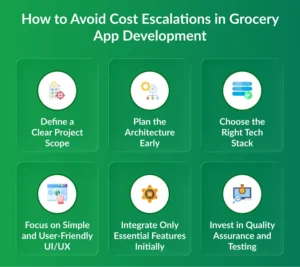
1. Define a Clear Project Scope
Start with a Minimum Viable Product (MVP) that includes only essential features. This approach prevents unnecessary additions, keeps development focused, and helps validate your idea before scaling.
2. Plan the Architecture Early
Designing the system architecture at the beginning ensures a smooth development process. Early planning reduces the chances of costly redesigns, technical issues, and unexpected delays.
3. Choose the Right Tech Stack
Selecting suitable technologies improves performance, scalability, and long-term efficiency. A well-chosen tech stack minimizes maintenance costs and supports future upgrades easily.
4. Focus on Simple and User-Friendly UI/UX
A clean and intuitive design enhances user experience while reducing development complexity. Simplicity speeds up development and lowers design and implementation costs.
5. Integrate Only Essential Features Initially
Avoid adding too many features at the start. Prioritize core functionalities and introduce advanced capabilities gradually as your business and user base grow.
6. Invest in Quality Assurance and Testing
Thorough testing helps identify bugs and performance issues early in the development cycle. This prevents expensive fixes after launch and a secure, reliable, and high-performing app.
Best Tech Stack for Grocery App Development
Selecting the right grocery app development tech is essential for building a scalable and secure grocery delivery platform. The following table outlines the ideal technologies used in modern grocery app development.
| Technology Layer | Tools & Technologies | Purpose |
| Frontend (Mobile App) | React Native, Flutter, Swift (iOS), Kotlin (Android) | Builds responsive and user-friendly mobile applications for smooth shopping experiences. |
| Frontend (Web App) | React.js, Angular, Vue.js | Enables interactive admin dashboards and vendor portals. |
| Backend Development | Node.js, Python (Django/Flask), Ruby on Rails, Java (Spring Boot) | Manages business logic, user data, orders, and real-time operations. |
| Database Management | MySQL, PostgreSQL, MongoDB, Firebase | Stores product information, customer data, and transactions securely. |
| Cloud & Hosting Services | Amazon Web Services (AWS), Google Cloud Platform (GCP), Microsoft Azure | Provides scalability, reliability, and secure data storage. |
| Payment Gateway Integration | Stripe, PayPal, Square, Braintree, Apple Pay, Google Pay | Secure and easy online transactions. |
| Maps & Navigation | Google Maps API, Mapbox | Enables real-time tracking, route optimization, and location-based services. |
| Push Notifications | Firebase Cloud Messaging (FCM), OneSignal | Sends order updates, promotional alerts, and delivery notifications. |
| AI & Machine Learning | TensorFlow, PyTorch, OpenAI APIs | Powers recommendations, demand forecasting, and intelligent automation. |
| Search & Analytics | Elasticsearch, Google Analytics, Mixpanel | Enhances search functionality and provides business insights. |
| DevOps & CI/CD Tools | Docker, Kubernetes, Jenkins, GitHub Actions | Automates deployment, improves scalability, for continuous integration. |
| Security & Authentication | OAuth 2.0, JWT, SSL Encryption, Firebase Authentication | Protects user data and secures login and transactions. |
| Real-Time Data Processing | WebSockets, Socket.io, Apache Kafka | Boost real-time order tracking and instant updates. |
| E-commerce & CMS Tools | Shopify, Magento, Strapi | Helps manage products, content, and digital storefronts efficiently. |
| Testing & Quality Assurance | Selenium, Appium, TestRail, Cypress | Bug-free performance and high-quality applications. |
Recommended Tech Stack for a Modern Grocery Delivery App
| Component | Recommended Technology |
| Mobile App | Flutter or React Native |
| Web Admin Panel | React.js |
| Backend | Node.js with Express |
| Database | PostgreSQL or MongoDB |
| Cloud Hosting | AWS |
| Payments | Stripe |
| Maps & Tracking | Google Maps |
| Notifications | Firebase Cloud Messaging |
| AI Capabilities | TensorFlow |
| DevOps | Docker and Kubernetes |
How AI & ML Are Transforming Grocery Apps
Artificial Intelligence (AI) and Machine Learning (ML) are making the online grocery industry more advanced. These technologies enhance efficiency, improve user experiences, and optimize operations.
- Personalized Product Recommendations: AI analyzes user behavior to suggest relevant products, increasing sales and customer satisfaction.
- Demand Forecasting: ML predicts product demand, helping businesses manage inventory efficiently and reduce waste.
- Smart Search and Voice Assistance: AI-powered search enables users to find items using voice or image recognition.
- Dynamic Pricing Optimization: Algorithms adjust prices based on demand, availability, and market trends.
- Route Optimization for Deliveries: AI identifies the fastest routes, reducing delivery time and fuel costs.
- Fraud Detection and Secure Payments: Machine learning detects suspicious activities and enhances transaction security.
- Chatbots and Virtual Assistants: AI-driven bots provide instant customer support and improve engagement.
- Predictive Reordering: Apps remind users to reorder frequently purchased items, increasing retention and revenue.
These innovations are shaping the future of grocery app development like Gopuff.
Choosing the Right Grocery App Development Company
Selecting the right development partner is crucial for building a successful and scalable grocery delivery platform. This grocery app development company guide will help you make an informed decision.
- Evaluate Industry Experience: Choose a company with proven expertise in on-demand and eCommerce solutions.
- Review Portfolio and Case Studies: Assess their experience in projects like Blinkit clone app development.
- Assess Technical Expertise: They specialize in modern technologies, AI integration, and cloud-based architectures.
- Check Client Testimonials and Reviews: Positive feedback indicates reliability and quality service.
- Understand Their Development Approach: Opt for companies that follow Agile methodologies for faster and more efficient delivery.
- Ensure Scalability and Customization: The company should offer tailored grocery app development services aligned with your business needs.
- Discuss Pricing Transparency: Clear cost structures help avoid hidden charges and budget overruns.
- Post-Launch Support and Maintenance: Reliable support for long-term success and smooth app performance.
Choosing the right grocery delivery app development company for your investment delivers maximum ROI.
Conclusion
The demand for online grocery delivery in the United States continues to rise, making it a profitable opportunity for businesses in 2026 and beyond. From understanding essential features to analyzing cost drivers, building a grocery delivery app requires strategic planning and the right technology partner.
On average, the cost to build a grocery delivery app in the USA ranges between $35,000 and $270,000+, depending on complexity, features, and scalability. By choosing the right approach and competent person, businesses can launch a scalable and future-ready platform.
Whether you plan to develop a solution similar to Gopuff, investing in the right technology today will for long-term success in the competitive digital marketplace.
FAQs
1. How long does it take to develop a grocery delivery app?
Developing a grocery delivery app usually takes 3 to 9 months. The timeline depends on the project’s scope, features, and level of customization required.
2. How do grocery delivery apps generate revenue?
They earn through commissions, delivery fees, subscriptions, vendor onboarding charges, advertisements, and direct product sales.
3. Can I build an app similar to Instacart, Blinkit, or Gopuff?
Yes, businesses can develop customized solutions using clone or tailored models. Partnering with an experienced grocery delivery app development company makes sure efficient and scalable results.
4. Why should businesses invest in AI-powered grocery apps?
AI enhances personalization, optimizes logistics, predicts demand, and improves customer experiences. This leads to higher efficiency, increased revenue, and better customer retention.
5. What business models are used in grocery delivery apps?
Grocery delivery apps typically follow inventory-based, marketplace, or hybrid models. Businesses can choose the model based on their operational goals, target audience, and investment capacity.
6. Is it better to develop a native or cross-platform grocery app?
Native apps offer superior performance and user experience, while cross-platform apps like Flutter and React Native reduce development time and costs. The ideal choice depends on your budget, timeline, and scalability needs.
7. What factors influence the success of a grocery delivery app?
Key success factors include user-friendly design, fast delivery, secure payments, reliable technology, and strong customer support. Integrating AI-driven features further enhances efficiency and customer satisfaction.