

Swiping left and right feels a little tired in 2026. The novelty has worn off, and users are demanding more. According to a Forbes Health survey last year, a staggering 79% of dating app users now report “dating fatigue”, and it’s pushing the entire industry to reinvent itself fast.
The good news? The reinvention is already underway, and it’s genuinely exciting.
The online dating services market is growing rapidly, increasing from USD 6.97 billion in 2025 to an expected USD 13.57 billion by 2031 at a CAGR of 11.76%. Rising smartphone usage, changing attitudes toward online dating, and growing paid subscriptions are driving this growth.
Today, more than 380 million people worldwide use dating apps to find meaningful connections. As competition increases, apps with smarter and more user-friendly features will lead the market in the coming years.
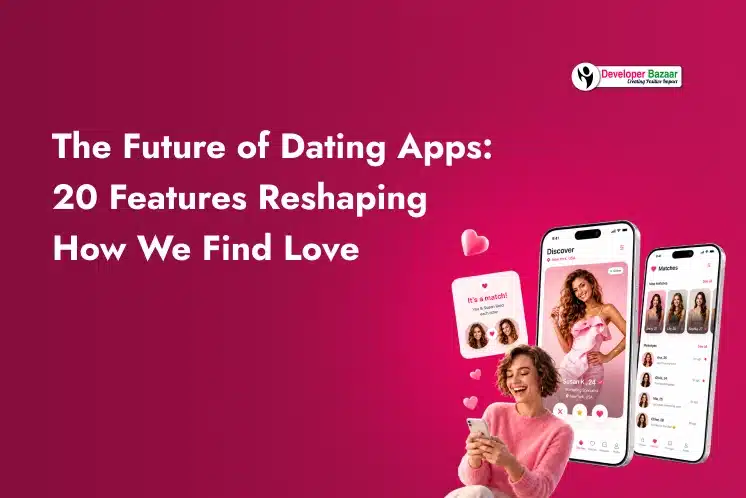
Here’s a closer look at 20 trending dating app features that are shaping the future of online dating.
20 Features of Coolest Dating Apps You Should Know
1. AI-Powered Matchmaking That Understands You
Old dating algorithms were simple: same city, same age, similar hobbies. That was enough. But modern AI matchmaking goes much deeper. It studies behavior patterns, communication styles, emotional signals, and even how you interact with profiles over time.
Think of it like a smart friend who really understands your preferences. The AI in dating apps keeps learning as you use the app, improving match suggestions based on your actual behavior, not just what you say you want.
Why it matters: Better matches from the start mean less ghosting, fewer wasted conversations, and stronger connections.
2. Virtual Reality (VR) Dating Experiences
What if your first date didn’t require picking an outfit or choosing a location? VR dating lets you meet someone in a virtual space like a beach café, rooftop restaurant, or cozy bookstore before meeting in real life.
This technology already exists, and many apps are adding VR features to help long-distance couples and first-time matches connect more comfortably.
Why it matters: VR reduces first-date pressure, lowers catfishing risks, and helps people build real chemistry naturally.
3. Augmented Reality (AR) Features
AR makes profiles more interactive and conversations more fun. Users can enjoy 3D profile elements, AR games inside chats, and creative filters that make messaging feel more natural and entertaining. These features help users express personality in ways that photos alone cannot.
Why it matters: AR helps people feel more authentic online.
4. Blockchain for Security and Verified Identities
Romance scams increased by 20% in one year, with victims losing around $8,000 on average. This is a serious issue. That’s why dating apps are exploring blockchain technology for verified identities and secure transactions.
Blockchain creates tamper-proof identity records. If a profile is blockchain-verified, users can trust that a real and accountable person is behind it. It also makes in-app transactions more transparent and secure.
Why it matters: Trust is one of the biggest challenges in the dating app industry today. Blockchain offers one of the strongest long-term solutions.
5. Voice and Video Messaging
Text messages benefit in many ways that make someone feel real, their laugh, sarcasm, tone, or natural speaking style. Voice and video messages bring those human elements back.
These features are already becoming popular because they help users build confidence before meeting, identify mismatched energy early, and make conversations feel more genuine instead of transactional.
Why it matters: Authenticity is extremely important in modern dating, and voice and video messaging help deliver that.
6. AI-Based Safety Features
Safety is an extra feature, users now expect it by default. Research shows that many online daters experience fake profiles, harassment, or unwanted behavior, especially women. AI is helping solve these problems.
For example, Bumble’s AI-powered “Deception Detector” reportedly catches 95% of spam and fake profiles before users even see them. The platform also saw a major drop in fake account reports after launching the feature.
Apps are increasingly using AI to monitor conversations, detect suspicious behavior, and even trigger emergency assistance if something feels unsafe.
Why it matters: No feature matters if users don’t feel safe using the platform. Strong AI safety systems make everything else possible.
7. Social and Group Dating Options
Solo dating can feel stressful and performative sometimes. Group settings reduce that pressure and offer something even more useful, the chance to see how someone behaves around other people.
Apps are launching features that allow users to join group video chats, attend virtual events together, or organize casual group meetups. It feels less like a formal date and more like a relaxed social experience.
Why it matters: Lower pressure leads to more natural interactions. Group settings also help reduce dating fatigue.
8. Personalized Date Planning
You matched. You chatted. Then what? For many users, planning the actual date becomes the biggest challenge. Dating apps are now solving this problem with personalized date suggestions based on both users’ interests.
Apps can recommend restaurants, events, or local experiences that fit both personalities. Some suggestions may even introduce ideas neither person considered before.
Why it matters: Reducing the gap between matching and meeting is one of the biggest opportunities in dating app design.
9. Mental Health and Wellness Integration
Dating can feel emotionally exhausting, and the industry is finally recognizing that reality. Apps are adding mindfulness tools, stress-management features, wellness resources, and reminders that encourage users to take healthy breaks.
This is more than a trend. Apps that genuinely support emotional wellbeing can build long-term trust with users in ways that simple matchmaking alone cannot.
Why it matters: Users who feel emotionally supported are more likely to stay active and build healthier relationships.
10. Inclusive and Diverse Features
Dating apps are expanding how they understand and represent users. More gender identity options, broader sexual orientation settings, and cultural matching preferences are becoming standard features instead of afterthoughts.
At the same time, matchmaking algorithms are improving to better support users from different backgrounds instead of relying on one-size-fits-all systems.
Why it matters: Representation is not just important, for many users, it determines whether they feel included or invisible.
11. Smart Wearable Integration
Smartwatches and wearable devices already understand a lot about users, including heart rate, sleep quality, stress levels, and mood patterns. Dating apps are beginning to use this information, with user permission, to improve recommendations and timing.
Imagine receiving a match suggestion when you’re relaxed and emotionally open, or getting a reminder to reconnect during a particularly positive week.
Why it matters: Timing and emotional context matter in dating, and wearable integration helps apps respond to real human behavior.
12. Gamification Elements
Points, badges, streaks, and challenges are already popular in fitness and learning apps, and dating platforms are following the same path. The goal is not to turn dating into a game, but to make the experience feel more rewarding and less repetitive.
Daily challenges, engagement rewards, and community participation features encourage users to keep coming back.
Why it matters: User retention remains one of the biggest challenges in dating apps, and thoughtful gamification can improve engagement significantly.
13. Live Streaming and Virtual Events
Dating apps are becoming social platforms, not just matchmaking tools. Many now offer live-streamed speed dating sessions, relationship coaching events, Q&A sessions, and community watch parties.
These events create a stronger sense of belonging and help users stay connected even when they are not actively matching with someone.
Why it matters: Platforms that build real communities create a stronger long-term advantage than apps focused only on matchmaking.
14. Advanced Profile Customization
Five photos and a short bio are no longer enough to fully represent someone. Advanced customization features, such as video introductions, personality quizzes, customizable layouts, and detailed interest tags, help users express themselves more naturally.
Richer profiles lead to stronger conversations, and stronger conversations lead to better matches.
Why it matters: Better profiles create better dating experiences for everyone.
15. Smarter Location-Based Matching
Location-based matching is becoming much smarter than simply showing nearby users. Modern systems analyze where users actually spend time and suggest connections within their genuine local environments.
Some apps also encourage spontaneous meetups when compatible users happen to be nearby.
Why it matters: Physical proximity makes meeting in person easier, which is ultimately the main goal of dating apps.
16. Privacy and Anonymity Controls
Privacy concerns continue to grow because of data breaches, screenshots, and online harassment. Dating apps are responding with features like incognito mode, selective profile visibility, end-to-end encrypted messaging, and disappearing photos.
Users increasingly expect more control over how their information is shared and protected.
Why it matters: Privacy is no longer just a legal requirement, it has become a major competitive advantage.
17. AI-Driven Conversation Starters
Starting conversations remains one of the biggest struggles for many users. AI can now analyze profiles, identify shared interests, and suggest personalized opening messages that feel natural and relevant.
These suggestions work much better than generic pickup lines because they create real opportunities for meaningful conversations.
Why it matters: Better opening messages often lead to better conversations and stronger matches.
18. Hybrid In-Person and Virtual Dating
The pandemic accelerated virtual dating, and many users still prefer building comfort online before meeting face-to-face. Hybrid dating has now become a mainstream approach instead of a temporary solution.
Apps that support video dates, shared virtual activities, and smooth transitions into real-life meetings are adapting well to modern dating habits.
Why it matters: Building comfort online first can reduce anxiety and improve safety before meeting in person.
19. Sustainability and Ethics-Aligned Features
Many users want the platforms they use to reflect their personal values. Dating apps are beginning to introduce eco-friendly date suggestions, carbon-awareness tools, and charitable giving options.
These features appeal strongly to users who prioritize environmental and ethical concerns in relationships.
Why it matters: Shared values are often one of the strongest foundations for long-term compatibility.
20. Voice-Activated Assistance
Voice-controlled features allow users to navigate apps, create profiles, and send replies hands-free. These tools improve convenience and make dating apps more accessible for users with disabilities.
Voice features also help users interact with apps more easily while multitasking or traveling.
Why it matters: Accessibility improves the experience for everyone, not just specific groups of users.
Where the Dating App Industry Is Heading
The headline numbers are compelling, the market is on track toward $24+ billion by 2035, with mobile apps accounting for nearly 87% of usage worldwide. But the more interesting story is qualitative.
Now, the swipe model is not preferred as much as earlier. Users want depth over volume, safety over scale, and authenticity over algorithmic optimization. The “dating recession” is real, only 31% of unmarried young adults are actively dating regularly, and it’s forcing apps to ask harder questions about what they’re actually delivering.
The platforms that will win the next decade aren’t the ones with the most users. They’re the ones that help those users actually meet people worth meeting, safely, authentically, and with a lot less friction than we’re used to.
How Developer Bazaar Helps You Build the Coolest Dating App
At Developer Bazaar Technologies, we help startups and enterprises build next-generation dating platforms with advanced, user-focused features. From AI-powered matchmaking and real-time chat to video calling, profile verification, and smart recommendation systems, our team develops scalable solutions designed for modern user expectations.
As a trusted dating app development company, we focus on creating secure, engaging, and high-performing applications that improve user retention and deliver meaningful experiences.
Whether you want to build a niche dating app, an AI-based matchmaking platform, or a feature-rich social dating solution, we help turn your idea into a future-ready product.

EndNote
Dating apps are now about endless swiping and casual conversations. The future of online dating is becoming smarter, safer, more immersive, and more human-centered. From AI-powered matchmaking and VR dating experiences to stronger privacy controls and wellness-focused features, modern platforms are transforming how people build meaningful relationships.
As user expectations continue to evolve, dating apps that prioritize authenticity, safety, emotional connection, and personalized experiences will lead the industry forward. The next generation of dating platforms will not simply help people match, they will help people connect in more genuine and lasting ways.
For businesses and startups, this creates a massive opportunity to build innovative dating platforms that solve real user problems and redefine digital relationships for the future.
FAQs
1. What are the most important features in modern dating apps?
Some of the most important features include AI-powered matchmaking, video and voice messaging, identity verification, privacy controls, personalized recommendations, and advanced safety tools.
2. How is AI changing dating apps?
AI enables dating apps to deliver smarter match recommendations, improve conversations, identify fake accounts, strengthen user safety, and create more personalized experiences based on individual behavior and preferences.
3. Are dating apps becoming safer in 2026?
Yes. Many dating apps are investing heavily in AI-based moderation, profile verification, blockchain identity systems, encrypted messaging, and emergency safety features to improve user protection.
4. Why are virtual and hybrid dating features becoming popular?
Virtual dating helps users build comfort and trust before meeting in person. Hybrid dating features like video calls and virtual events also reduce first-date pressure and improve safety.
5. What is the future of the dating app industry?
The future of dating apps focuses on deeper connections, authentic interactions, better mental wellness support, immersive experiences such as VR/AR, and AI-driven personalization to improve matchmaking quality.