



Projects Completed
Happy Clients
Delivery Rate
Communication
Apps Downloads
Years of Growth
 By
Developer Bazaar Technologies
By
Developer Bazaar Technologies
Artificial Intelligence (AI) is changing the way businesses handle supply chains. From managing inventory to tracking deliveries, AI is making everything faster, smarter, and more efficient. Traditional systems often make mistakes or take too much time. But with AI solutions, companies can now predict demand, avoid stockouts, and save costs.
This article explains how AI in supply chain management helps businesses improve inventory management, reduce errors, and stay ahead in a competitive market.
AI in the supply chain means using smart technology to help manage tasks like tracking products, balancing inventory, and planning delivery routes. It works faster and better than old systems.
AI uses data to learn and improve. It can understand voices, read messages, and even predict the future. In supply chain management, this means AI can:
With AI in supply chain management, businesses can manage their stock more wisely and serve customers faster. It saves time, cuts costs, and helps make better decisions every day.
AI didn’t become smart overnight. It took time to grow. There are various stages of evolution of AI in Supply Chain:
This growth shows that AI integration in supply chain management is no longer optional but it’s necessary.
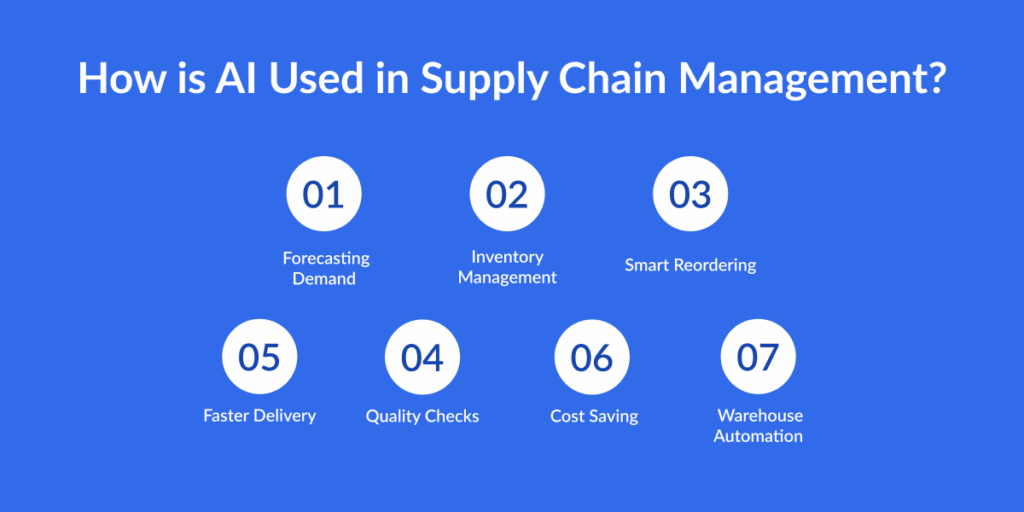
AI helps at every step of the supply chain. Here’s how it works:
AI studies customer behavior and sales data. It tells businesses what items people will need and when, so they don’t run out of stock.
AI in inventory management makes sure that companies have the right amount of stock. Not too much. Not too little.
When stock is low, AI systems can automatically reorder supplies. This saves time and avoids delays.
AI solution for logistics tracks traffic, weather, and delivery routes. It finds the best way to get products to customers on time.
AI tools watch for problems in packaging, production, and storage. They alert teams early before customers face any issues.
AI reduces waste, prevents errors, and uses fewer resources. This means companies spend less while doing more.
AI can guide robots and machines inside warehouses to pick, pack, and move items without human help.
With AI integration, supply chain systems become smarter every day. Businesses work better and serve their customers faster.
Day by day there are more advancements in AI for supply chain management. With smart systems and tools, companies can now make better decisions, work faster, and reduce waste.
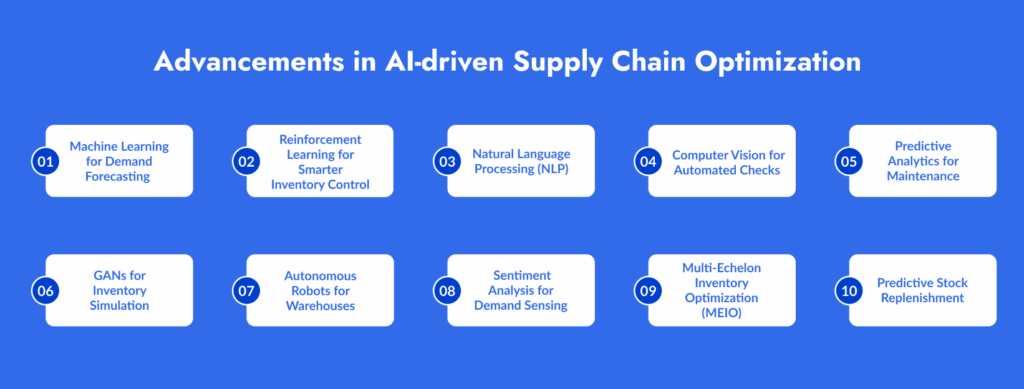
Some of the latest advancements in AI-driven supply chain optimization:
AI systems can study past sales, weather, and market trends to predict what products people will want. This helps companies avoid running out of stock or ordering too much.
This AI method learns through trial and error. It helps businesses figure out the best time to reorder items and how much to keep in stock.
AI can read customer reviews, social media posts, and news to understand what people like. This helps plan inventory better based on real customer opinions.
AI cameras and sensors can scan products in real-time, track what’s in the warehouse, and spot any damaged goods.
AI systems can study machine data to predict when a machine might break. Fixing things early means fewer delays and less money spent on repairs.
Generative AI creates fake (but realistic) data to test different inventory plans. This helps companies see what might happen before making real-world changes.
AI robots can move around the warehouse, pick items, and deliver them quickly. This saves time and reduces human effort.
AI reads what people are saying online to figure out what they want. This helps businesses adjust their stock levels accordingly.
AI balances inventory across different locations, factories, warehouses, and stores to avoid fluctuations in stock like adding too much or too little stock.
AI systems track sales and inventory in real-time. They automatically reorder items before they run out.
These smart AI solutions help businesses save time, reduce costs, and keep customers happy.
The impact of AI in supply chain management is huge. It’s helping companies become faster, smarter, and more efficient.
With AI in inventory management, businesses can work better and keep up with changing customer demands.
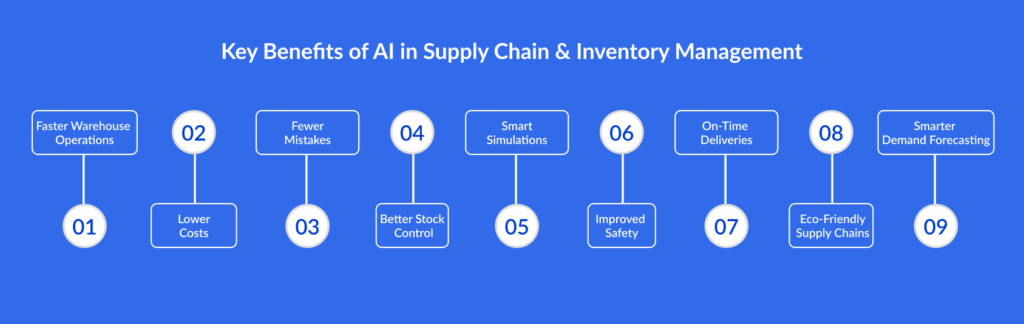
There are many benefits of AI in Supply Chain Management and AI in Inventory Management helps businesses work smarter and faster.
AI suggests the best layout for racks and shelves so workers or robots can move quickly. It also finds the fastest routes for picking items, which saves time and speeds up delivery. This helps in getting orders ready and shipped much faster.
AI helps companies spend less by reducing waste and saving energy. It watches machine health and predicts problems before they cause breakdowns. This means fewer repairs and no sudden downtime, which saves a lot of money.
AI quickly catches errors like placing the wrong item in an order or sending damaged goods. It checks inventory using cameras and sensors to avoid manual mistakes. This leads to fewer returns, less waste, and happier customers.
AI tracks real-time stock and predicts what’s more required to add in the inventory. It makes sure there is enough of each item. This keeps shelves full without wasting money on extra stock.
AI lets companies test different ideas before trying them in real life. For example, they can see what happens if they move a warehouse or change a delivery route. This helps them make smarter decisions without any risk or loss.
AI tracks worker safety using cameras and smart wearables. It checks if safety gear is worn and warns about risky movements. This reduces accidents and creates a safer working space for everyone.
AI finds the fastest delivery paths and updates them if there’s traffic or bad weather. It makes sure all parts or packages reach on time, avoiding production delays. Customers also get better delivery updates and faster service.
AI helps cut down fuel usage by planning smarter delivery routes. It also reduces waste and supports recycling by avoiding overproduction. This makes the supply chain better for the planet and more sustainable.
AI studies past sales, trends, and even customer reviews to guess what people will buy next. It helps companies prepare for busy times and avoid slow-moving stock. This makes planning easier and improves profits.
These smart benefits show why businesses are choosing AI services and solutions to improve their supply chains.
By adding AI in Inventory Management and AI integration in Supply Chain Management, companies can work faster, safer, and more efficiently.
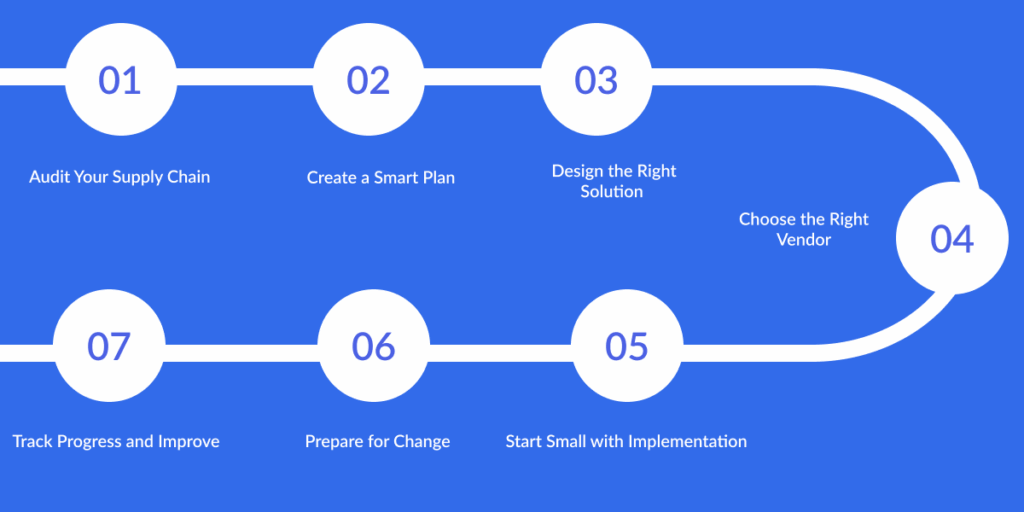
Before using AI in supply chain management, it’s important to prepare the right way. Here’s a simple step-by-step guide to help businesses get ready:
Start by checking every part of your supply chain to find slow, expensive, or confusing areas. Look for places where mistakes happen often or where delays cost time and money. This helps you know where AI can bring the most improvement.
Don’t try to change everything at once. Set clear goals, list out the main problems, and break the AI journey into small steps. A smart plan makes it easier to track progress and avoid mistakes along the way.
Check out what tools and systems you’ll need. For example, you may need cloud software, smart sensors, or warehouse robots. Make sure all your systems can connect and work well together.
Pick a trusted software development company company that offers the best AI solutions for your needs. Check if they have a good support team, fair pricing, and experience in your industry. This helps build a strong and long-term partnership.
Take little steps in the beginning. Begin with one AI project, like stock tracking or delivery route planning. Test it out, train your team on how to use it, and make sure it works before expanding to other areas.
AI might feel new or scary to some employees. Talk to your team, explain why AI is useful, and show how it can make their jobs easier and safer. Good communication builds trust and support for the changes.
Once AI is working, timely check its progress, how it is working. Use reports and feedback to see what’s working and what needs fixing. AI keeps getting smarter over time, so keep updating and improving the system.
| Challenge | Why It Happens | What It Means for You |
|---|---|---|
| Training Costs | Workers need to learn new tools and grow comfortable with them. | Extra classes, practice time, and short pauses in regular work can feel pricey at first, but they build long-term skills. |
| Startup & Data Costs | Good AI in inventory management relies on clean, accurate data, collecting and cleaning it can take time and money. | If the data is messy, the system’s answers will be messy too (“garbage in, garbage out”) |
| High-Power Computers | Training big machine-learning models needs fast GPUs or strong cloud servers. | Monthly cloud bills may jump at first, but smart scaling keeps them under control later. |
| Complex Systems | Sensors, robots, edge devices, and software all talk to each other. | Teams must watch these moving parts and fix small problems early before they grow. |
| Change Management | New tech can feel scary to staff used to old habits. | Clear goals, simple steps, and steady coaching help everyone trust the new AI solution for logistics. |
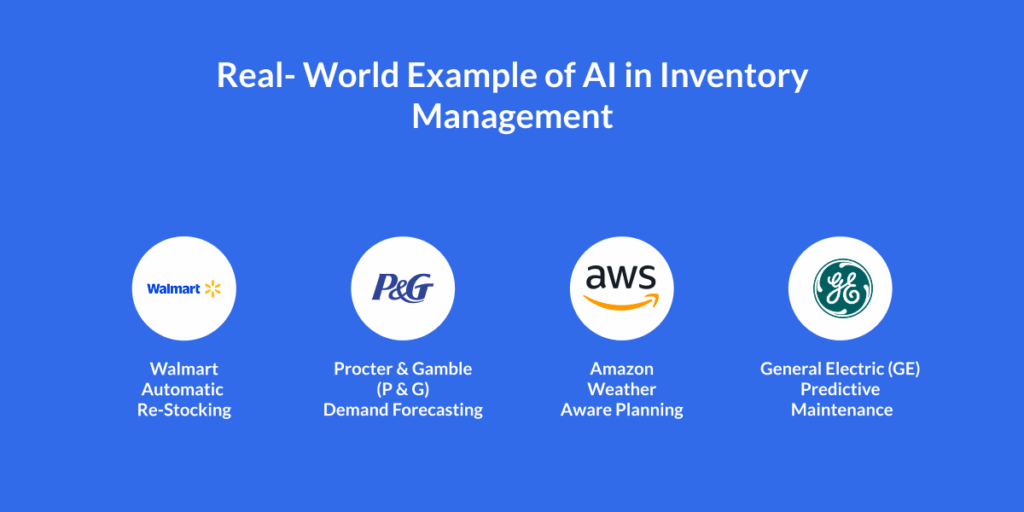
A few use cases of AI in inventory management:
Walmart’s AI looks at sales speed, shelf life, and supplier reliability. It orders fresh stock before shelves run empty, so shoppers always find what they need.
P & G’s machine learning system studies huge data sets, past sales, ads, and market trends. It predicts demand with high accuracy, cutting both stockouts and overstocks.
Amazon’s AI watches weather reports plus customer clicks and past orders. It shifts inventory closer to buyers when storms slow down roads, keeping delivery promises.
GE fits factory machines with sensors. AI spots tiny warning signs and schedules repairs early, slashing downtime and keeping spare-parts stock lean.
These clear success stories prove that AI in supply chain management raises speed, saves money, and keeps customers smiling.
Developer Bazaar Technologies delivers end-to-end AI solutions for every node in your flow from raw materials to last-mile drop-off.
AI is no longer just a fascinating tool, now it is a must-have for businesses that want to stay ahead in today’s competitive market. From reducing waste and avoiding stock outs to predicting demand and improving delivery timelines, AI in supply chain management offers unmatched efficiency.
Still, implementing AI comes with its own set of challenges, like high startup costs, complex systems, and training requirements. But with the right AI development services partner, challenges can be managed smoothly.
Whether you’re a retail giant like Walmart or a growing business, AI services can help you unlock smarter, faster, and greener supply chain operations.
A: AI helps by analyzing sales data, predicting future demand, spotting stock issues early, and even automating reordering. This ensures the right products are available at the right time without overstocking.
A: Top companies like Amazon, Walmart, and GE use AI for tasks like demand forecasting, automatic restocking, predictive maintenance, and more. These help them save money, avoid delays, and serve customers better.
A: There can be initial setup and training costs, but many cloud-based AI services offer flexible pricing. Plus, the savings in time, labor, and waste usually make up for the costs in the long run.
A: Small businesses can start by using simple AI tools like demand prediction software or smart inventory apps. Over time, they can upgrade to advanced systems with the help of AI service providers.
A: The future includes full automation, digital twins for testing ideas, real-time edge computing, and green AI to make operations more eco-friendly.
A: Developer Bazaar Technologies is an expert in AI integration for supply chain and logistics. They offer end-to-end support from planning to full deployment.
Co-Founder
Developer Bazaar technologies

Key Takeaways: The cost to develop an AI app typically ranges from $10,000 to $500,000+, depending on app complexity, AI features, integrations, security requirements, and the development team. Choosing pre-trained AI models instead of building custom...
Key Takeaways: The cost to develop an AI app typically ranges from $10,000 to $500,000+, depending on app complexity, AI features, integrations, security requirements, ...
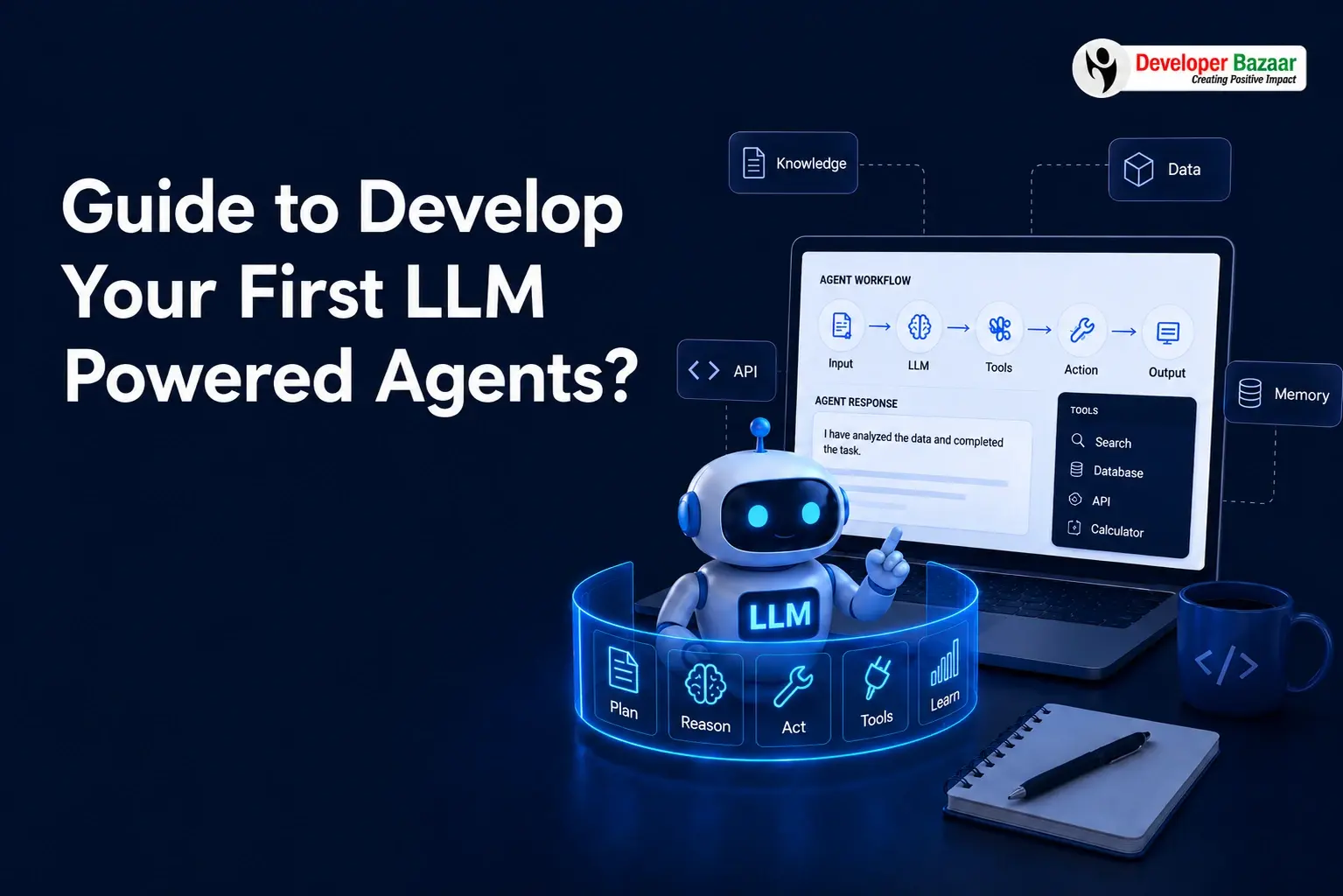
Key Takeaways: Building an LLM agent is easier when you start with one well-defined task instead of trying to automate everything at once. Most businesses can build powerful AI agents using pre-trained LLMs without training a...
Key Takeaways: Building an LLM agent is easier when you start with one well-defined task instead of trying to automate everything at once. Most ...
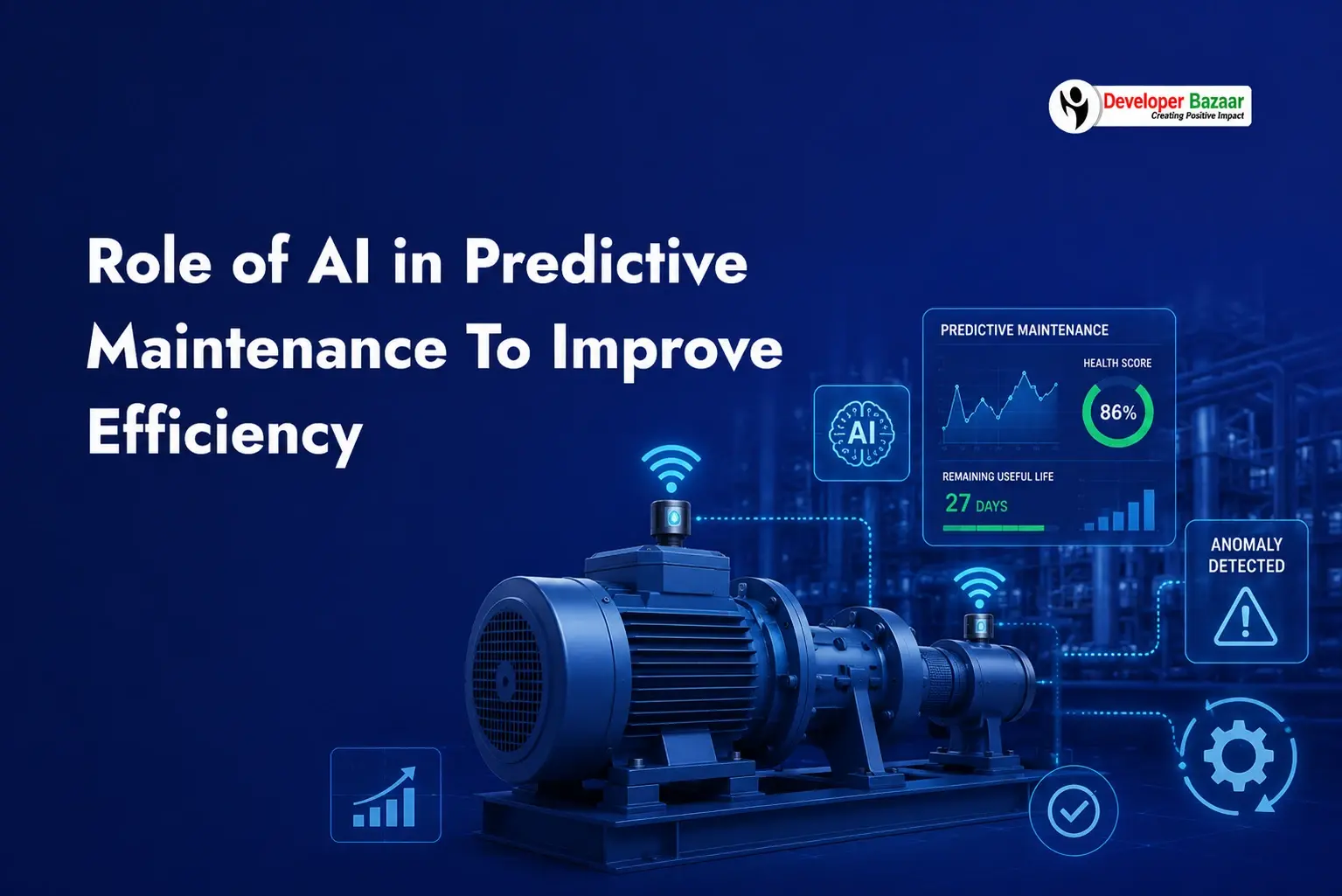
Key Takeaways: AI predictive maintenance prevents equipment failures before they happen by analyzing real-time sensor data and identifying early warning signs. Predictive maintenance with AI is more efficient than reactive or preventive maintenance, helping businesses reduce...
Key Takeaways: AI predictive maintenance prevents equipment failures before they happen by analyzing real-time sensor data and identifying early warning signs. Predictive maintenance with ...
Key Takeaways: AI software delivers long-term business value by improving decision-making, automation, customer experiences, and operational efficiency. Successful AI projects require more than coding, they depend on quality data, the right AI model, seamless integration, and...
Key Takeaways: AI software delivers long-term business value by improving decision-making, automation, customer experiences, and operational efficiency. Successful AI projects require more than coding, ...
Key Takeaways: AI agents go beyond traditional automation by reasoning, planning, and executing multi-step healthcare workflows with minimal human intervention. Agentic AI delivers value across the healthcare ecosystem, from clinical documentation and medical imaging to patient...
Key Takeaways: AI agents go beyond traditional automation by reasoning, planning, and executing multi-step healthcare workflows with minimal human intervention. Agentic AI delivers value ...
Key Takeaways: AI integration helps mobile apps deliver personalized experiences, automate repetitive tasks, improve customer support, and strengthen security. Businesses can start with pre-built AI APIs like OpenAI, Google AI, or AWS AI, making AI adoption...
Key Takeaways: AI integration helps mobile apps deliver personalized experiences, automate repetitive tasks, improve customer support, and strengthen security. Businesses can start with pre-built ...
Key Takeaways: Generative AI Models create original text, images, code, audio, and video by learning patterns from massive datasets rather than copying existing content. Different model architectures, including GANs, VAEs, Transformers, Diffusion Models, Autoregressive Models, and...
Key Takeaways: Generative AI Models create original text, images, code, audio, and video by learning patterns from massive datasets rather than copying existing content. ...
Is your business still depending on old software systems that slow down growth and innovation? Many companies struggle with outdated applications that are costly, hard to maintain, and unable to meet modern customer expectations. The growing...
Is your business still depending on old software systems that slow down growth and innovation? Many companies struggle with outdated applications that are costly, ...
Businesses today collect huge amounts of data every second. Finding unusual activities or errors in this massive data is difficult for humans. This is where AI Anomaly Detection becomes helpful. AI-powered systems can quickly scan data,...
Businesses today collect huge amounts of data every second. Finding unusual activities or errors in this massive data is difficult for humans. This is ...
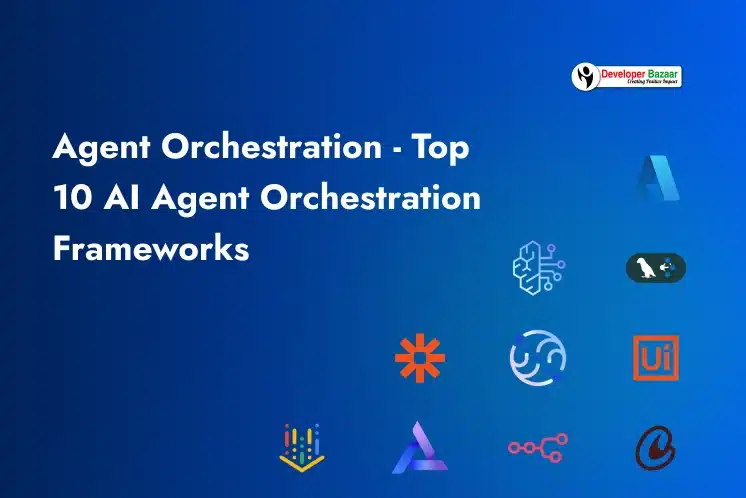
AI agents are becoming part of everyday business systems. According to Gartner, 40% of enterprise applications will include AI agents by the end of 2026, up from less than 5% in 2025. But there is a...
AI agents are becoming part of everyday business systems. According to Gartner, 40% of enterprise applications will include AI agents by the end of ...

Complete the form below and validate your idea now.
✔ Your idea is 100% protected by our Non Disclosure Agreement.
