

Why are more people using apps to manage their diet and health in 2026?
These days, people are more careful about their health than ever before. They want simple apps that help them eat better, stay fit, and track their daily progress. This is why developing diet and nutrition apps is becoming increasingly important.
Many people are dealing with lifestyle diseases like diabetes and heart problems, so they are turning to digital solutions to stay healthy.
Modern apps now use AI to give smart meal plans, track calories, and guide users in real time. This makes nutrition app development a strong and growing business opportunity.
What is a Diet and Nutrition App?
A diet and nutrition app is a simple mobile or web app that helps people eat healthy and stay fit. It works like a personal health guide in your pocket.
These apps help users:
- Track what they eat every day
- Count calories and nutrients
- Plan healthy meals
- Improve daily eating habits
For example, apps like Fooducate and Lifesum allow users to:
- Check the nutrition details of foods
- Track daily calorie intake
- Get smart suggestions for healthier meals
These apps make healthy living easy and more organized for everyone.
Diet and Nutrition App Development Market Understanding
The market for diet and nutrition app development is growing very fast in 2026. More people now want to stay healthy and prevent diseases instead of treating them later.
According to industry data, the global nutrition app market is expected to reach $35.08 billion in 2030, growing at a CAGR of 20% in the coming years. This shows strong demand and huge business potential.
Why is the Market Growing?
- People want to avoid diseases like diabetes and heart problems
- Smartphones and the internet are used by almost everyone
- AI makes apps smarter and more helpful
- Users prefer personalized health and diet plans
Key Market Trends
- AI-powered meal planning for smarter food choices
- Real-time calorie tracking for better control
- Personalized diet suggestions based on user data
- Social features for motivation and engagement
- Region-based diet options like vegetarian, keto, and gluten-free
Because of these trends, many businesses are investing in nutrition app development and health and fitness app development to create powerful and user-friendly apps that also generate good revenue.
How to Develop a Diet & Nutrition App?
If you are wondering how to develop a diet and nutrition app, you need to follow a clear step-by-step process. Each stage is important to build a successful and user-friendly app.
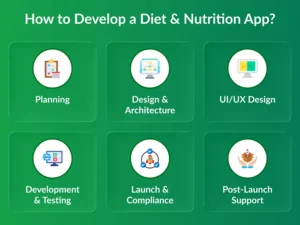
1. Planning
The first step in diet and nutrition app development is proper planning. In this stage, you study the market to understand what users need and what your competitors are offering. You also decide who your target users are, such as fitness lovers, beginners, or people with health issues. Setting clear goals, like weight loss tracking or meal planning, helps you build the app in the right direction. A strong plan makes the rest of the development process smooth and focused.
2. Design & Architecture
In this stage, you create the basic structure of your app. This includes deciding how the app will work, how data will flow, and how different parts will connect. You also plan APIs and integrations, such as connecting with wearable devices or food databases. Wireframes are created to show a simple layout of the app screens. This step helps make your nutrition app development scalable and work efficiently as more users join.
3. UI/UX Design
Now, the focus shifts to making the app look good and easy to use. UI (User Interface) design ensures the app is visually attractive, while UX (User Experience) design ensures users can navigate it easily without confusion. Designers create screens, buttons, and layouts that are simple and clean. Testing designs with real users helps find problems early and improve the experience. A good design keeps users engaged and makes your app stand out.
4. Development & Testing
This is the main stage where your app is actually built. Developers work on both the backend (server, database, APIs) and frontend (what users see and interact with). Features like calorie tracking, meal logging, and analytics are added during this phase. At the same time, testing is done regularly to find and fix bugs. Proper testing helps in your diet app development results in a smooth and reliable app.
5. Launch & Compliance
Before launching the app, it is important to follow all data privacy and security rules, especially because health data is sensitive. Compliance with standards like data protection laws for user trust. After that, the app is prepared for launch by adding descriptions, screenshots, and other details for app stores. Beta testing is also done with a small group of users to collect feedback and fix final issues before the official release.
6. Post-Launch Support
Launching the app is just the beginning. After launch, you need to regularly fix bugs, update features and improve performance. User feedback plays a big role in making the app better over time. Adding new features like AI recommendations or better analytics helps keep users engaged. Continuous improvement is key to long-term success in health and fitness app development.
Must-Have Features of a Diet and Nutrition Mobile App
To succeed in nutrition app development, your app must include the right mix of basic and advanced features. These features help users stay engaged, achieve their goals, and keep coming back to the app.
Basic Features
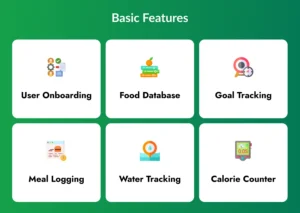
1. User Onboarding
User onboarding is the first step where the app collects important details like age, weight, health goals, and diet preferences. This helps the app understand the user better. Based on this data, the app can provide personalized recommendations and a better experience from the start.
2. Food Database
A strong food database includes a wide range of foods with detailed nutrition information like calories, protein, carbs, and fats. It should also include local and international foods. This makes food tracking accurate and useful for users from different regions.
3. Goal Tracking
This feature allows users to set personal goals such as weight loss, weight gain, or muscle building. The app tracks progress and shows how close the user is to achieving their goal. It keeps users motivated and focused on their health journey.
4. Meal Logging
Meal logging lets users easily record what they eat throughout the day. It should support quick entry, saved meals, and history tracking. This helps users build a daily habit of tracking their food intake consistently.
5. Water Tracking
Water tracking helps users monitor their daily water intake. The app can send reminders to drink water at regular intervals. Staying hydrated improves overall health, so this feature adds extra value to the app.
6. Calorie Counter
A calorie counter shows how many calories a user has consumed and how many are left based on their goal. It gives a clear picture of daily intake. This helps users stay within their calorie limits and maintain a balanced diet.
Advanced Features
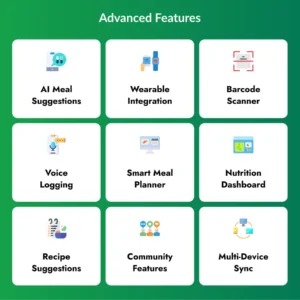
1. AI Meal Suggestions
AI-powered meal suggestions analyze user habits, goals, and preferences to recommend the best meals. Over time, the app becomes smarter and gives more accurate suggestions. This creates a highly personalized experience for users.
2. Wearable Integration
This feature connects the app with smartwatches and fitness bands. It collects real-time data like steps, heart rate, and calories burned. This helps the app adjust diet plans based on daily activity levels.
3. Barcode Scanner
A barcode scanner allows users to scan packaged food items quickly. The app instantly shows nutrition details without manual entry. This saves time and improves accuracy in food tracking.
4. Voice Logging
Voice logging lets users record their meals using voice commands. This makes the app easier to use, especially when users are busy. It also improves accessibility for people who prefer hands-free interaction.
5. Smart Meal Planner
A smart meal planner creates weekly or daily meal plans based on user goals and preferences. It can also generate grocery lists automatically. This helps users stay organized and follow a structured diet plan.
6. Nutrition Dashboard
The nutrition dashboard shows detailed insights using graphs and charts. Users can see their intake of calories, proteins, vitamins, and more. This helps them understand their eating habits and make better decisions.
7. Recipe Suggestions
This feature recommends healthy recipes based on available ingredients and dietary needs. It encourages users to cook at home and try healthier options. It also keeps the app engaging and useful.
8. Community Features
Community features allow users to connect with others, share progress, and join challenges. This creates motivation and accountability. Social support helps users stay consistent with their health goals.
9. Multi-Device Sync
Multi-device sync allows users to access their data on mobile, tablet, or web. All information is updated in real time across devices. This gives flexibility and improves the overall user experience.
How Much Cost to Develop a Nutrition and Diet App
The cost to build a fitness and diet app depends on many factors, such as features, design, and technology used. A simple app will cost less, while an advanced app with AI and smart features will cost more.
Here is a simple cost estimation of a Fitness App:
| App Type | Estimated Cost |
| Simple App | $3,500 – $50,000 |
| Medium App | $51,000 – $95,000 |
| Complex App | $95,000 – $,000 |
Key Cost Factors
Several things affect the total cost of diet and nutrition app development:
- App Features: More features mean higher development cost.
- Design Quality: A clean and attractive design requires more effort and time.
- AI Integration: Adding AI for smart suggestions increases complexity and cost.
- Development Team: Hiring an experienced fitness app development company may cost more and offers better quality.
- Platform: Building for Android, iOS, or both will impact the overall budget.
EndNote
Diet and nutrition apps are becoming an important part of modern healthcare. With the help of AI and smart technologies, diet and nutrition app development is helping people make better health decisions every day.
If you plan your app properly, understand user needs, and work with the right team, you can build a successful product. A well-built app not only grows your business but also helps users live healthier and happier lives.
FAQs
1. Why are diet and nutrition apps becoming popular in 2026?
Diet and nutrition apps are becoming popular because people want to stay healthy and prevent diseases early. With busy lifestyles, these apps make it easy to track food, calories, and fitness in one place. They also provide personalized guidance, which makes them more useful than general health advice.
2. Who should use a diet and nutrition app?
Anyone who wants to improve their eating habits can use a diet and nutrition app. It is helpful for fitness beginners, athletes, working professionals, and even people with health conditions. These apps guide users step by step, making healthy living easier for everyone.
3. How do diet apps help in weight management?
Diet apps help users track their daily calorie intake and compare it with their goals. They also provide meal suggestions and reminders to stay consistent. This helps users make better food choices and maintain a healthy weight over time.
4. What technologies are used in nutrition app development?
Modern nutrition app development uses technologies like Artificial Intelligence (AI), cloud computing, and data analytics. AI helps in personalized meal planning, while cloud systems store user data securely. These technologies make the app smart, fast, and easy to use.
5. How do diet apps keep users engaged for a long time?
Diet apps keep users engaged by using features like reminders, progress tracking, and rewards. Many apps also include community support and challenges to motivate users. Regular updates and personalized insights make users return to the app daily.