

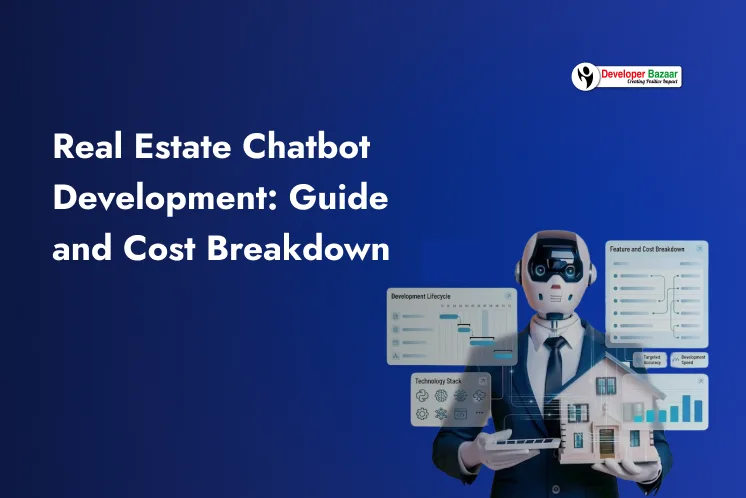
The real estate world is changing too fast. Today, people want quick answers, smart suggestions and easy communication. And for this real estate chatbot helps. It can talk to users, show properties, book visits and even help close deals, anytime or day anywhere.
Industry data shows that Generative AI can create between $110 billion to $180 billion in value for the real estate industry. But success does not come from just adding a simple chat window on your website. The real advantage comes when you build a smart Real Estate Chatbot that connects deeply with your business systems.
In this blog, you will learn everything about the real estate chatbot development, its benefits, types, use cases and the cost of developing a real estate chatbot.
What is Real Estate Chatbot Development?
Real Estate Chatbot Development means building smart chatbot systems that can help buyers, sellers, renters, and real estate agents with their daily tasks. These chatbots use AI (Artificial Intelligence) to understand human language, respond like a real person, and solve user problems quickly and efficiently.
What a Custom Real Estate Chatbot Can Do:
- Answer property questions: The chatbot can instantly respond to common questions like price, location, amenities, and availability of properties.
- Suggest homes based on budget: It can recommend suitable properties by understanding the user’s budget, preferred location and requirements like number of rooms or property type.
- Book property visits: The chatbot can schedule site visits by checking available time slots and confirming appointments.
- Collect customer details: It gathers important information such as name, phone number, email, and preferences, which helps businesses generate and manage leads effectively.
- Help agents manage leads: By organizing and qualifying leads, the chatbot helps agents focus only on serious buyers, improving productivity and conversion rates.
Where You Can Use a Real Estate Chatbot:
- Websites: You can integrate the chatbot into your website so visitors can get instant help while browsing property listings.
- Mobile apps: Adding a chatbot to your app improves user experience by providing quick support and personalized suggestions on the go.
- WhatsApp: Chatbots on WhatsApp allow users to interact easily using a familiar platform, making communication faster and more convenient.
- Facebook Messenger: With Messenger integration, businesses can engage with potential customers directly through social media and answer queries in real time.
How It Works:
- Understand what users ask: The chatbot uses AI to understand user queries like “2BHK under ₹50 lakh” and identifies the intent behind the request.
- Connect with property data and CRM systems: It links with property databases and CRM tools to fetch accurate listings and store user information for future use.
- Learn from user chats using AI: Over time, the chatbot improves its responses by learning from past conversations and user behavior.
- Give smart and quick replies: It provides instant and relevant answers, helping users make faster decisions without waiting for human agents.
Benefits of Using Chatbots in Real Estate
Using a custom real estate chatbot can make your business faster, smarter and more customer-friendly.
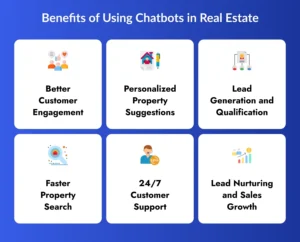
1. Better Customer Engagement
Chatbots reply to users instantly, which keeps them engaged from the first interaction. They work 24/7, so customers can ask questions anytime, even at night. This reduces waiting time and improves overall user satisfaction.
2. Personalized Property Suggestions
Chatbots can understand user needs like budget, location and property type. Based on this, they suggest the most suitable properties to each user. This makes the search process easier and more relevant for buyers.
3. Lead Generation and Qualification
Chatbots collect important details such as name, contact number, and preferences. They also ask smart questions to identify serious buyers. This helps agents focus only on high-quality leads and improves conversion rates.
4. Faster Property Search
Users can quickly filter properties by price, location, or size using the chatbot. It provides instant results without manual searching. This saves time and helps users make faster decisions.
5. 24/7 Customer Support
Chatbots can answer common questions anytime, such as pricing, availability, or loan options. This reduces the need for human agents to handle repetitive queries. As a result, agents can focus on more important tasks.
6. Lead Nurturing and Sales Growth
Chatbots send follow-up messages to keep users engaged throughout the buying journey. They can suggest better or premium properties based on user interest. This helps in upselling and increases overall sales.
Different Types of Real Estate Chatbot Development
When planning custom real estate chatbot development, choosing the right type of chatbot is very important. Each type has its own use case and benefits.
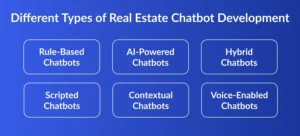
1. Rule-Based Chatbots
These chatbots work on fixed rules and follow predefined decision trees. They respond based on keywords or selected options, making them simple and predictable.
Advantages: They are easy to build and quick to deploy, which makes them cost-effective. They work well for simple and repetitive questions like FAQs.
Disadvantages: They cannot understand complex queries or context. If a user asks something outside the defined rules, the chatbot may fail to respond properly.
Best for: Basic customer support, FAQs, and simple interactions.
2. AI-Powered Chatbots
These are advanced chatbots that use AI, machine learning, and NLP to understand user intent. They can learn from conversations and improve over time.
Advantages: They understand natural language and provide smart, human-like responses. They can also offer personalized recommendations based on user behavior.
Disadvantages: They are more complex to develop and require more data and resources. The development cost is also higher compared to simple bots.
Best for: Property recommendations, virtual assistants, and advanced customer support.
3. Hybrid Chatbots
Hybrid chatbots combine rule-based logic with AI capabilities. They use rules for simple tasks and AI for complex conversations.
Advantages: They offer a balance between control and flexibility. This makes them capable of handling both basic and advanced queries effectively.
Disadvantages: They require proper planning and design to ensure smooth switching between rule-based and AI responses.
Best for: Complete real estate platforms that need both automation and intelligent interaction.
4. Scripted Chatbots
These chatbots follow a fixed script and guide users step-by-step through predefined options. They are structured and easy to control.
Advantages: They are simple to design and test, making them reliable for guided workflows. Users can easily follow the conversation path.
Disadvantages: They lack flexibility and may frustrate users if their query does not match the script.
Best for: Appointment booking, surveys, and step-by-step guidance.
5. Contextual Chatbots
These chatbots remember past interactions and use that information in future conversations. They provide a more personalized experience.
Advantages: They feel more human-like and improve user engagement. They can handle long and complex conversations effectively.
Disadvantages: They are complex to build and require strong data handling capabilities. There may also be concerns about storing user data.
Best for: Personal assistants and detailed customer interactions.
6. Voice-Enabled Chatbots
These chatbots use voice recognition and speech technology to interact with users. Users can talk to the bot instead of typing.
Advantages: They offer hands-free interaction and are easy to use, especially for users who prefer speaking over typing. They also improve accessibility.
Disadvantages: They require advanced technology and can be affected by background noise. Development can also be more complex.
Best for: Smart devices, voice assistants, and hands-free applications.
High-Impact Real Estate Chatbot Use Cases That Drive ROI
A real estate chatbot is not for chatting, it helps businesses earn more money and save time.
1. Instant Property Inquiry Handling
The chatbot answers user questions instantly about price, location, and availability. This keeps users engaged and reduces missed opportunities. Faster replies mean higher chances of converting visitors into buyers.
2. Smart Property Recommendations
The chatbot suggests properties based on user needs like budget and location. This makes the search easy and saves time for users. Personalized suggestions increase the chances of sales.
3. Lead Generation and Qualification
The chatbot collects user details like name, phone number, and preferences. It also asks questions to find serious buyers. This helps agents focus only on high-quality leads.
4. Appointment Booking Automation
The chatbot schedules property visits without human help. It checks available time slots and confirms bookings. This reduces manual work and improves efficiency.
Major Features Required for Chatbot Development for Real Estate
To build real estate chatbot that works smoothly and delivers results, you must include the major features that every real estate chatbot needs.
1. Lead Capture & Qualification
The chatbot collects important user details like name, phone number, email, and property preferences. This helps businesses store useful data for future follow-ups. It also asks smart questions to understand if the user is serious about buying or just exploring, which helps agents focus on the right leads.
2. Property Search & Filters
The chatbot allows users to search properties based on filters like price, location, size, and type. This makes it easy for users to find what they want quickly. It saves time by showing only relevant options, which improves the overall user experience.
3. MLS/IDX Integration
The chatbot connects with real-time property databases like MLS or IDX. This ensures that users always see the latest and accurate listings. It builds trust because users get updated information instead of outdated or unavailable properties.
4. Automated Appointment Scheduling
Users can book property visits directly through the chatbot without calling an agent. The chatbot checks available time slots and confirms bookings instantly. It also sends reminders to users, which reduces missed appointments and improves efficiency.
5. CRM Integration
The chatbot sends all collected lead data to CRM systems like HubSpot or Salesforce. This helps businesses organize and manage customer information easily. Agents can track conversations, follow up with leads, and improve their sales process.
6. Multilingual Support
The chatbot can communicate in multiple languages, making it easier for people from different regions to use it. This enables businesses to connect with a broader audience and support customers in the language they prefer.
6. AI Personalization
The chatbot uses AI to understand user behavior and preferences. Based on this, it suggests properties that match the user’s needs. This enhances personalization and significantly improves the likelihood of conversion.
7. Analytics & Chat Logs
The chatbot tracks user interactions, popular queries, and performance data. This enables businesses to gain deeper insights into user behavior. Using this data, companies can improve chatbot responses and make better business decisions over time.
How to Build Real Estate Chatbot: 6 Steps to follow
If you want to build a real estate chatbot, you need to follow a clear and simple process. Each step is important to make sure your chatbot works well and helps your business grow.
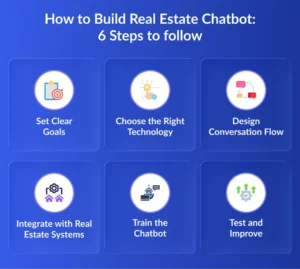
1. Set Clear Goals
Begin by defining the purpose and goals of your chatbot. For example, it can help generate leads, suggest properties, answer customer questions, or book appointments. When your goals are clear, you can focus on building only the features that matter. This saves time, reduces cost, and ensures your real estate chatbot development stays on track.
2. Choose the Right Technology
Next, select the right tools and technologies for your chatbot. You can use AI and NLP (Natural Language Processing) tools like Dialogflow, GPT APIs, or other chatbot platforms. Choosing the right technology helps your chatbot understand user queries better and give smart responses. It also makes your chatbot faster, scalable, and more reliable.
3. Design Conversation Flow
Plan how your chatbot will talk to users step by step. Create simple, clear, and friendly conversations so users can easily understand and interact. You should design both guided options (like buttons: Buy, Rent) and open chat responses. A well-designed flow makes the chatbot feel natural and improves user experience.
4. Integrate with Real Estate Systems
Connect your chatbot with important systems like property databases (MLS/IDX), CRM tools, and calendar apps. This allows the chatbot to show real-time property listings and manage appointments. Integration ensures that your chatbot is not just answering questions but also performing real tasks like booking visits and storing lead data.
5. Train the Chatbot
Train your chatbot using real estate data such as property listings, FAQs, pricing details, and customer queries. This helps the chatbot understand the industry better. The more data you provide, the smarter your chatbot becomes. It will give accurate answers and offer better property suggestions to users.
6. Test and Improve
Before launching, test your chatbot to make sure everything works properly. Check if it understands queries, gives correct answers, and connects smoothly with other systems. After launch, keep monitoring its performance and improve it based on user feedback. Regular updates help your chatbot stay effective and deliver better results over time.
How Much Does it Cost to Develop a Chatbot for Real Estate Business?
The cost of developing a real estate chatbot depends on features, complexity, and integrations.
| Chatbot Type | Estimated Cost | Includes |
| Basic Chatbot | $20,000 – $40,000 | Simple Q&A, basic property search, lead capture |
| Advanced AI Chatbot | $50,000 – $120,000 | AI/NLP, CRM integration, scheduling, smart responses |
| Custom AI Avatar Chatbot | $120,000 – $200,000+ | Voice, 3D avatar, AR tours, multi-language support |
| Enterprise Chatbot | $150,000 – $300,000+ | Advanced analytics, multi-system integration, automation |
Factors Affecting Real Estate Chatbot Development Cost
The real estate chatbot development cost can change based on many factors:
1. Features and Use Cases
Simple chatbots cost less because they have fewer features. Advanced chatbots with AI and automation cost more.
2. AI Complexity
Rule-based bots are cheaper and easier to build. AI-powered chatbots need more training and data, which increases cost.
3. Third-Party Integrations
Connecting with CRM, MLS, or calendar systems adds extra cost. Each integration needs development and testing.
4. Multilingual and Voice Support
Supporting multiple languages adds to both development time and overall cost. Voice features also require advanced technology.
5. Custom UI/UX Design
Basic chatbot designs are cheaper. Custom designs with animations or avatars cost more.
6. Hosting and Maintenance
After launch, you need to pay for hosting and updates. This is a recurring cost every month or year.
7. Development Team
Hiring an experienced AI agent development company may cost more but ensures quality. Outsourcing can reduce cost by 30 – 60%.
Top Best Practices for Real Estate Chatbot Development
To build a real estate chatbot that works well and gives results, you must follow some important best practices. These help you create a smart, fast, and user-friendly chatbot.
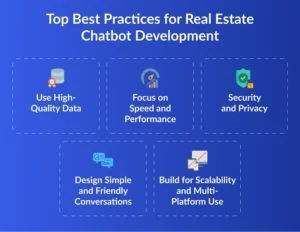
1. Use High-Quality Data
A real estate chatbot works best when it is trained with correct and updated data. This includes property listings, prices, and real estate terms. If the data is clean and accurate, the chatbot gives better answers and builds user trust. Always update the data regularly to keep it relevant.
2. Focus on Speed and Performance
Users expect quick replies when they search for properties. If the chatbot is slow, users may leave the website. You should optimize the chatbot to give fast responses by using better APIs and reducing delays. A fast chatbot improves user experience and increases conversions.
3. Security and Privacy
Real estate chatbots collect personal details like contact numbers and preferences. It is important to keep this data safe. Use secure systems, encryption, and follow data protection rules. This helps users trust your custom real estate chatbot.
4. Design Simple and Friendly Conversations
Your chatbot should be simple, intuitive, and easy to understand. Use simple language, buttons, and quick replies to guide users. A friendly and natural conversation style makes users feel comfortable and keeps them engaged.
5. Build for Scalability and Multi-Platform Use
Your chatbot should work smoothly even when many users are using it at the same time. It should also work on websites, apps, WhatsApp, and social media. This makes sure a consistent experience across all platforms and helps your business grow easily.
Common Challenges and How to Overcome Them When Developing a Real Estate Chatbot
While real estate chatbot development offers many benefits, it also comes with some challenges. Understanding these problems and their solutions helps you build custom chatbot solutions that work smoothly and deliver better results.
1. Managing Complex Property Data
Challenge: Real estate data is very detailed and includes information like price, location, size, amenities, and availability. Managing and updating all this data can become difficult, especially when listings change frequently.
Solution: You should use structured databases and connect your chatbot with MLS/IDX systems. This allows automatic updates and keeps property information accurate. Proper data organization also helps your real estate chatbot show relevant and up-to-date listings.
2. Understanding User Language
Challenge: Users may ask the same question in many different ways, using simple, complex, or even unclear language. A basic chatbot may not understand these variations properly.
Solution: Use AI and NLP (Natural Language Processing) tools to train the chatbot with real user queries. This helps the chatbot learn different ways people ask questions. Over time, it becomes smarter and provides more accurate responses.
3. Handling Complex Queries with Human Support
Challenge: Chatbots are not perfect and may struggle with complex, emotional, or legal questions. This can lead to poor user experience if not handled properly.
Solution: Add a human handoff feature that allows the chatbot to transfer the conversation to a real agent when needed. This ensures users always get the right help and improves trust in your custom real estate chatbot.
4. Integration with Multiple Systems
Challenge: A real estate chatbot needs to connect with many systems like CRM, property databases, and calendars. Managing all these integrations can be technically complex.
Solution: Use APIs and automation tools to connect different systems smoothly. This ensures that data flows properly between platforms and improves the chatbot’s overall performance.
5. Maintaining User Trust and Privacy
Challenge: Users may feel unsure about sharing personal details like phone numbers or budgets with a chatbot. This can reduce engagement and lead generation.
Solution: Use secure systems, encryption, and clear privacy policies. Explain how user data will be used and protected. Building trust is very important for successful real estate chatbot development.
6. Designing a Good User Experience
Challenge: If the chatbot design is confusing or too complex, users may stop using it. A poor experience can reduce engagement and conversions.
Solution: Design simple and user-friendly conversations using buttons, quick replies, and AI chat. Test the chatbot with real users and improve it based on feedback to ensure a smooth experience.
7. Budget Limitations
Challenge: Building an advanced chatbot with AI features, integrations, and custom design can be expensive, especially for small businesses.
Solution: Start with a basic chatbot that includes only essential features. As your business grows, you can upgrade and add more advanced features. You can also hire AI developers or outsource development to reduce costs.
Why Choose Developer Bazaar Technologies for Real Estate Chatbot Development?
Developer Bazaar Technologies is a strong choice for real estate chatbot development. They offer complete AI development services, handling everything from planning and design to development, deployment, and support, making the process smooth and hassle-free.
They specialize in custom real estate chatbot development, building solutions tailored to your business needs like lead generation, property recommendations, and appointment booking. Their team uses advanced AI technologies to create smart, human-like chatbots that improve user experience.
They also help in easy integration with CRM systems, property databases, and apps, allowing your real estate chatbot to work efficiently across platforms like websites, mobile apps, WhatsApp, and social media. Plus, they build scalable solutions so you can build custom chatbot systems that grow with your business.
Conclusion
A real estate chatbot is a powerful tool that helps businesses improve customer service, generate leads, and increase sales. It works 24/7, gives instant replies, and makes property search easier for users.
By investing in real estate chatbot development, you can automate your business processes and stay ahead in the market. Whether you are a small agency or a large company, using AI in real estate is now a smart decision.
With the right AI development services and strategy, you can build a chatbot that delivers real results and long-term growth.
FAQs
1. Can I integrate a chatbot with my existing real estate CRM?
Yes, you can easily connect your chatbot with CRM systems like Salesforce, HubSpot, or Zoho. This helps you store user data, track leads, and manage follow-ups better.
2. How long does it take to develop a real estate chatbot?
The time depends on the complexity of the chatbot. A basic chatbot can take around 4 – 6 weeks, while an advanced AI chatbot may take 8 – 12 weeks or more.
3. Should I build a custom chatbot or use a ready-made solution?
A custom real estate chatbot is better if you need specific features and integrations. Ready-made solutions are faster and cheaper but offer limited customization.
4. Can a real estate chatbot support multiple languages?
Yes, modern chatbots support multiple languages. This helps you reach more users and serve customers from different regions.
5. Can a chatbot help with virtual property tours?
Yes, advanced chatbots can integrate with virtual tour tools. They can guide users through properties and answer questions in real time, improving the overall experience.